
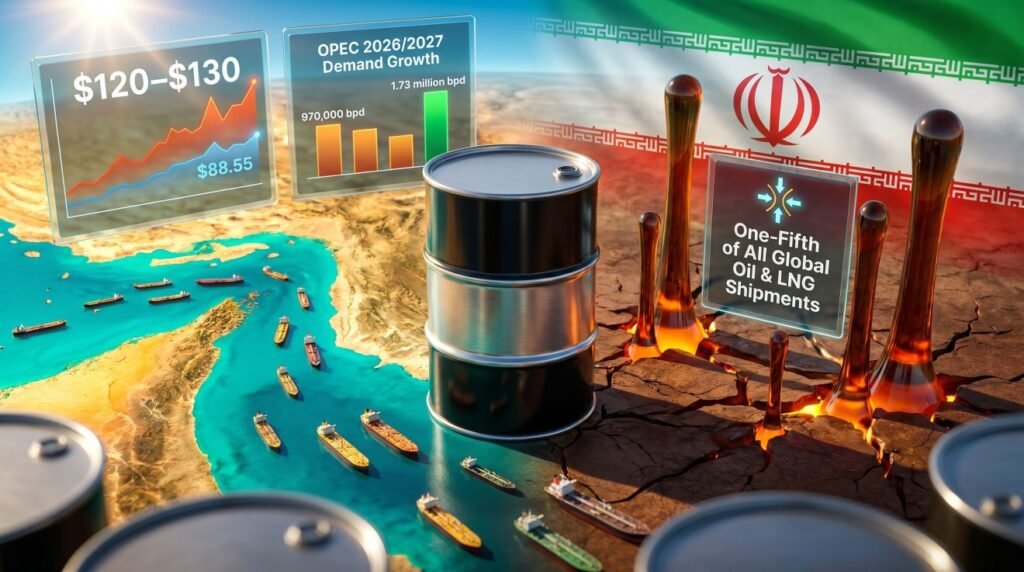
Global oil prices fell by more than 1% on Wednesday, extending losses recorded earlier this week as signs emerged that oil shipments through the Strait of Hormuz are gradually recovering. The decline pushed both major crude benchmarks close to their lowest levels in four months.
Brent and WTI Crude Continue to Decline
Brent crude futures dropped 78 cents, or 1%, to $76.30 per barrel by 0350 GMT. Meanwhile, US West Texas Intermediate (WTI) crude fell 78 cents, or 1.1%, to $72.43 per barrel.
Both benchmarks had already settled around 1% lower on Tuesday and touched their lowest levels since early March. The latest decline reflects growing confidence among traders that oil supplies from the Middle East will continue to flow despite recent regional tensions.
Increased Strait of Hormuz Traffic Boosts Market Confidence
Market analysts pointed to improving shipping activity in the Strait of Hormuz as a major factor behind the fall in prices.
Commodity strategists at ING noted that positive developments in the Persian Gulf have increased optimism about oil transportation through the strategic waterway. According to analysts, vessel crossings have risen in recent days, although traffic remains below levels seen before the recent conflict.
The Strait of Hormuz is one of the world’s most important energy corridors, carrying a significant portion of global oil exports. Any disruption to shipping in the area often leads to sharp increases in energy prices.
US-Iran Diplomatic Progress Weighs on Crude Markets
Oil prices also came under pressure after Washington granted Tehran a 60-day sanctions waiver following initial peace talks. The waiver allows Iran to continue selling oil while negotiations continue.
Analysts believe the development has eased concerns about potential supply disruptions and could increase crude availability in international markets.
Tomomichi Akuta, Senior Economist at Mitsubishi UFJ Research and Consulting, said hopes for easing tensions between the United States and Iran, along with the recovery of oil shipments through the Strait of Hormuz, have weighed heavily on crude prices.
He added that further progress in nuclear negotiations could push oil prices back to levels seen before the recent regional conflict.
Oman and Iran Continue Navigation Talks
Diplomatic discussions regarding the future administration of navigation in the Strait of Hormuz also continued this week.
According to reports, Oman and Iran agreed to continue consultations on managing navigation through the strategic waterway. At the same time, US Secretary of State Marco Rubio stated that any Iranian attempt to impose transit fees on ships passing through the strait would violate international law.
Despite these developments, uncertainty remains over the long-term stability of the agreement and the future of regional security arrangements.
Conflicting Statements on Nuclear Inspections
Questions also remain regarding the progress of nuclear negotiations between Washington and Tehran.
US President Donald Trump said on Tuesday that Iran had agreed to nuclear inspections “into infinity.” However, Iranian officials denied making such a commitment during ongoing talks.
The conflicting statements have created uncertainty among investors, who continue to monitor diplomatic developments closely.
Stranded Tankers Begin Moving Through Strait
Shipping activity showed further signs of improvement as several vessels successfully passed through the Strait of Hormuz.
An Iranian military source told local media that a limited number of ships are being allowed to transit the waterway each day under coordination with Iran’s Revolutionary Guards Navy.
Ship-tracking data indicated that three stranded supertankers successfully crossed the strait on Tuesday. Meanwhile, the United Nations shipping agency confirmed that an evacuation plan is underway to help hundreds of vessels and approximately 11,000 seafarers stranded in the Gulf resume their journeys following the US-Iran ceasefire agreement.
The gradual restoration of maritime traffic has eased fears of a prolonged disruption to global energy supplies.
Investors Watch Supply Recovery
Market participants are now focused on how quickly Middle Eastern oil producers can restore exports to normal levels and whether more vessels will return to the region.
A faster recovery in shipments could increase global supply and place additional downward pressure on crude prices in the coming weeks.
US Crude Inventories Show Modest Decline
Meanwhile, inventory data offered mixed signals for the oil market.
According to market sources citing figures from the American Petroleum Institute (API), US crude oil inventories fell by 765,000 barrels during the week ending June 19.
The decline was smaller than expected. Analysts surveyed by Reuters had forecast an average drawdown of approximately 4.5 million barrels.
The lower-than-expected inventory reduction suggests that supply conditions remain relatively comfortable despite recent geopolitical disruptions.
Outlook for Oil Markets
Oil markets remain highly sensitive to developments in the Middle East. While improving shipping conditions and diplomatic progress have eased immediate concerns, traders continue to monitor the durability of the US-Iran ceasefire and ongoing nuclear negotiations.
For now, increased vessel movement through the Strait of Hormuz and expectations of higher oil supplies are keeping downward pressure on prices. However, any setback in negotiations or disruption to shipping routes could quickly reverse the trend and reignite volatility in global energy markets.