
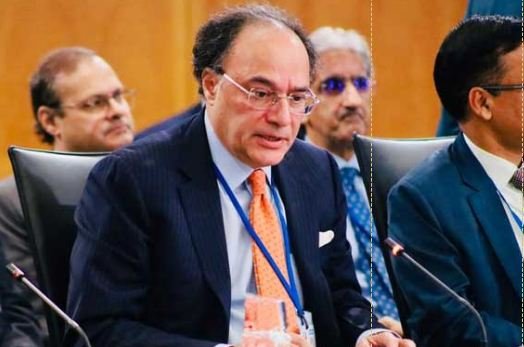
Finance Minister Muhammad Aurangzeb addressed a press conference in Islamabad to elaborate on the proposed budget for FY2026-27, highlighting measures aimed at export-led growth, tax relief, and tariff rationalisation.
Progress Toward Economic Growth
Aurangzeb opened his briefing by stating that the budget reflected “significant progress” in the direction of economic growth discussed earlier. He noted that the government made comprehensive efforts to create an enabling environment for export-led growth, which included the abolishment of the advance tax.
Super Tax Abolished for Exporters
The minister stressed the decision to abolish the super tax for businesses earning more than Rs500 million, describing it as a “very meaningful direction of travel.” On the directives of Prime Minister Shehbaz Sharif, he extended the proposal further to cover all exporters.
Financing and Subsidies
Aurangzeb drew attention to the financing dimension of the budget, beyond taxation alone. An additional subsidy of Rs70 billion was proposed to elevate the ongoing refinancing scheme to a higher level of support.
Tariff Rationalisation on Track
On tariffs, the minister noted the government entered the second year of its five-year plan to reduce the cost of intermediate goods and raw materials. He underlined the need to narrow the trade deficit for goods while acknowledging that services exports, particularly in the IT sector, grew in strategic importance.
FTR Maintained for IT and Freelancers
The government announced the continuation of the 0.25 per cent Final Tax Regime (FTR) in line with proposals from the IT industry, freelancers, and PASHA.
Relief for Salaried Class
Aurangzeb emphasised that the budget targeted relief for lower-income salaried workers. Tax slabs were revised downward — from 5 per cent to 1 per cent and from 15 per cent to 13 per cent for the relevant income brackets.
Budget Presented Before National Assembly
On Friday, Aurangzeb presented the financial plan before the National Assembly. Key announcements included a three-year freeze on provincial transfers, with resources reallocated toward security needs and relief for salaried workers, corporates, the real estate sector, and exporters.
In his third budget — and the fifth under the current major coalition — the minister proposed taxes on social media earnings, a fixed tax scheme for small traders and shopkeepers, a higher minimum tax rate for wholesalers and retailers, incentives for small electric vehicles and bikes, and restrictions on luxury electric vehicles.