
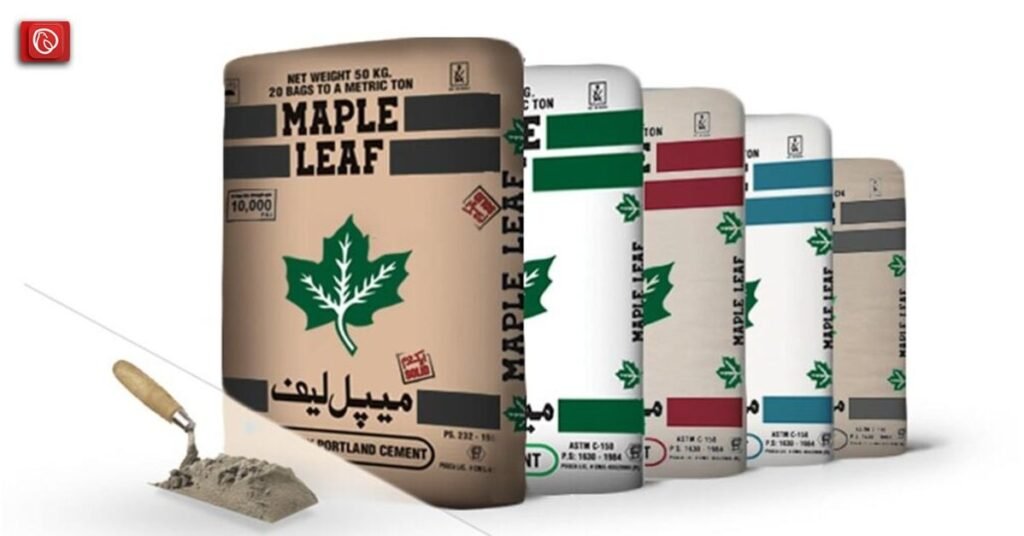
Maple Leaf Approves Pioneer Cement Merger
Maple Leaf Cement has moved closer to fully absorbing Pioneer Cement after its board approved a Scheme of Arrangement on September 2, 2026.
Under the proposed arrangement, Pioneer Cement’s entire business, including its plants, assets, liabilities, rights and obligations, will be transferred to Maple Leaf Cement. Pioneer will subsequently be dissolved without winding up.
The move would effectively bring Pioneer under a single listed structure rather than continuing to operate it as a separate listed subsidiary.
Shareholders to Receive 2.65 MLCF Shares
Under the proposed share-swap arrangement, Pioneer Cement shareholders other than Maple Leaf Cement itself will receive 2.65 ordinary shares of Maple Leaf Cement for every one PIOC share.
The transaction will result in the issuance of approximately 136.17 million new Maple Leaf shares.
Pioneer’s existing shares, including those held by Maple Leaf, will be cancelled as part of the amalgamation.
Maple Leaf Already Controls Most of Pioneer
The structure of the transaction is important because Maple Leaf Cement and its group already control approximately 88.28% of Pioneer Cement following the takeover completed in February.
The new Maple Leaf shares will therefore primarily go to Pioneer’s remaining minority shareholders and relevant group entities rather than representing a fresh acquisition of control.
Based on Maple Leaf Cement’s share price of around Rs97.4, the swap ratio implies a value of approximately Rs258 per Pioneer share.
That is broadly in line with Pioneer’s prevailing market price and does not represent a major premium for shareholders.
The Rs478 Cash Offer Puts the Swap in Context
The proposed merger also needs to be viewed against Maple Leaf’s earlier cash offer.
Maple Leaf acquired control of Pioneer Cement at approximately Rs478.43 per share only months ago.
For investors who did not participate in that offer and continued holding PIOC shares, the proposed arrangement now means exchanging their Pioneer shares for Maple Leaf stock at a substantially lower implied value.
As a result, the 2.65-share ratio may be favourable relative to Pioneer’s current market price, but it is considerably below the earlier cash acquisition price.
A Merger of Control Rather Than Equals
This is effectively a parent company consolidating its subsidiary rather than a merger between two independent businesses.
Maple Leaf already consolidates Pioneer Cement’s financial results, while management had previously indicated that a legal merger could take place by late 2026 or early 2027.
The proposed arrangement now provides a formal structure for completing that process.
The combined production capacity is significant. Maple Leaf’s Mianwali complex has capacity of around 7.8 million tonnes, while Pioneer’s Jauharabad facilities add approximately 5 million tonnes.
Together, the two businesses would approach 13 million tonnes of annual capacity, strengthening Maple Leaf’s position in Pakistan’s northern cement market.
Operational Synergies Could Be the Bigger Prize
The two cement operations are located relatively close to each other, with the plants separated by roughly 80 kilometres.
This proximity could create opportunities to improve logistics, coordinate coal procurement and optimise kiln utilisation.
For Maple Leaf, eliminating a separate listed structure could also reduce administrative complexity and allow the combined business to operate under a more streamlined balance sheet.
The share-swap ratio is also slightly above the 2.1-to-2.6 range that had been considered reasonable by Topline Securities, placing the proposed exchange at the upper end of that range.
Merger Still Needs Regulatory Approval
The board approval does not complete the transaction.
Shareholders of both companies will need to approve the arrangement, while the relevant regulatory approvals will also be required.
The Lahore High Court must sanction the scheme under Sections 279 to 283 of the Companies Act.
A joint petition is expected to be filed with the court in due course.
The proposed effective date is July 1, 2026, which would allow the companies to combine their financial reporting from the beginning of the fiscal year if the arrangement receives the necessary approvals.
Until then, Pioneer Cement remains a separately listed company on the Pakistan Stock Exchange.
Maple Leaf Shareholders Face Around 13% Dilution
The issuance of approximately 136.17 million new Maple Leaf shares will dilute existing shareholders.
Against Maple Leaf’s current share count of roughly 1.05 billion, the new shares represent dilution of around 13%.
However, Maple Leaf already owns the overwhelming majority of Pioneer, meaning much of the economic benefit of the subsidiary is already reflected in the parent’s financial position.
The consolidation would also eliminate related-party transactions between the two companies. For example, Pioneer had recently approved a financing facility of up to Rs4 billion for its parent. Following amalgamation, such transactions would effectively become internal to the combined business.
North Pakistan’s Cement Market Continues to Consolidate
The proposed merger comes as Pakistan’s cement industry continues to move toward greater consolidation.
With Lucky Cement and Bestway maintaining strong positions, the combined Maple Leaf-Pioneer operation would become another major player in the northern cement market.
The disappearance of Pioneer’s independent listing will also change how investors gain exposure to the business.
Investors currently holding PIOC shares would receive Maple Leaf shares under the proposed arrangement, effectively replacing their direct exposure to Pioneer with ownership in the larger combined company.
What the Merger Means for Investors
For Maple Leaf shareholders, the merger could simplify the group structure while creating opportunities for operational efficiencies across two sizeable cement operations.
For Pioneer’s remaining minority shareholders, the key issue is whether the 2.65-share exchange ratio fairly reflects the value of their investment.
The proposed arrangement still has several steps to clear before it becomes effective, particularly shareholder and court approval.
If completed, Pioneer Cement’s separate identity on the stock exchange would disappear, leaving Maple Leaf Cement with a larger and more integrated cement business.
The plants may remain in the same locations, but the corporate structure behind them would be significantly different.