
Index of Transparency and Accountability iTAP Pakistan has officially entered the national policy and business conversation, marking a milestone moment in how governance, accountability, and public trust are measured in the country. Launched by the Federation of Pakistan Chambers of Commerce and Industry (FPCCI) in collaboration with global research firm Ipsos, iTAP is Pakistan’s first fully indigenous, data-driven index designed to assess transparency and accountability across public institutions.
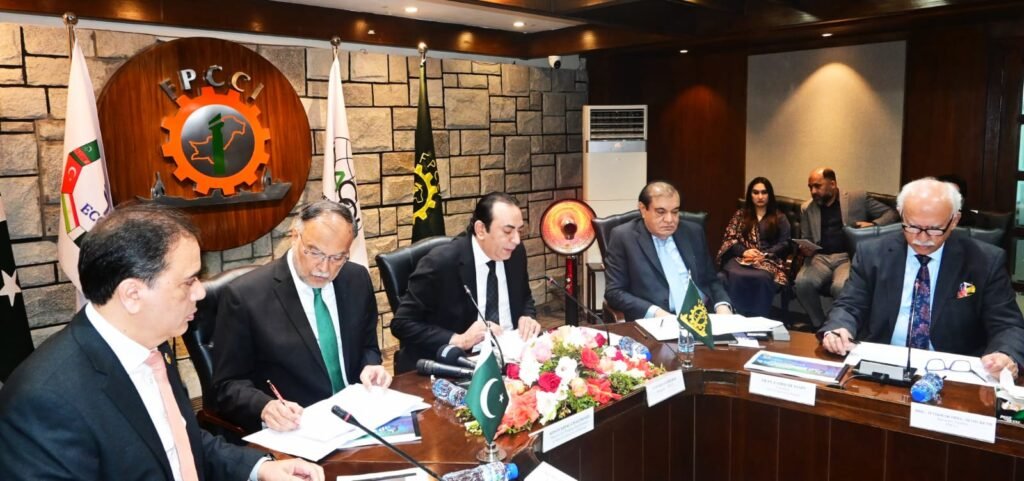
The formal launch took place at FPCCI Capital House in Islamabad, drawing participation from government leadership, business stakeholders, civil society, academia, and the media underscoring the national relevance of the initiative.
Why the Index of Transparency and Accountability iTAP Pakistan Matters
For decades, conversations around transparency in Pakistan have largely been perception-driven, anecdotal, or based on external benchmarks. The Index of Transparency and Accountability iTAP Pakistan changes that narrative by introducing a locally developed, recurring, and evidence-based tool that reflects the lived experiences of citizens.
Conceived in May 2025, iTAP aims to serve as a long-term national benchmark, allowing policymakers, investors, and institutions to track governance performance over time. The inaugural field survey, conducted between December 2025 and January 2026, provides a nationally representative snapshot of public trust and institutional interaction.
What makes iTAP distinctive is its grounding in Pakistani realities measuring not just opinions, but actual citizen experiences with public services.
Launch Ceremony Highlights: Policy Meets Data
The launch ceremony was led by Federal Minister for Planning, Development and Special Initiatives, Mr. Ahsan Iqbal, who attended as Chief Guest. FPCCI President Mr. Atif Ikram Sheikh and Mr. Mian Zahid Hussain, SI, Chairman of the FPCCI Policy Advisory Board, also addressed the audience, emphasizing the strategic relevance of iTAP for economic reform and investment confidence.
The presence of senior policymakers alongside business and research leaders highlighted a shared understanding: transparency and accountability are no longer abstract ideals, but measurable economic enablers.
Key Findings from the Index of Transparency and Accountability iTAP Pakistan
One of the most striking insights from the iTAP findings is the gap between public perception and lived experience. While perceptions of corruption remain high, the data reveals that a majority of citizens report their direct interactions with public institutions as corruption-free.
This contrast is critical. It suggests that Pakistan’s governance challenge may not only lie in service delivery, but also in communication, awareness, and trust-building.
In practical terms, the index establishes a credible baseline showing:
• Many public institutions are performing better than widely believed
• Negative narratives, if left unaddressed, can distort economic and governance realities
• Transparency improvements must be paired with effective public communication
Investor Confidence and Economic Significance
From a business and investment perspective, the Index of Transparency and Accountability iTAP Pakistan carries far-reaching implications. Transparency and accountability are foundational to:
• A predictable business environment
• Lower transaction costs
• Stronger investor confidence
• Sustainable economic growth
By offering measurable governance indicators, iTAP can help investors differentiate between perception-driven risk and data-backed realities potentially improving Pakistan’s investment outlook at a critical economic juncture.
Government Perspective: Measuring to Improve
In his address, the Federal Minister congratulated FPCCI for placing transparency and accountability at the center of national discourse with seriousness and rigor. He emphasized that good governance begins with measurement, reinforcing the principle that “what gets measured gets improved.”
The Minister also cautioned that persistent negative perceptions, if not addressed through evidence and reform, can undermine national progress. Bridging the perception–reality gap, he stressed, must become a shared responsibility across government, business, and civil society.
The Future of Index of Transparency and Accountability iTAP Pakistan
Looking ahead, the true power of the Index of Transparency and Accountability iTAP Pakistan lies in its continuity. If tracked consistently over time, iTAP can evolve into:
• A national monitoring tool for governance reforms
• A reference point for policy evaluation
• A confidence-building mechanism for citizens and investors alike
By institutionalizing transparency measurement, Pakistan takes a decisive step toward strengthening trust, improving accountability, and aligning governance with economic ambition.