
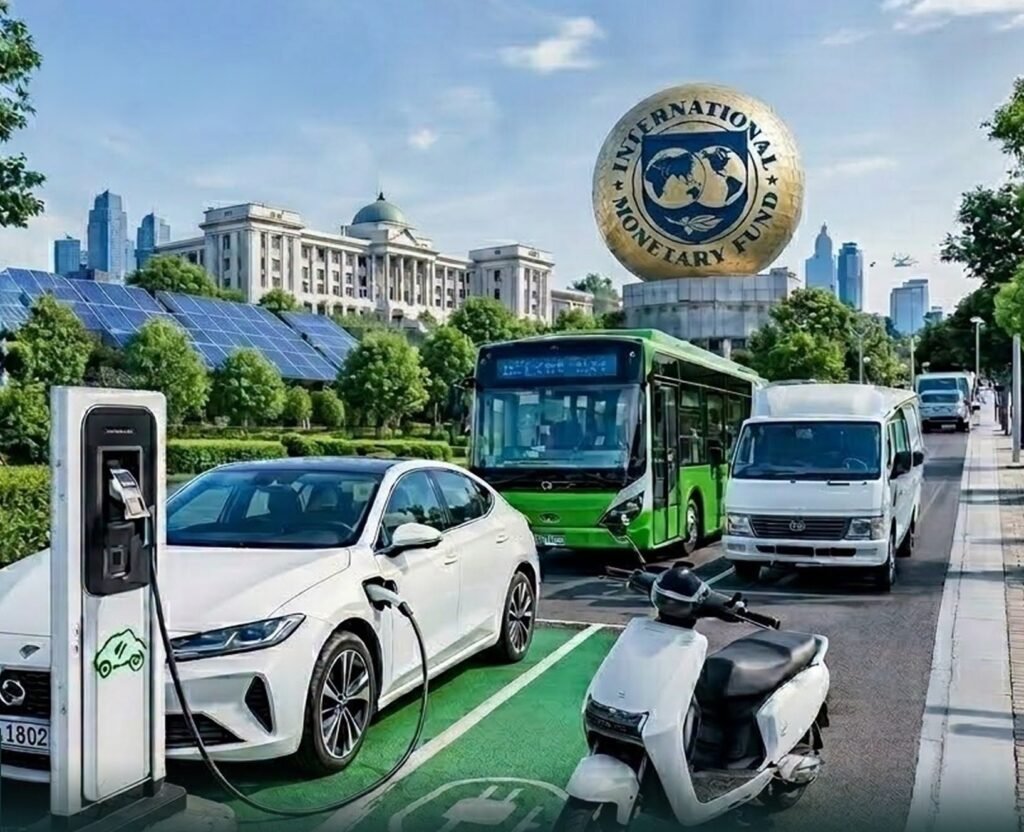
The International Monetary Fund has turned down the government’s proposal to charge only 1% sales tax on new energy vehicles, including electric vehicles. The decision has added fresh uncertainty to the finalisation of the Auto Policy 2026-31 at a time when the existing policy is set to expire this month. Any tax changes must be incorporated into the budget that the National Assembly is expected to pass shortly.
IMF Insists on Standard Rate and Direct Subsidies
Government officials shared the tax proposals with the IMF on Thursday. They had suggested a 1% sales tax on new energy vehicles and a 50% reduction in the standard 18% rate for hybrid vehicles. The IMF rejected the idea of any concessional sales tax rates for vehicles. It maintained that the full 18% rate should apply and that any support for buyers or the industry should come through direct subsidies instead.
This approach, according to the Fund, helps protect the overall tax base and avoids permanent distortions. Finance ministry sources said the IMF asked for more clarifications on the proposals. The IMF resident representative did not respond to requests for comment. Special Assistant to the Prime Minister on Industry Haroon Akhtar Khan also declined to confirm whether the 1% rate proposal had been rejected.
The lender’s position reflects its broader focus on revenue mobilisation under Pakistan’s ongoing programme. Reduced rates on vehicles would have lowered collections at a time when the government has committed to corrective measures if revenues fall short by December.
Policy Finalisation Faces Procedural and Coordination Hurdles
The disagreement has made it harder to complete the Auto Policy 2026-31 before the June 24 target. Internal meetings, including those chaired by Deputy Prime Minister Ishaq Dar, have remained inconclusive so far. A key reason is that the Ministry of Industries and Production did not carry out inter-ministerial consultations as required under the Rules of Business.
This lapse has created friction with the Ministry of Commerce, which is the custodian of the National Tariff Policy. The auto policy must align with the tariff rationalisation framework now in its second year. Without quick resolution, the new policy risks missing the window to be reflected in the finance bill.
The impasse comes at a sensitive moment for the automobile sector. Higher sales tax on new energy vehicles would likely push up their prices and slow the shift toward cleaner mobility. At the same time, sticking to the IMF’s advice could help maintain fiscal discipline and prevent future revenue gaps that might require additional taxation measures later in the year.