
Karachi: Indus Motor Company proposed that the upcoming Auto Policy 2026–31 should maintain at least a 40% tariff difference between Completely Knocked Down (CKD) and Completely Built Up (CBU) vehicles to protect jobs and ensure competitiveness.
This was proposed by Chief Executive IMC Ali Asghar Jamali while speaking at Pakistan Auto Show (PAPS) held at the Expo Center Karachi from November 14-16, in which IMC participated as a Diamond Sponsor.
“Our participation at PAPS 2025 reflects our commitment to the ‘Make in Pakistan’ vision to produce world-class vehicles locally while supporting job creation and industrial growth.
“We urge the government to maintain policies that promote local manufacturing and shield the industry from the negative impact of used car imports,” said Jamali, adding that there is a need for stable and forward-looking government policies to ensure the long-term sustainability of the local auto industry.
He further emphasized that parts manufacturing in Pakistan should be nurtured, and imports of parts already produced locally should be subject to higher import duties to strengthen the local parts industry, develop Pakistani skill sets, and create sustainable employment.
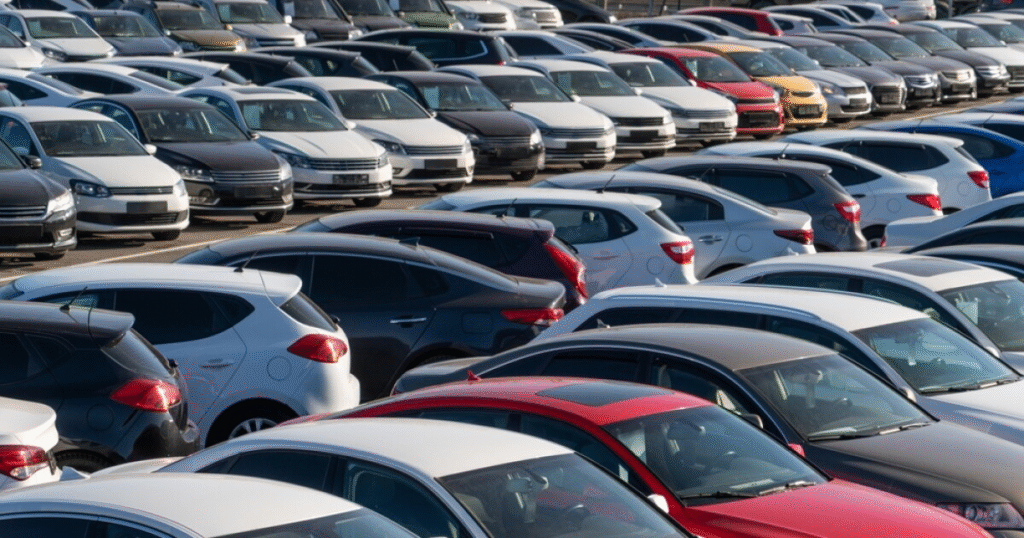
Jamali also called for decisive measures against the rising import of used vehicles, which threaten domestic production, Large Scale Manufacturing (LSM) growth, and employment generation.
It is to be noted that currently 17 global automotive players have invested in Pakistan, establishing plants with a combined capacity of 500,000 vehicles, of which only one third is utilized.
In this situation, he added, where major investments exist alongside underused capacity, the import of used cars, already 25% of the market, undermines investor confidence.
“Insufficient capacity utilization also makes locally produced vehicles less competitive and more expensive for consumers,” reasoned Jamali.
Over the past 35 years, he added, IMC has consistently invested in localization, human skills development, enabling high-quality vehicle production, job creation, and economic growth through its strong vendor network and technical collaborations.
“The company continues to lead efforts for sustainability, innovation, and industrial advancement within Pakistan’s automotive ecosystem,” said Jamali.
Jamali said that at IMC they believe in building a stronger Pakistan through localization, innovation, and continued investment in our people and industry.
Through an active participation at PAPS 2025, he added, IMC reaffirmed its dedication to localization, industrial growth, and sustainable economic development, in line with the national vision of “Make in Pakistan.”
At the IMC pavilion, visitors were drawn to the expended displays of the Toyota Yaris and Corolla Cross, highlighting the extensive localization achieved in these models.
The exhibit reflected IMC’s enduring commitment to its “Make in Pakistan” philosophy, promoting local manufacturing, innovation, and industrial self-reliance.
The event brought together original equipment manufacturers (OEMs), policymakers, government stakeholders, and the public to showcase advancements in Pakistan’s automotive industry.