
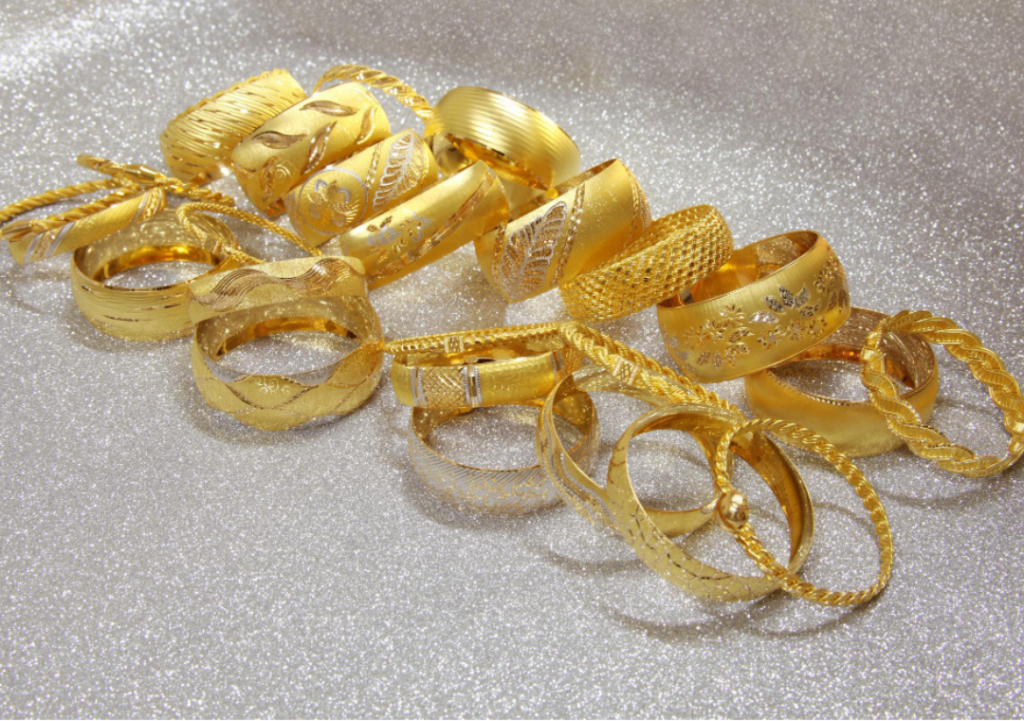
The Gold Price in Pakistan recorded a sharp increase on Thursday, with the price of 24-karat gold climbing by Rs11,300 per tola to reach Rs449,236, reflecting renewed volatility in global precious metal markets. The latest rates issued by the All-Pakistan Gems and Jewellers Sarafa Association (APGJSA) indicate that both gold and silver continued their upward momentum in the domestic market despite mixed signals from international trading.
The sudden rise has once again highlighted the sensitivity of Pakistan’s bullion market to global economic developments, currency fluctuations, and investor sentiment. For consumers planning weddings, jewellery purchases, or investment in physical gold, the latest increase represents another financial hurdle in an already inflationary environment.
Gold Price in Pakistan Climbs Across All Major Categories
The increase was not limited to the per tola rate. The price of 24-karat gold per 10 grams also surged significantly, gaining Rs9,688 to settle at Rs385,147. Meanwhile, 22-karat gold per 10 grams was quoted at Rs353,064, reflecting higher prices across all major gold categories traded in Pakistan.
Silver prices also moved upward, although at a much slower pace. Twenty-four karat silver increased by Rs35 per tola, reaching Rs6,659, while the price per 10 grams rose by Rs30 to Rs5,709.
Compared to the previous trading session, gold has recorded one of its strongest single-day gains in recent weeks. On a month-on-month basis, gold has appreciated by Rs14,300 per tola, while it has gained Rs24,400 since the beginning of the fiscal year. However, despite these gains, gold remains lower by Rs7,726 compared to the start of the current calendar year, illustrating the highly volatile nature of bullion markets.
Global Gold Market Remains Volatile
Internationally, spot gold traded near $4,266 per ounce, slipping by around $10.8, or 0.25 percent, during the latest session. Despite the modest decline, global bullion prices continued to receive support from several macroeconomic factors.
A weaker US dollar, declining US Treasury yields, and renewed optimism over a possible reopening of the Strait of Hormuz have collectively influenced investor behavior. These developments continue to reinforce gold’s traditional role as a safe-haven asset during periods of geopolitical and financial uncertainty.
Analysts believe that international price fluctuations are likely to keep influencing Pakistan’s domestic bullion market in the coming weeks, particularly if global economic uncertainty persists.
Why the Gold Price in Pakistan Keeps Rising
Pakistan’s gold market does not operate in isolation. Domestic prices are directly linked to international bullion rates and are further influenced by the exchange rate of the Pakistani rupee against the US dollar.
However, another issue deserves closer scrutiny. While consumers face record-high gold prices, the domestic market continues to suffer from limited pricing transparency. Retail buyers often encounter noticeable differences between official benchmark rates and actual market prices charged by local jewellers. The absence of stronger regulatory oversight leaves ordinary consumers with little protection against inconsistent pricing practices.
Market experts have repeatedly stressed the need for greater transparency in bullion pricing and standardized retail practices to improve consumer confidence and reduce uncertainty.
What Investors and Buyers Should Watch
The latest rally reinforces gold’s position as a preferred hedge against economic uncertainty. Nevertheless, the sharp daily increase also serves as a reminder that bullion prices can change rapidly based on international developments.
Investors should closely monitor global interest rate expectations, movements in the US dollar, geopolitical developments, and Pakistan’s exchange rate, as these factors will continue to shape the Gold Price in Pakistan over the coming weeks.
For households, jewellers, and investors alike, today’s surge underscores that timing has become increasingly important in a market where price swings of thousands of rupees per tola can occur within a single trading session.