
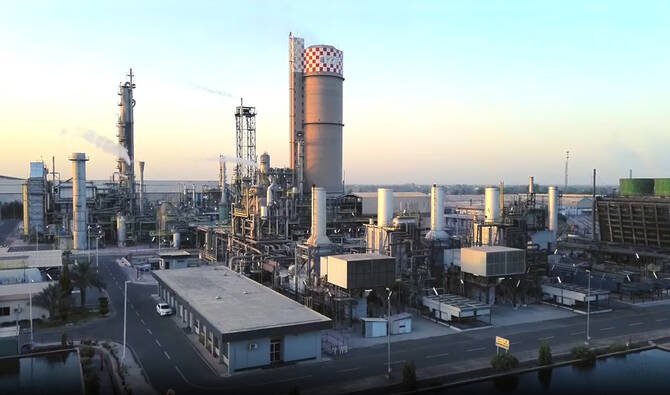
Lahore: Pakistan China Joint Chamber of Commerce and Industry (PCJCCI) has welcomed the establishment of Pakistan’s first coal-based fertilizer plant under the China-Pakistan Economic Corridor (CPEC), describing the $1.12 billion investment as a game-changing initiative that will strengthen agricultural productivity, enhance food security, create employment opportunities, and accelerate industrial development across the country.
Nazir Hussain, President PCJCCI emphasized that the utilization of indigenous coal resources for fertilizer production will reduce Pakistan’s dependence on imported fertilizer inputs, ensure a more stable supply for farmers, and contribute to lower production costs in the agricultural sector. “The first coal-based fertilizer plant under CPEC is not merely an industrial project; it is a strategic investment in Pakistan’s agricultural future. Affordable and consistent fertilizer availability will directly support higher crop yields, strengthen food security, and improve the competitiveness of Pakistan’s agricultural exports,” he remarked.
Brig, Mansoor Saeed Sheikh, Senior Vice President PCJCCI said that China’s remarkable success in agricultural modernization offers valuable lessons for Pakistan. He explained that Pakistan possesses immense untapped potential across diverse agro-climatic zones. Dryland farming can be expanded in Zones III-A and III-B through advanced irrigation technologies and modern cultivation practices. Similarly, the Indus Delta region can be transformed through integrated rice and fish cultivation models inspired by successful Chinese experiences.
He further suggested adopting innovative Chinese techniques such as raised-bed-over-water cultivation systems in the coastal areas and small islands of Sindh. These climate-resilient farming methods can increase agricultural productivity while addressing environmental and water-related challenges.
Amir Ali Vice President PCJCCI noted that the fertilizer plant will serve as a catalyst for broader agricultural reforms and modernization. He highlighted that China’s expertise in agricultural mechanization, smart farming, aquaculture, and agro-industrial development can help Pakistan unlock the full potential of its agriculture and blue economy sectors. The coal-based fertilizer project demonstrates how Chinese investment can support Pakistan’s long-term development goals.
Salahuddin Hanif, Secretary General PCJCCI said that expansion of bilateral cooperation through the establishment of China-Pakistan Agricultural Innovation Centers, demonstration farms, fisheries research facilities, and agro-processing zones to facilitate knowledge transfer and capacity building. PCJCCI reaffirmed its commitment to promoting industrial and agricultural cooperation between Pakistan and China and expressed confidence that the first coal-based fertilizer plant under CPEC will serve as a foundation for broader agricultural reforms, increased food security, enhanced exports, and sustainable economic growth in Pakistan.