
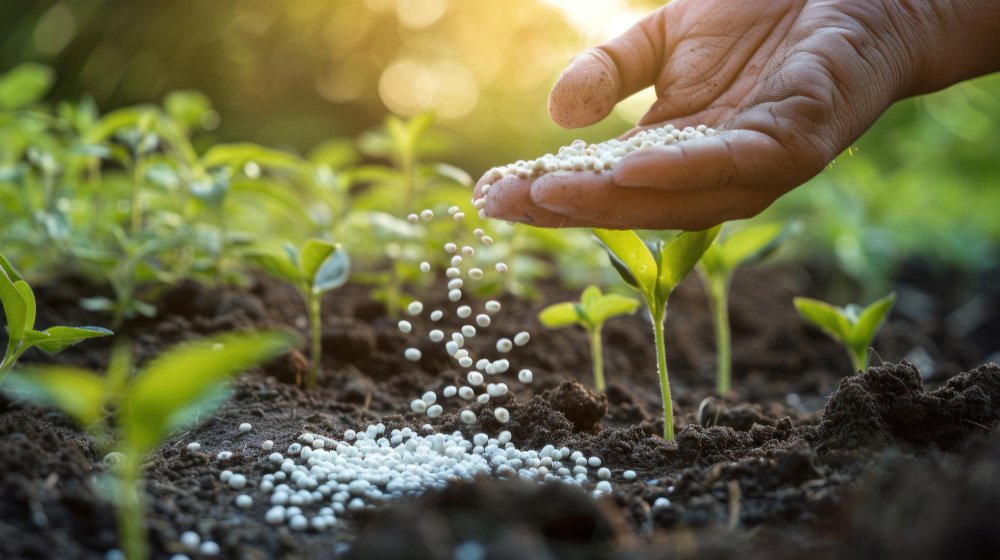
Fertilizer Consumption in Pakistan has taken a dramatic turn in January 2026, raising serious questions about farm economics, crop planning, and the broader agricultural outlook. According to the latest Monthly Fertilizer Review issued by the National Fertilizer Development Centre (NFDC), total nutrient offtake fell by a staggering 48% year-on-year to 151,000 tonnes.
What’s driving this sharp contraction and what could it mean for Pakistan’s Rabi crops?
Fertilizer Consumption in Pakistan: Product-Wise Breakdown
The numbers paint a concerning picture.
In January 2025, farmers lifted 446,000 tonnes of urea. This January, that number dropped to just 218,000 tonnes a massive 51% decline. Similarly, DAP consumption slid from 61,000 tonnes to 39,000 tonnes, reflecting a 35.8% decrease.
Nutrient-wise trends show:
• Nitrogen usage fell from 246,000 tonnes to 121,000 tonnes (down 50.8%)
• Phosphate declined from 38,000 tonnes to 25,000 tonnes (down 34.2%)
• Potash eased from 6,400 tonnes to 5,200 tonnes (down 18.7%)
• Total nutrient offtake shrank from 290,000 tonnes to 151,000 tonnes
This steep drop in fertilizer consumption in Pakistan suggests either delayed purchasing, financial pressure on farmers, or reduced sowing intensity.
Rabi Season Tells a Different Story
Interestingly, cumulative figures for the Rabi 2025–26 season (October to January) show a more balanced outlook.
Total nutrient offtake during this period reached 1.909 million tonnes a modest 1.9% increase compared to last year’s 1.873 million tonnes.
Here’s how the Rabi trend unfolded:
• Urea offtake rose 12%, from 2.449 million tonnes to 2.744 million tonnes
• Nitrogen usage climbed 8.6%
• Potash demand increased 14.1%
• However, DAP fell sharply by 23.1%
• Phosphate declined 20.5%
This indicates that while January was weak, earlier months helped cushion the overall seasonal performance.
Domestic Production: Strong Supply, Weak Demand?
Total domestic fertilizer production in January 2026 stood at 744,000 tonnes.
Urea dominated output with 541,000 tonnes, accounting for nearly 73% of total production. Other key products included:
• NP at 79,000 tonnes
• CAN at 72,000 tonnes
• DAP at 29,000 tonnes
• Smaller volumes of SSP, SOP, and NPK blends
The contrast between strong production and weak offtake raises concerns about inventory buildup and cash flow pressure across the fertilizer value chain.
Provincial Trends: Punjab and Sindh Hit Hard
Provincial data reveals uneven impact.
Punjab’s urea offtake fell 50.5% to 141,000 tonnes, while Sindh recorded an even steeper 61.5% decline to 44,000 tonnes. KP showed a relatively modest 11.6% decrease, while Balochistan dropped 35%.
DAP demand also contracted across provinces, with Balochistan seeing the steepest fall of 70%, followed by KP at 56.1%.
These regional disparities could influence crop yields differently across provinces.
Fertilizer Prices: Mixed Signals
On the pricing front, domestic fertilizer rates showed a mixed trend:
• Urea (Sona) rose 1.3% to Rs. 4,357 per 50kg bag
• DAP declined 1.6% to Rs. 14,360
• NP dropped 2.2%
• SSP, CAN, and SOP registered marginal decreases
Globally, however, urea prices strengthened in key markets like China and the Middle East, suggesting possible future pressure on local prices.
What’s Next for Fertilizer Consumption in Pakistan?
The steep January contraction in fertilizer consumption in Pakistan could signal short-term demand disruption rather than structural weakness. However, if lower phosphate usage persists, it may impact crop yields and soil health in the coming months.
For policymakers, agri-input suppliers, and investors, the coming weeks will be critical. Will farmers step back into the market ahead of peak crop growth stages? Or is this the beginning of a more cautious planting cycle?
One thing is clear: fertilizer consumption trends remain a powerful leading indicator of Pakistan’s agricultural and economic momentum.
Stay tuned the fields may reveal the real story soon.