
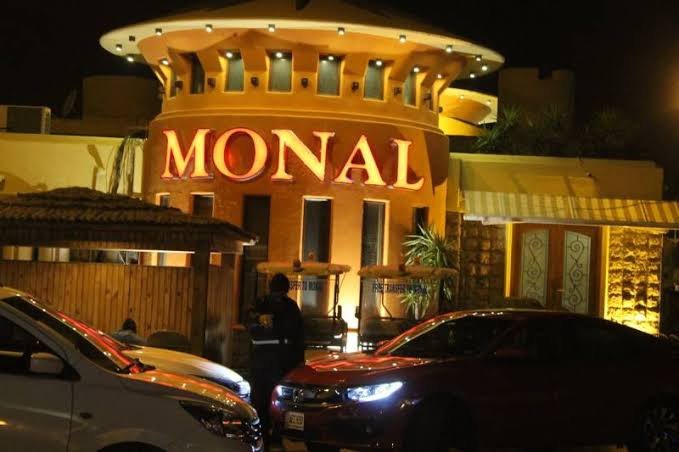
The Federal Constitutional Court has set aside the earlier judicial decision that led to the demolition of Monal Restaurant at Pir Sohawa, directing trial courts to independently determine the ownership dispute without being influenced by observations made in previous judgments.
The ruling marks a significant development in the long-running Monal Restaurant demolition case, which has remained at the center of legal proceedings involving land ownership, environmental protection, and administrative jurisdiction in Islamabad’s Margalla Hills National Park.
The Constitutional Court accepted appeals filed by the Capital Development Authority (CDA) and the Metropolitan Corporation Islamabad (MCI). It also vacated the stay order that had previously been in place, clearing the way for the pending ownership cases to proceed before the relevant trial courts.
Trial Courts Directed to Decide Ownership Dispute Independently
In its judgment, the Constitutional Court instructed the trial courts to decide the pending ownership cases independently and as expeditiously as possible. The bench emphasized that the courts must not be influenced by observations contained in earlier judicial decisions while deciding the merits of the dispute.
The court further clarified that issues relating to the administration, regulation, and management of the land should be determined by the competent regulatory authorities rather than through judicial intervention.
By separating the ownership dispute from administrative matters, the court sought to ensure that each issue is decided by the appropriate legal and regulatory forum.
Justice Hassan Azhar Rizvi Raises Concerns Over Earlier Judgment
During the hearing, Justice Hassan Azhar Rizvi observed that several important legal aspects had not been considered in the earlier Supreme Court judgment.
He questioned both the filing of the original petition and the subsequent review petition, suggesting that certain matters included in the earlier ruling extended beyond the actual issues raised before the court.
Justice Rizvi remarked that the previous judgment addressed issues that were not part of the pleadings presented by the parties.
He stressed that the Constitutional Court would not issue an emotional judgment and would confine itself strictly to the legal questions argued before the bench.
Court Urges Lawyers to Avoid Praising the Bench
During the proceedings, senior lawyer Ahsan Bhoon praised the court. However, Justice Rizvi asked legal counsel not to commend the bench during hearings.
He reiterated that judges are required to decide cases solely on the basis of arguments presented before the court and the available judicial record.
Justice Rizvi also stated that the Constitutional Court’s judgment would avoid unnecessary commentary or narratives unrelated to the issues under consideration.
According to him, after reviewing the earlier Supreme Court judgment, it appeared that several observations had gone beyond the scope of the actual court proceedings.
Background of the Monal Restaurant Case
Monal Restaurant began operations at Pir Sohawa in 2006 after obtaining a lease for land located within the scenic area overlooking Islamabad.
The legal dispute intensified in January 2022 when the Islamabad High Court examined issues relating to commercial activities and land ownership inside the Margalla Hills National Park.
The matter was later taken to the Supreme Court, which, in June 2024, ruled that commercial activities inside the national park were incompatible with environmental conservation objectives.
The Supreme Court directed Monal Restaurant, La Montana, and other commercial establishments operating within the protected area to vacate the premises within three months.
The court held that preserving the ecological integrity of the national park was of greater public importance than allowing commercial operations to continue.
Restaurant Structures Demolished in 2024
Following the Supreme Court’s decision, review petitions challenging the judgment were dismissed.
In October 2024, the Capital Development Authority informed the Supreme Court that the restaurant buildings had been demolished and that possession of the land had been restored to the authorities.
The demolition of Monal Restaurant brought an end to one of Islamabad’s best-known dining destinations, which had attracted visitors for nearly two decades because of its panoramic views of the capital.
CDA and MCI Challenge Earlier Decision
The latest proceedings arose after the CDA and the Metropolitan Corporation Islamabad challenged aspects of the earlier judgment.
The Islamabad local government argued that the previous ruling had deprived it of valuable lease and rental income.
According to court proceedings, the Metropolitan Corporation Islamabad claimed that Monal Restaurant owed more than Rs63.9 million in lease-related payments.
The Constitutional Court has now directed that these disputes be resolved independently by the competent trial courts without relying on conclusions drawn in earlier judicial observations.
Decision Reopens Legal Questions
While the Constitutional Court has set aside the earlier ruling relating to the ownership dispute, it has not restored commercial operations at the demolished restaurant.
Instead, the judgment focuses on ensuring that the ownership issues are decided fairly, independently, and in accordance with the evidence presented before the trial courts.
The ruling also reinforces the principle that administrative and regulatory matters should remain within the jurisdiction of the relevant government authorities.
The Monal Restaurant demolition case is expected to continue before the trial courts, where the ownership dispute and related financial claims will now be examined afresh under the Constitutional Court’s directions.