
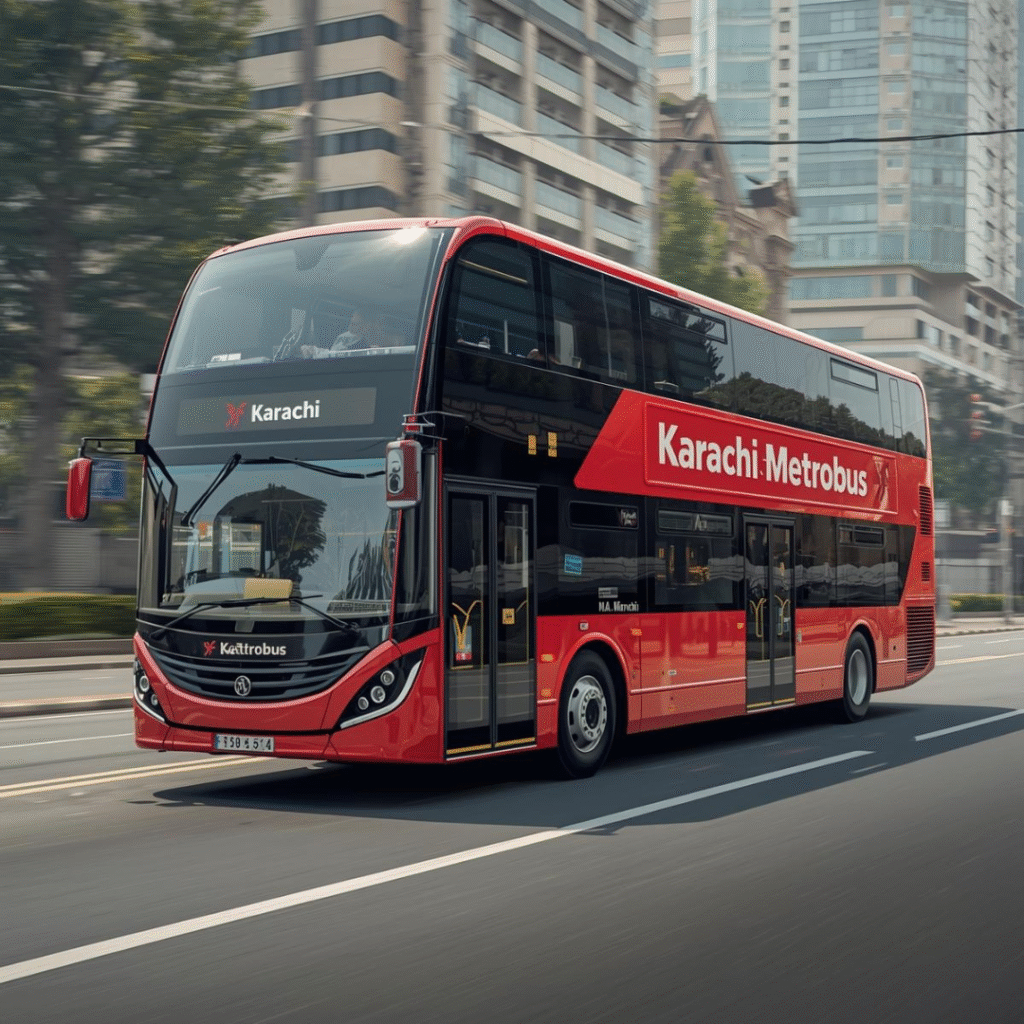
Double-decker buses in Karachi have officially made a comeback, signaling a major milestone in the city’s long-overdue public transport transformation. The Sindh government formally inaugurated the service on December 31, with operations opening to the general public from January 1, aiming to ease congestion and modernize commuting for Pakistan’s largest metropolis.
The initiative was launched by Sindh Senior Minister Sharjeel Inam Memon, who also oversees the transport portfolio, alongside Sindh Local Government Minister Syed Nasir Hussain Shah. The launch fulfills a promise made by the Sindh government in October 2024 to reintroduce double-decker buses in a city of over 23 million residents struggling with chronic mobility challenges.
Double-Decker Buses in Karachi: Routes, Timelines, and Vision
Speaking at the inauguration, Sharjeel Inam Memon highlighted that the launch aligns perfectly with the government’s deadline.
He recalled that the Sindh government had committed to introducing double-decker buses in Karachi by December 2025, noting that the promise had been delivered right on December 31.
Initially, the double-decker buses in Karachi will operate on high-demand corridors. According to official statements, the primary routes include:
• Malir to Shahrah-e-Faisal, one of Karachi’s busiest arteries
• Zainab Market (Saddar) to Model Colony, covering commercial and residential hubs
These routes have been strategically selected to maximize ridership, ease daily commuting pressure, and support economic activity.
A Historic Return After 65 Years
According to a handout issued by the Sindh transport department, double-decker buses are being introduced again in Karachi after 65 years, making the initiative both symbolic and strategic.
The return of this iconic mode of transport reflects a broader urban planning approach moving more passengers with fewer vehicles, thereby reducing traffic congestion and emissions.
Expanding Public Transport Beyond Karachi
Double-Decker Buses in Karachi and Province-Wide Plans
The Sindh government’s transport vision extends well beyond Karachi. Minister Memon confirmed that new routes for electric buses (e-buses) will also be designated across Sindh, including Karachi, starting next week.
He emphasized that public transport services are being offered at subsidized fares, with the provincial government absorbing operational costs to ensure affordability.
Currently, more than 125,000 commuters use the People’s Bus Service daily in Karachi, highlighting strong demand for reliable mass transit solutions.
Infrastructure Investment to Support Transport Growth
Addressing concerns over road conditions, the minister revealed that the Sindh cabinet has allocated over Rs9 billion specifically for roads in industrial areas. Major infrastructure projects, including the Shahrah-e-Bhutto Expressway, are already underway to complement the expanded transport network.
Improved roads are expected to enhance the efficiency, safety, and sustainability of the double-decker buses in Karachi, especially on high-traffic corridors.
Covering Tourist Spots and Every Major Road
When asked whether double-decker buses would also serve tourist destinations, the response was unequivocal.
“Yes, definitely. We aim to cover not just tourist spots but every road,” Memon said.
This approach positions the buses not only as a transport solution but also as a tool for promoting tourism and projecting a positive image of Sindh’s urban development.
‘A Gift from the Chief Minister’
In a separate statement, the Sindh Chief Minister’s Office described the launch of double-decker buses in Karachi as a “gift” to the city’s residents.
Chief Minister Murad Ali Shah stated that Karachiites deserve modern, efficient transport and that the new service reflects tangible progress rather than political promises.
“The city is now not just running, it’s progressing. Better transport facilities for Karachi are no longer a promise they are becoming a reality,” the CM was quoted as saying.
Why Double-Decker Buses Matter for Karachi’s Future
Instead of listing data in tables, the impact can be explained simply:
• More passengers per bus means fewer vehicles on roads
• Reduced congestion leads to shorter commute times
• Subsidized fares support inclusive economic growth
• Modern transport improves Karachi’s global city image
The launch of double-decker buses in Karachi represents a critical step toward sustainable urban mobility. With clear timelines, expanding routes, heavy infrastructure investment, and strong political backing, the initiative has the potential to reshape how Karachi moves—today and in the years ahead.
As Sindh targets province-wide transport expansion in 2026, Karachi’s double-decker buses may well become the symbol of a city finally catching up with modern urban standards.