
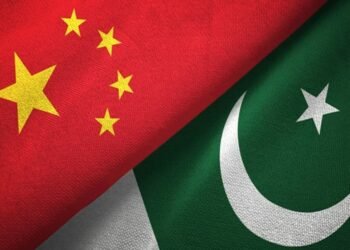
China investment in Pakistan continued to dominate the country’s foreign direct investment landscape during the first 10 months of FY26, but the latest numbers from the State Bank of Pakistan reveal a troubling slowdown that is raising fresh concerns about investor confidence in the country.
Despite remaining Pakistan’s biggest foreign investor, China sharply reduced its investment flow compared to the previous year. The decline comes at a time when Pakistan is struggling to stabilize its economy, attract global capital, and rebuild investor trust.
According to the latest SBP data, China injected a net direct investment of $61 million in April 2026 alone, making it the highest investor for the month. Hong Kong followed with $27.6 million, while the United Arab Emirates contributed $25 million.
China Investment in Pakistan Crosses $739 Million in FY26
During the first 10 months of FY26, China investment in Pakistan stood at $739.6 million. Although this kept China firmly at the top position among foreign investors, the figure represented a steep 28.95 percent decline compared to the $1.04 billion invested during the same period last year.
China alone accounted for more than half of Pakistan’s total direct investment inflows during the period. Its share stood at 52.49 percent of the country’s total FDI.
The numbers show that Pakistan still relies heavily on Chinese capital, particularly through infrastructure, energy, and strategic development projects linked to regional economic cooperation. However, the sharp decline signals that even Pakistan’s closest economic partner is becoming more cautious.
Pakistan’s Overall FDI Suffers Sharp Decline
Pakistan’s total foreign direct investment during 10MFY26 stood at $1.41 billion, reflecting a massive 30.78 percent year-on-year drop compared to $2.04 billion recorded in the same period of FY25.
The decline highlights the growing economic pressure facing Pakistan, including currency instability, high financing costs, political uncertainty, and weak investor sentiment.
Hong Kong remained the second-largest investor in Pakistan with net FDI of $281.3 million during 10MFY26. However, its investment also fell by 28.15 percent compared to last year’s $391.5 million.
In contrast, Switzerland emerged as one of the few bright spots in the investment data. Swiss investment surged 26.41 percent year-on-year to reach $169.9 million, giving the country a 12.06 percent share in Pakistan’s total FDI inflows.
Other notable investors included the United Arab Emirates with $168.9 million, followed by other countries contributing $101 million collectively, while the United Kingdom invested $98.7 million during the review period.
Foreign Portfolio Investment Triggers Alarm Bells
While direct investment remained weak, Pakistan’s foreign portfolio investment situation appeared even more alarming.
Foreign portfolio investment, which tracks investment in equity markets and financial instruments, recorded a negative flow of $433.5 million during April 2026 alone.
On a cumulative basis, Pakistan witnessed a massive portfolio divestment of $1.38 billion during 10MFY26. This was significantly worse than the $575.3 million divestment recorded in the same period last year.
The trend suggests that foreign investors are pulling money out of Pakistan’s stock market and financial sectors amid persistent economic uncertainty.
Interestingly, the United Kingdom emerged as the largest portfolio investor during the month, investing $13.9 million in April and $16.1 million during the cumulative period.
Pakistan’s Total Foreign Investment Nearly Vanishes
Pakistan’s total foreign investment picture painted an even more concerning scenario.
The country attracted total foreign investment of just $379 million during April 2026. On a cumulative basis, total foreign investment during 10MFY26 collapsed to only $31.7 million.
This marks a dramatic fall compared to $1.46 billion in total foreign investment recorded during the corresponding period last year.
The latest figures underline the immense challenge facing Pakistan’s economic managers as the country battles slowing foreign inflows, investor hesitation, and growing dependence on a handful of strategic partners.
Economists warn that unless Pakistan introduces stronger economic reforms, political stability, and investor-friendly policies, attracting sustainable foreign investment may become increasingly difficult in the coming years.