
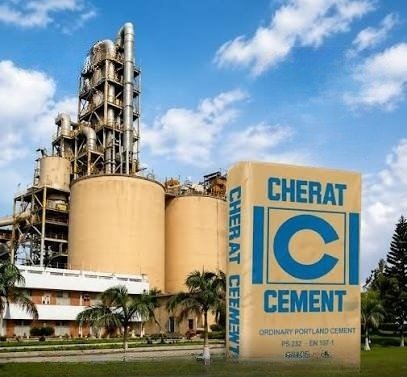
Cherat Cement Company Limited (CHCC) reported a 6% year-on-year decline in profit after tax (PAT) to PKR 1.7 billion for the fourth quarter of FY2026, as rising input costs put significant pressure on profitability.
Earnings per share (EPS) declined to PKR 8.94, compared with PKR 9.51 recorded in the same quarter last year.
The results highlight the growing pressure on Pakistan’s cement manufacturers, where improvements in pricing and dispatch volumes are struggling to keep pace with rising production costs.
Gross Margins Contract Sharply
Cherat Cement’s gross margin fell considerably to 27.4% from 32.6% a year earlier.
The decline came despite some positive developments in the company’s operating performance.
Local cement dispatches increased 1.6% year-on-year, while retention prices improved by around 10%.
Ordinarily, stronger pricing combined with modest volume growth would be expected to support margins. However, the improvement was more than offset by higher input costs.
The magnitude of the margin decline was also greater than market expectations.
Coal Prices Emerge As Major Pressure Point
Higher coal prices appear to have been one of the biggest factors behind the margin compression.
Coal costs increased approximately 23% year-on-year, significantly raising the company’s production expenses.
A less favourable fuel mix may have added further pressure to the cost structure.
While management has yet to provide complete clarity on the extent of the margin deterioration, the results indicate that the benefits from improved pricing were insufficient to absorb the increase in fuel and other production costs.
Sales And Operating Profit Decline
Cherat Cement’s net sales fell 9% year-on-year to PKR 8.9 billion during the quarter.
Operating profit performed even worse, declining 28% year-on-year.
The sharper decline in operating profit compared with sales reflects the significant impact of cost inflation on the company’s underlying profitability.
The numbers suggest that the quarter’s weakness was primarily operational rather than the result of financing costs.
Lower Finance Costs Provide Some Relief
One positive factor was the reduction in finance costs.
Cherat Cement’s finance expenses declined 26% year-on-year, helped by a major reduction in short-term borrowings.
Short-term debt fell to just PKR 194 million, compared with PKR 2.7 billion a year earlier.
This reduction provided some relief to the bottom line and helped offset part of the pressure created by weaker operating profitability.
However, the improvement in financing expenses was not enough to compensate for the deterioration in gross and operating margins.
Lower Tax Rate Supports Bottom Line
Other charges also declined significantly during the quarter.
In addition, the company recorded a lower effective tax rate of 27.5%, compared with 38.7% during the same period last year.
The lower tax burden helped limit the decline in net profit.
However, these factors represent secondary support for earnings and do not resolve the underlying issue of rising production costs.
Full-Year FY26 Profit Declines 16%
For the full financial year FY2026, Cherat Cement reported a 16% decline in profit after tax to PKR 7.3 billion.
Gross profit declined by 14%, despite relatively stable full-year sales.
The annual performance reinforces the pressure seen during the final quarter, with higher input costs weighing on profitability despite improvements in pricing and operating conditions.
Final Dividend Takes Full-Year Payout To PKR5.5
Cherat Cement has announced a final cash dividend of PKR4 per share.
This takes the company’s total FY26 dividend payout to PKR5.5 per share.
The final payout was broadly in line with market expectations.
While the dividend provides some support for shareholders, the distribution does not change the broader concern surrounding the company’s operating margins and earnings outlook.
Solar And Battery Projects Could Reduce Energy Costs
Cherat Cement is planning investments aimed at reducing its exposure to high energy costs.
The company is expected to invest in a 5.4 MW solar project along with a 25 MW battery storage system.
These projects could help reduce energy expenses and improve the company’s cost structure once they become operational.
A shift toward grid power and a potential decline in coal prices are also viewed as possible positives for future profitability.
Margin Recovery Still Depends On External Factors
The outlook for Cherat Cement remains closely tied to developments in energy and commodity markets.
A recovery in local demand and improved retention prices could provide support to revenues.
However, the company remains exposed to several external risks, including coal price volatility, regional tensions and energy-market uncertainty.
There is also execution risk associated with the planned solar and battery projects.
Until these investments begin contributing to the cost structure, Cherat Cement may remain vulnerable to elevated energy expenses.
Pricing Power Alone Is Not Enough
Cherat Cement’s 4QFY26 results demonstrate the limitations of relying on pricing improvements when production costs are rising rapidly.
Although local dispatches increased and retention prices improved, the 23% increase in coal prices contributed to a substantial deterioration in gross margins.
The decline in operating profit further highlights the pressure on the company’s core business.
Lower borrowing costs and a reduced tax burden helped protect earnings, but these benefits were not enough to prevent a decline in quarterly and full-year profitability.
Cherat Cement Faces A Critical Margin Test
Cherat Cement enters FY27 with potential positives from stronger domestic demand, pricing improvements and planned investments in renewable energy and battery storage.
However, the recovery in profitability remains dependent on factors that are not entirely within the company’s control.
A meaningful decline in coal prices, successful execution of its energy projects and sustained improvements in local cement demand will be important for restoring margins.
Until then, the 4QFY26 results serve as a clear reminder that pricing gains alone cannot protect cement-sector profitability when input costs rise sharply.