Pakistan

https://theboardroompk.com/multiple-us-fighter-jets-crash-in-kuwait-amid-iran-strikes/
Pakistan

PSX Crashes 16,089 Points (9.57%) as US-Iran Tensions Spark Panic Selling and Trading Halt

Karachi – The Pakistan Stock Exchange (PSX) experienced its most severe single-day decline on record on Friday, February 27, 2026, as the benchmark KSE-100 Index tumbled 16,089 points, or 9.57%, to close at 151,973. Read More: https://theboardroompk.com/multiple-us-fighter-jets-crash-in-kuwait-amid-iran-strikes/ The plunge was sparked by mounting geopolitical risks in the Middle East, particularly escalating tensions between the United States and Iran that fueled investor panic and widespread selling. Market participants cited fears of potential military confrontation, which had already begun to ripple through global markets and oil prices in the preceding days. “The sharp downturn was triggered by escalating geopolitical tensions following the outbreak of war between the United States and Iran, which severely dented investor confidence and sparked widespread panic selling,” said Ali Najib, Deputy Head of Trading at Arif Habib Ltd. Trading was halted within the first five minutes after the index crashed to an intraday low of 152,991 (down 15,071 points or 8.97%), breaching circuit breakers. Activity resumed around 10:22 am, leading to a sharp technical rebound of over 6,000 points to an intraday high of 159,329. However, renewed heavy selling in the closing hours wiped out the gains, resulting in the steep closing loss. Heavyweight stocks bore the brunt, with major drags including FFC, UBL, ENGROH, HUBC, MEBL, OGDC, HBL, LUCK, MCB, and PPL collectively erasing 8,148 points from the index. Despite the turmoil, trading volume surged, exceeding 800 million shares, with turnover hitting PKR 48.3 billion. KEL topped the volume leaders with 163.3 million shares traded. Analysts noted that while the session reflected extreme volatility driven by external shocks, robust participation suggested some bargain hunting during the rebound phase. Market direction ahead remains heavily tied to developments in the US-Iran standoff, with any further escalation likely to sustain pressure, while signs of de-escalation could support a recovery.

Agreement Signing and Launch of OJ DRIVE NEXGEN ENGINE OIL
Pakistan

Agreement Signing and Launch of OJ DRIVE NEXGEN ENGINE OIL

Lahore, 26 February 2026: In a significant step towards strengthening Pakistan’s evolving automobile sector, Omoda & Jaecoo Nishat, (NexGen Auto Pvt. Ltd.) under the Nishat Group, has entered into a strategic collaboration with PARCO Gunvor Limited to introduce OJ DRIVE NEXGEN ENGINE OIL, an engine oil specifically engineered for Omoda & Jaecoo vehicles. Read More: https://theboardroompk.com/us-israel-strikes-assassinate-irans-supreme-leader-khamenei/ The agreement signing and product launch ceremony was held at Ballroom A, The Nishat Hotel, bringing together senior leadership from both organizations, industry stakeholders, and esteemed dealers. The launch of OJ DRIVE NEXGEN ENGINE OIL reaffirms Nishat Group’s commitment to delivering advanced mobility solutions to its customers. Since entering the market in August 2025, Omoda & Jaecoo Nishat has introduced a progressive lineup that includes two of Pakistan’s most sought-after SUV options, the Jaecoo J7 SHS PHEV and the Jaecoo J5 SHS HEV. With the rapid adoption of hybrid mobility solutions, the demand for a purpose-built engine oil tailored to these advanced drivetrains has become increasingly critical. OJ DRIVE NEXGEN ENGINE OIL has been developed to meet this requirement, ensuring optimal performance, protection, and efficiency for the brand’s Super Hybrid System engines, while addressing Pakistan’s diverse driving conditions with the technical support of PARCO Gunvor Limited. OJ DRIVE NEXGEN ENGINE OIL is introduced in a 0W-30 SP/GF-6 fully synthetic formulation, available in 4.7-litre packaging, and is designed to complement the technical architecture of Omoda & Jaecoo vehicles.

Petroleum Prices Expected to Increase in Pakistan: Sparks Inflation Concerns
Pakistan

Petroleum Prices Expected to Increase in Pakistan: Sparks Inflation Concerns

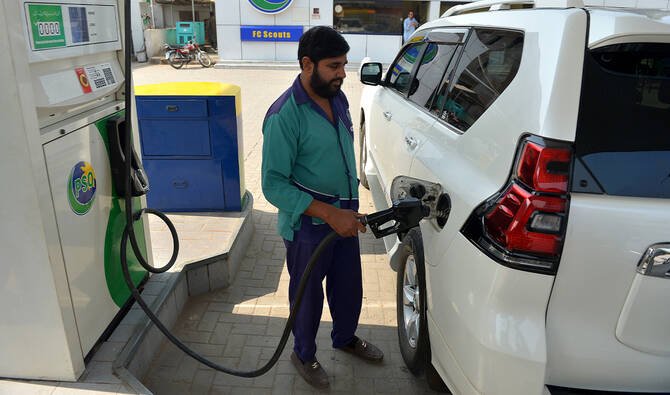
Petrol Price Increase Pakistan is once again at the center of economic discussion, as fresh estimates suggest a rise of Rs4.50 to Rs7 per litre in petroleum prices for the upcoming fortnight ending March 15. The anticipated hike reflects shifting global oil trends and mounting regional pressures factors that are quietly reshaping Pakistan’s inflation outlook. Read More: https://theboardroompk.com/illegal-immigration-pakistan-europe-agreement-new-legal-job-pathways-open-for-pakistanis/ Why Petrol Price Increase Pakistan Is Happening Now The expected Petrol Price Increase Pakistan is largely driven by a modest uptick in international crude oil prices. Market insiders point to regional geopolitical tensions as a key reason behind the recent upward movement in benchmark crude rates. As global prices climb, Pakistan being a net importer of petroleum products faces immediate cost pressures. These are then passed on to consumers through revised ex-depot prices. Current projections indicate: • Petrol prices may rise by approximately Rs4.50 per litre• High-Speed Diesel (HSD) could increase by around Rs4.70 per litre• Kerosene oil may go up by Rs5 per litre• Light Diesel Oil (LDO) is expected to see the highest jump of about Rs7 per litre This pricing adjustment is expected to take effect from February 28, setting the tone for fuel costs in early March. Breaking Down the Current Fuel Pricing Structure To understand the Petrol Price Increase Pakistan, it’s important to look beyond global oil rates and examine the local pricing structure. Currently: • Petrol is officially priced at Rs258.17 per litre but sold above Rs259 in retail markets• HSD stands at Rs275.70 officially, while market prices exceed Rs277 per litre• Kerosene is priced at Rs180.53 but is rarely available below Rs300 in open markets• LDO is set at Rs161.72 per litre A significant portion of fuel prices comes from taxes and margins. The government collects nearly Rs105 per litre on petrol and Rs98 per litre on diesel through petroleum levy, customs duty, and climate-related charges. Additionally, around Rs17 per litre goes to oil marketing companies and dealers as distribution and sales margins. How Petrol Price Increase Pakistan Impacts Inflation The Petrol Price Increase Pakistan has far-reaching consequences beyond fuel stations. Petrol is primarily used by private vehicle owners, motorcyclists, and rickshaw drivers making it a direct burden on middle- and lower-income households. However, diesel prices play an even more critical role in inflation. High-Speed Diesel fuels: • Trucks and buses• Agricultural machinery like tractors and tube wells• Rail transport Any increase in diesel prices translates into higher transportation costs, which eventually raise the prices of vegetables, fruits, and essential commodities. This ripple effect is one of the key drivers of food inflation in Pakistan. The Government’s Growing Dependence on Petroleum Revenue Another crucial dimension of the Petrol Price Increase Pakistan is its role in government revenue. Petroleum products remain one of the largest sources of indirect taxation. In FY2025, the government collected approximately Rs1.161 trillion through petroleum levy alone. This figure is projected to rise by nearly 27%, reaching Rs1.470 trillion in the current fiscal year. With monthly sales of petrol and diesel averaging between 700,000 to 800,000 tonnes, compared to just 10,000 tonnes for kerosene, these fuels continue to dominate revenue generation. What to Expect Next As the official announcement approaches, all eyes are on final calculations that will determine the exact price adjustment. While the increase may appear moderate, its cumulative impact on transportation, food prices, and household budgets could be significant. The Petrol Price Increase Pakistan is more than just a routine adjustment it’s a signal of broader economic pressures that could shape inflation trends in the coming months.

https://theboardroompk.com/pakistani-agri-expert-dr-muhammad-ali-raza-bags-2025-dunhuang-award-in-china/
Pakistan

Pakistan Afghanistan Conflict 2026: A Dangerous Escalation Unfolds

Pakistan Afghanistan Conflict 2026 has taken a dramatic and alarming turn, with Islamabad declaring it is now in “open war” with Afghanistan’s Taliban government. Reports of explosions in Kabul and cross-border strikes in Kandahar and Paktika signal a rapidly intensifying conflict that could reshape regional stability in South Asia. Read More: https://theboardroompk.com/pakistani-agri-expert-dr-muhammad-ali-raza-bags-2025-dunhuang-award-in-china/ The escalation comes amid ongoing clashes along the disputed Durand Line, pushing tensions between the two neighboring countries to their most volatile point in years. Pakistan Afghanistan Conflict 2026: What Triggered the Escalation? The current phase of the Pakistan Afghanistan Conflict 2026 was ignited after Taliban spokesperson Zabihullah Mujahid announced “large-scale offensive operations” against Pakistani forces along the border. These operations were reportedly a response to earlier Pakistani air strikes targeting alleged militant hideouts inside Afghanistan. Islamabad, in turn, expanded its military operations, striking deeper into Afghan territory. Pakistan’s Defence Minister Khawaja Asif framed the situation as a necessary response to growing threats, stating that diplomatic efforts had been exhausted and “decisive action” was now underway. Global Reactions to Pakistan Afghanistan Conflict 2026 The international community has reacted with urgency as the Pakistan Afghanistan Conflict 2026 risks spiraling into a broader regional crisis. United Nations Calls for Restraint United Nations Secretary-General Antonio Guterres expressed deep concern over the surge in violence. Through spokesperson Stephane Dujarric, he urged both sides to adhere to international humanitarian law and prioritize civilian safety. Iran Urges Dialogue During Ramadan Iran’s Foreign Minister Abbas Araghchi emphasized diplomacy, calling for restraint in the spirit of Ramadan. Tehran has offered to facilitate dialogue between Kabul and Islamabad. Russia Offers Mediatio Russia has called for an immediate halt to cross-border attacks and expressed readiness to mediate if both parties agree. India Condemns Pakistan’s Actions India’s Foreign Ministry spokesperson Randhir Jaiswal strongly criticized Pakistan’s air strikes, describing them as an attempt to divert attention from internal challenges. Turkiye Engages in Shuttle Diplomacy Hakan Fidan has held discussions with regional stakeholders, including Qatar and Saudi Arabia, to assess pathways for de-escalation. Qatar Pushes for Stability Qatar’s Minister of State Mohammed bin Abdulaziz Al-Khulaifi engaged with Pakistan’s Ishaq Dar to explore diplomatic solutions aimed at restoring regional stability. China Signals Concern China has expressed deep concern over the escalation. Foreign Ministry spokesperson Mao Ning confirmed Beijing’s willingness to play a constructive role in easing tensions. United Kingdom Calls for Dialogue The UK’s Home Secretary Yvette Cooper urged both nations to avoid further civilian harm and return to mediated negotiations. Pakistan Afghanistan Conflict 2026: Afghanistan’s Response Former Afghan President Hamid Karzai struck a defiant tone, asserting that Afghanistan would defend its sovereignty and respond firmly to aggression. Karzai also criticized Pakistan’s long-standing policies, urging Islamabad to adopt a path of “good neighbourliness” rather than confrontation. Why Pakistan Afghanistan Conflict 2026 Matters for the Region The Pakistan Afghanistan Conflict 2026 is not just a bilateral issue it carries significant implications for regional security, trade, and geopolitics. South Asia is already grappling with economic uncertainty and political volatility. A prolonged conflict could disrupt trade corridors, intensify refugee flows, and increase the risk of proxy involvement by global powers. The timing during Ramadan adds a deeper emotional and political dimension, making calls for restraint even more urgent. Can Diplomacy Still Prevail? Despite the sharp escalation, multiple countries including China, Iran, and Russia have stepped forward with offers to mediate. The involvement of regional and global stakeholders suggests that diplomatic channels remain open, albeit under immense pressure. The key question now is whether Islamabad and Kabul will step back from the brink or continue down a path that could lead to a prolonged and destabilizing conflict. Conclusion: A Defining Moment in Pakistan Afghanistan Conflict 2026 The declaration of “open war” marks a critical turning point in the Pakistan Afghanistan Conflict 2026. With global powers urging restraint and both sides signaling resolve, the coming days will be decisive. Will diplomacy prevail or is the region on the edge of a deeper crisis?

Muhammad Amin Rajput Appointment as SSGC MD/CEO for 3 Years
Pakistan

Muhammad Amin Rajput Appointment as SSGC MD/CEO for 3 Years

The Sui Southern Gas MD Appointment has sparked fresh interest across Pakistan’s energy and corporate sectors, as Muhammad Amin Rajput officially steps into the role of Managing Director and Chief Executive Officer of Sui Southern Gas Company (SSGC). The appointment, approved by the company’s Board of Directors, comes into effect immediately under a three-year contractual tenure. Read More: https://theboardroompk.com/pakistani-agri-expert-dr-muhammad-ali-raza-bags-2025-dunhuang-award-in-china/ This move is more than just a routine leadership transition it signals continuity, stability, and a renewed focus on operational efficiency in a sector critical to Pakistan’s economic future. Sui Southern Gas MD Appointment Signals Continuity Prior to this appointment, Amin Rajput had already been serving as Acting Managing Director at SSGC. His elevation to the top position reflects the board’s confidence in his leadership capabilities and deep institutional knowledge. Having previously held key roles such as Chief Financial Officer and Chief Internal Auditor within the organization, Rajput brings a rare combination of financial discipline and operational insight. This continuity is particularly important for SSGC as it navigates challenges like gas supply constraints, circular debt, and infrastructure modernization. A Career Built on Financial Leadership and Industry Expertise The Sui Southern Gas MD Appointment highlights Rajput’s extensive career spanning more than three decades. His experience cuts across multiple sectors including oil & gas, energy, manufacturing, and the automobile industry. Before joining SSGC, he served as Chief Internal Auditor at K-Electric, one of Pakistan’s leading power utilities. His international exposure includes working in Saudi Arabia with Zahid Tractor, associated with global giants like Volvo and Caterpillar, where he held various finance and audit roles. Rajput is also a Fellow Chartered Accountant (FCA) and a Certified Internal Auditor, having completed his professional training with KPMG Pakistan a credential that underscores his strong financial governance background. Why This Appointment Matters for Pakistan’s Energy Sector The Sui Southern Gas MD Appointment comes at a crucial time when Pakistan’s energy sector is under pressure to reform and innovate. With increasing demand, supply challenges, and regulatory complexities, leadership at major utilities like SSGC plays a pivotal role in shaping outcomes. Rajput’s deep expertise in audit, finance, and governance could help strengthen transparency and improve operational efficiencies within the company. His familiarity with internal systems also reduces the learning curve, enabling faster decision-making and execution. What Lies Ahead for SSGC Under New Leadership As CEO, Amin Rajput is expected to focus on several key priorities:• Enhancing gas distribution efficiency• Strengthening financial controls and reducing losses• Supporting infrastructure upgrades• Navigating regulatory and policy challenges The Sui Southern Gas MD Appointment positions the company to build on existing strategies while adapting to evolving market demands. Stakeholders will be closely watching how Rajput leverages his experience to drive performance and deliver long-term value. Final Thoughts The appointment of Muhammad Amin Rajput marks a significant moment for Sui Southern Gas Company. With his extensive background and internal experience, the transition promises stability and a potential boost in governance standards. As Pakistan’s energy landscape continues to evolve, leadership decisions like the Sui Southern Gas MD Appointment will play a defining role in shaping the future of the sector.

Pakistani Agri Expert Dr. Muhammad Ali Raza Bags 2025 Dunhuang Award in China
Pakistan

Pakistani Agri Expert Dr. Muhammad Ali Raza Bags 2025 Dunhuang Award in China

In a major boost to Pakistan-China scientific collaboration, Dr. Muhammad Ali Raza has clinched the 2025 Dunhuang Award from Gansu Province. Read More: https://theboardroompk.com/pakistan-approves-battery-backed-system-for-100-reliable-power-in-gwadar-by-early-2027/ The honor salutes his dedicated work as a foreign expert at the Gansu Academy of Agricultural Sciences, driving advancements in sustainable farming and regional development. Breakthroughs in Resource-Smart Agriculture Dr. Raza specializes in innovative techniques that conserve water and nutrients in intercropping systems, watermelon production, and intensive wheat-maize cultivation suited to dry areas. His applied research has practical impacts on food security and efficiency in both Gansu’s arid zones and Pakistan’s comparable terrains. By integrating Chinese expertise in biotechnology and mechanized systems, he advocates for productivity gains that could revolutionize Pakistan’s farming landscape. His journey from a student in China to a leading researcher illustrates the power of bilateral educational programs. Historic Recognition and Broader Impact Presented every three years since 1996, the Dunhuang Award carries significant prestige across China for honoring foreign contributions. This is the first time GAAS has received it, spotlighting the value of international talent. Dr. Raza’s success aligns with thousands of Pakistani scholars benefiting from Chinese scholarships. He views such opportunities as foundations for shared innovation and stronger ties. The award reinforces mutual benefits in agriculture, promising enhanced cooperation and sustainable growth for both countries.

Pakistan Approves Battery-Backed System for 100% Reliable Power in Gwadar by Early 2027
Pakistan

Pakistan Approves Battery-Backed System for 100% Reliable Power in Gwadar by Early 2027

Pakistan’s federal government has greenlit a comprehensive battery-backed power arrangement to deliver fully reliable electricity to Gwadar by February or March 2027. Read More: https://theboardroompk.com/pakistan-senate-resolution-on-afghanistan-tensions-a-defining-moment/ The announcement came during a Senate session where Power Minister Sardar Awais Ahmed Khan Leghari detailed the plan to ensure no interruptions for vital facilities, including the deep-sea port, water desalination units, and emerging industrial areas. Overcoming Supply Challenges Gwadar’s existing power comes from Iranian imports (intermittent and fluctuating) and distant national grid connections (prone to voltage issues). Simultaneous operation is technically impossible, and past grid upgrade plans were not feasible economically. Abandoning the earlier 300MW imported coal plant under CPEC, authorities opted for a smarter approach: Battery Energy Storage Systems (BESS) paired with economical backup generation. This setup will handle the present 40-50 MW demand while allowing expansion as the region develops. Strategic Impact and Future Outlook The project guarantees stable power independent of external sources, eliminating fluctuations and promoting investor confidence in Gwadar. It supports sustainable progress in the Makran region and ties into national goals for efficient energy solutions. Minister Leghari emphasized its role as a milestone for reliable supply to critical infrastructure. Combined with ongoing solar initiatives in Balochistan, it signals a forward-looking strategy to power economic hubs like Gwadar effectively.

Pakistan Launches Strikes on Afghanistan: Claims 133 Afghan Taliban Fighters Killed, in Operation Ghazab lil-Haq
Pakistan

Pakistan Launches Strikes on Afghanistan: Claims 133 Afghan Taliban Fighters Killed, in Operation Ghazab lil-Haq

Pakistan carried out intense air and ground strikes inside Afghanistan overnight into February 27, 2026. Read More: https://theboardroompk.com/nha-boosts-pakistans-road-network-to-14480-km-in-118-districts/ Explosions rocked Kabul, with smoke rising over targeted sites. Escalation Along the Durand Line Strikes hit Taliban military offices and posts in Kabul, Kandahar, and Paktia provinces. Ground clashes erupted in multiple border sectors, including near Torkham. Pakistan accused Afghanistan of sheltering TTP militants launching cross-border attacks. Afghanistan denied the claims, calling Pakistan’s issues internal. Heavy Losses and Conflicting Claims Pakistan reported killing 133 Taliban fighters and destroying 27 posts. Afghanistan claimed 55 Pakistani soldiers killed and 19 posts captured. Both sides issued unverified tolls, with earlier strikes killing civilians. Defence Minister Khawaja Asif said, “Our cup of patience has overflowed. Now it is open war.” Taliban spokesperson Zabihullah Mujahid confirmed strikes but vowed strong retaliation. Clashes followed Afghan attacks on Pakistani installations Thursday night.Tensions stem from long accusations of militant safe havens. A fragile ceasefire from late 2025 appears broken. International calls for de-escalation emerged, with Russia offering mediation.Saudi Arabia discussed reducing tensions with Pakistan. Punjab province in Pakistan went on high alert. Security operations intensified, including deportations of Afghans.The 2,600-km border remains volatile. Analysts warn of protracted guerrilla conflict.Pakistan holds superior conventional forces. Taliban excels in asymmetric warfare from past experiences.Civilian risks rise with urban strikes. Kabul residents reported jets, blasts, and ambulances.Videos showed burning buildings in Paktian. The strikes mark a dangerous shift from border skirmishes to city targets. Both nations risk wider instability.Diplomatic efforts may be needed soon.

PSX Hits Over 500,000 Investors for the First Time Ever
Pakistan

PSX Hits Over 500,000 Investors for the First Time Ever

Karachi: The Pakistan Stock Exchange (PSX) has reached a significant landmark in its history, with the total number of registered investors surpassing the half-million mark at 502,024 as of February 26, 2026. This marks the first time the exchange has crossed the 500,000 threshold, signaling deepening retail participation and growing confidence in Pakistan’s capital markets. Read More: https://theboardroompk.com/nha-boosts-pakistans-road-network-to-14480-km-in-118-districts/ According to a detailed update shared by Khurram Schehzad, Advisor to the Finance Minister, the surge reflects a dramatic acceleration in investor onboarding. Since June 2022, more than 227,000 new investors have joined the PSX — representing an impressive 83% expansion in just over 3.5 years. Notably, the number of investors added in this recent period (227,000) exceeds the total accumulated from the exchange’s inception until mid-2022 (approximately 275,000).The momentum has been particularly strong in recent months:January 2026 recorded the highest single-month addition ever, with 20,600 new investors.February 2026 additions have already exceeded 18,000 — and the month is not yet over. Schehzad highlighted that the majority of new entrants are young retail investors, attributing the trend to restored macro-economic stability, ongoing reforms, improved policy clarity, and credible growth prospects. “Capital markets deepen when trust builds,” he noted, adding that this shift is channeling household savings into productive assets — a vital foundation for sustainable economic expansion.The milestone comes amid a broader bull run in Pakistan’s equities. The KSE-100 Index has posted strong gains in 2026, building on record highs earlier in the year and reflecting optimism around institutional buying, potential foreign inflows, and a pipeline of over 16 new initial public offerings (IPOs) expected in 2026. When including other public market products such as commodities, mutual funds, and fixed-income instruments, the total investor count across Pakistan’s public markets now approaches 1.3 million — further underscoring the widening base of participation. Analysts view this development as a structural positive for the economy. Rapid growth in retail investor numbers — especially among younger demographics — indicates increasing financial inclusion and belief in the reform agenda led by the government and institutions. The PSX’s performance has positioned Pakistan among the stronger-performing emerging markets in recent periods, with the investor surge reinforcing the narrative of a maturing and more inclusive capital market ecosystem. As Pakistan continues to stabilize and reform, milestones like this half-million investor breakthrough serve as a barometer of public confidence and the potential for long-term capital formation.

NHA Boosts Pakistan's Road Network to 14,480 Km in 118 Districts
Pakistan

NHA Boosts Pakistan’s Road Network to 14,480 Km in 118 Districts

The National Highway Authority (NHA) has significantly expanded its road network to 14,480 kilometers, covering 118 districts across Pakistan. This milestone underscores the government’s dedication to improving connectivity, boosting economic activity, and promoting regional integration. Read More: https://theboardroompk.com/ccp-approves-acquisition-of-attock-cement-by-fauji-cement-and-kot-addu-power-company/ Province-Wise Coverage and Lengths The network includes 48 national highways, motorways, and strategic roads. Punjab leads with 4,080 km across 30 out of 36 districts, followed by Balochistan with 4,443 km in 27 districts. Sindh has 2,566 km spanning 26 districts, while Khyber Pakhtunkhwa covers 2,392 km in 25 districts. Additional stretches include 854 km in Gilgit-Baltistan, limited coverage in Azad Jammu and Kashmir (three districts), and 54 km in Islamabad Capital Territory. Ongoing Development and Quality Assurance The NHA is managing 71 projects under the Public Sector Development Programme (PSDP), valued at Rs3.4 trillion, with Rs681.37 billion already spent. Funding comes from government resources, foreign loans, and Public-Private Partnerships (PPP). To maintain high standards, independent supervisory consultants oversee construction, alongside dedicated Monitoring and Inspection teams. Projects follow FIDIC guidelines, with “The Engineer” ensuring impartial administration, quality control, timely execution, and dispute resolution. Timely funding alignment with schedules is emphasized to prevent delays. This expansion enhances logistics, reduces travel times, supports trade, and connects remote areas to markets, contributing to overall national progress.

Scroll to Top