
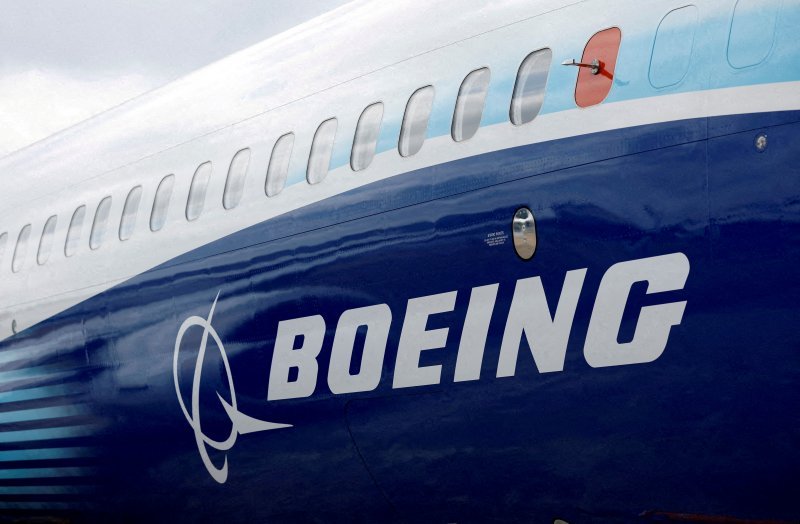
Boeing, a leading U.S. plane maker, has petitioned the the U.S. Federal Aviation Administration (FAA) for an exemption to continue producing and selling up to 35 additional 777F cargo freighters beyond the 2028 deadline.
In February 2024, the U.S. Federal Aviation Administration (FAA) adopted these rules, aligning with global efforts under the International Civil Aviation Organization (ICAO) to curb pollution from commercial jets. These regulations target new aircraft types, exempting those already in service, and aim to push manufacturers toward more efficient designs as part of broader goals to achieve net-zero aviation emissions by 2050.
Read More: https://theboardroompk.com/us-approves-686-million-f-16-upgrade-package-for-pakistan-air-force/
The 777F, a dedicated freight version of the popular 777 widebody jet, is currently the world’s most fuel-efficient large freighter and the only one of its kind in active production. However, it falls short of the upcoming emissions standards.
The request, filed on December 19, 2025, cites robust global demand for air cargo capacity—driven by e-commerce and international trade—and delays in certifying Boeing’s next-generation 777-8 Freighter, which is designed to comply with the new rules. The 777-8F is not expected until around 2029, following the delayed 777-9 passenger variant targeted for 2027.
Boeing emphasizes economic impacts: large widebody freighters handled over $260 billion in U.S. air exports in 2024, with each exported 777F contributing about $440 million to trade balance. Without the waiver, potential losses could exceed $15 billion. This follows a similar congressional exemption last year for Boeing’s 767 freighter. The company seeks FAA approval by May 1, 2026, to avoid disrupting supply chains.
The aviation industry faces growing pressure to reduce carbon emissions, with new international standards set to limit greenhouse gases from large aircraft starting in 2028.