
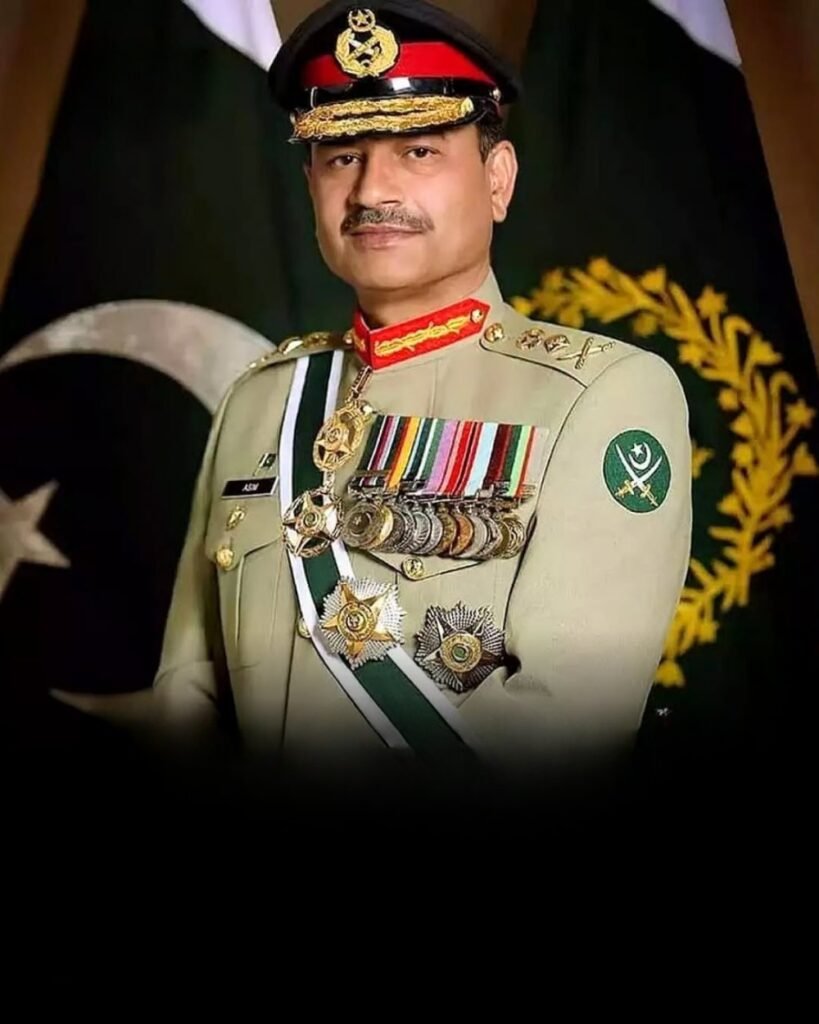
Chief of Defence Forces (CDF) and Chief of Army Staff Field Marshal Asim Munir has said foreign-sponsored proxies in Balochistan are being used by hostile elements to undermine peace, obstruct development and create divisions between the state and the people.
According to Inter-Services Public Relations (ISPR), the army chief made the remarks while interacting with Balochistan’s political leadership. He stressed that the future of Balochistan and Pakistan was closely linked, describing the province as an important part of the country’s development and prosperity.
“The present and the future of Balochistan and Pakistan are one and forever,” Munir said, according to the military’s media wing.
The CDF highlighted the resilience, talent and patriotic spirit of Balochistan’s people. He said lasting peace and stability were essential for unlocking the province’s economic potential, attracting investment and converting its human and natural resources into greater prosperity.
Munir also emphasised the importance of young people in the province. He said Balochistan’s youth represented one of the most promising sections of society and stressed that providing them with education, opportunities and avenues for participation in national development was critical to sustainable progress.
Army Chief Links Security Threats To Foreign Proxies
During the meeting, Munir identified what the state describes as Fitna al Khawarij and Fitna al Hindustan as foreign-sponsored proxies being used by hostile elements against Balochistan.
The military uses the term Fitna al Khawarij for militants associated with the banned Tehreek-i-Taliban Pakistan (TTP), while Fitna al Hindustan is a term used by the state for terrorist organisations operating in Balochistan.
According to ISPR, Munir said these groups were attempting to destabilise the province, prevent development and widen the gap between the state and its citizens.
He said such efforts would be countered through a collective national response and decisive action by the state.
The CDF also called for a stronger response to what he described as hostile propaganda and misleading narratives. He stressed the need to expose false claims and highlight the development, potential and aspirations of Balochistan’s people.
“Destiny of Balochistan rests only in the hands of the people of Balochistan,” ISPR quoted him as saying.
Focus On Youth, Development And Social Cohesion
Munir praised Balochistan’s political leaders, notables and other influential figures for their role in promoting peace and social cohesion.
He urged them to support a constructive national discourse and help counter narratives that could deepen divisions within society.
The military leadership has repeatedly linked peace and economic development in Balochistan, where the government has sought to attract investment by highlighting the province’s mineral, energy and strategic potential.
Munir said a clear national narrative, combined with lasting peace and stability, was necessary to create conditions for investment and development.
The participants of the meeting reaffirmed their commitment to peace, development and prosperity in Balochistan and Pakistan.
According to ISPR, they pledged to stand alongside the state and armed forces against threats to peace and stability. They also expressed their commitment to people-centred development and a more peaceful and prosperous province.
Balochistan Faces Rising Security Challenges
The remarks come as Balochistan continues to face a serious security challenge, with violence increasing sharply in recent months.
According to a monthly security assessment released by the Pakistan Institute for Conflict and Security Studies (PICSS), Balochistan recorded a significant deterioration in its security situation in July.
The report said the province’s overall death toll increased by 241 per cent, rising from 109 deaths in June to 372 in July.
The number of security personnel killed also rose sharply. According to the assessment, deaths among security personnel increased from six in June to 62 in July, representing a rise of 933 per cent.
Terrorist deaths increased from 75 in June to 238 in July, while civilian deaths rose from 28 to 54, an increase of 93pc. The report also recorded the deaths of 18 members of peace committees.
The figures underline the scale of the security challenge facing the province as authorities seek to maintain stability while advancing economic and development initiatives.
Against this backdrop, Munir’s message focused on combining security measures with development, youth empowerment and social cohesion.