
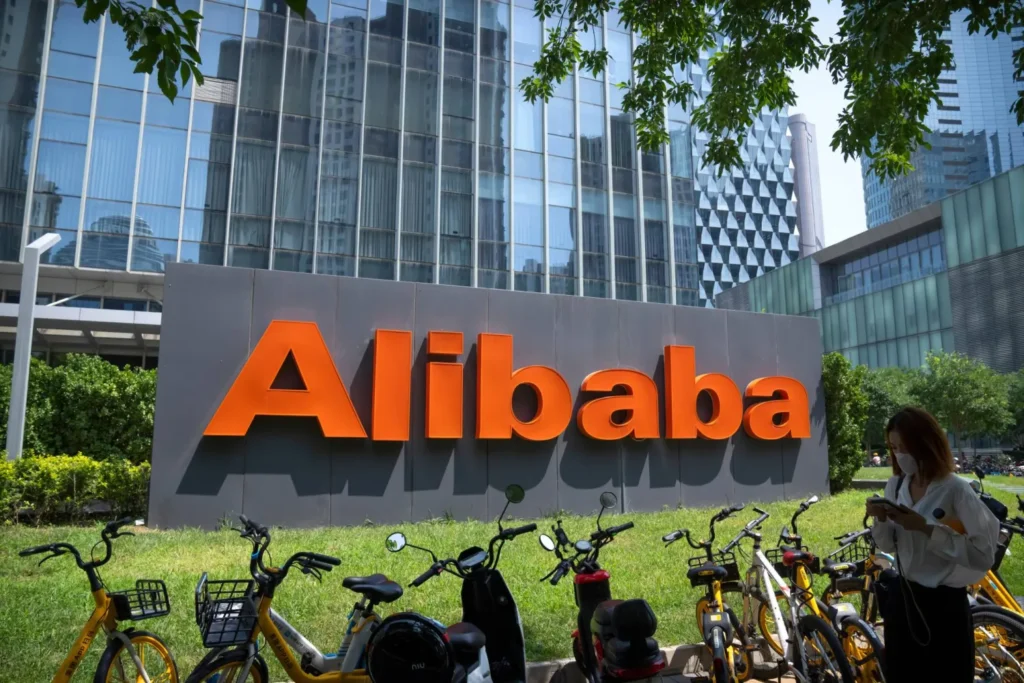
Chinese technology giant Alibaba Group has filed a federal lawsuit against the US Department of Defense, challenging its inclusion on a Pentagon list of companies allegedly linked to the Chinese military.
The lawsuit, filed on Tuesday in a federal court in San Jose, California, argues that the designation is unfounded and has already begun affecting the company’s business operations and representation in the United States.
Alibaba Challenges Pentagon Blacklist
The legal challenge comes after the Pentagon added Alibaba to a list of 80 companies and subsidiaries that US authorities claim have connections to China’s military establishment.
In the court filing, Alibaba argued that the Defense Department’s decision lacks both factual and legal justification.
According to the complaint, the company is neither a military organization nor part of China’s military-civil fusion strategy, a policy that seeks to integrate civilian technological development with military objectives.
An Alibaba spokesperson told AFP that the company considers the designation “arbitrary and capricious” and is seeking its removal through legal action.
Pentagon Restrictions Set to Take Effect
The Pentagon’s updated blacklist, released earlier this month, carries significant consequences for companies included on it.
Beginning June 30, the US Department of Defense will be prohibited from entering into new contracts with designated firms and their controlled subsidiaries.
While the designation does not amount to economic sanctions, it can affect a company’s reputation, business relationships, and future opportunities in the United States.
The list also included Chinese technology company Baidu and electric vehicle manufacturer BYD.
Company Raises First Amendment Concerns
Alibaba’s lawsuit also argues that the designation restricts its ability to retain lobbying and advocacy firms in the United States.
According to the complaint, some firms that had represented Alibaba for years informed the company that they could no longer continue their services because of the Pentagon’s designation.
The company contends that these restrictions interfere with its ability to communicate with policymakers and government officials, raising concerns related to First Amendment protections.
Lawyers for Alibaba claim the practical impact of the designation extends beyond government contracting and affects the company’s broader engagement within the US market.
Alibaba Highlights American Investor Base
In its court filing, Alibaba emphasized that it is a publicly traded company with a diverse shareholder structure.
The company noted that major American financial institutions, including JPMorgan Chase, Citigroup, and BlackRock, hold significant investments in the company.
Alibaba argued that its global ownership structure and commercial operations demonstrate that it functions as an international technology and cloud-services provider rather than a military-affiliated enterprise.
China Responds With Export Controls
The dispute comes amid renewed tensions between Washington and Beijing over trade, technology, and national security issues.
Earlier this week, China announced export controls on 10 US companies involved in the defense sector and rare earths mining industry. Chinese authorities described the measures as a response to recent US actions targeting Chinese firms.
The latest retaliatory move highlights the continuing economic and strategic rivalry between the world’s two largest economies.
Impact on US-China Relations
The legal battle emerges at a sensitive moment in bilateral relations.
Last month, US President Donald Trump met Chinese President Xi Jinping in Beijing as both sides sought to stabilize relations and reduce tensions in key areas, including trade and technology.
However, disputes over sanctions, export controls, military-linked company designations, and access to advanced technologies continue to strain ties between the two countries.
Analysts say the outcome of Alibaba’s lawsuit could have broader implications for other Chinese companies facing similar scrutiny in the United States and may influence future legal challenges to government blacklists.