
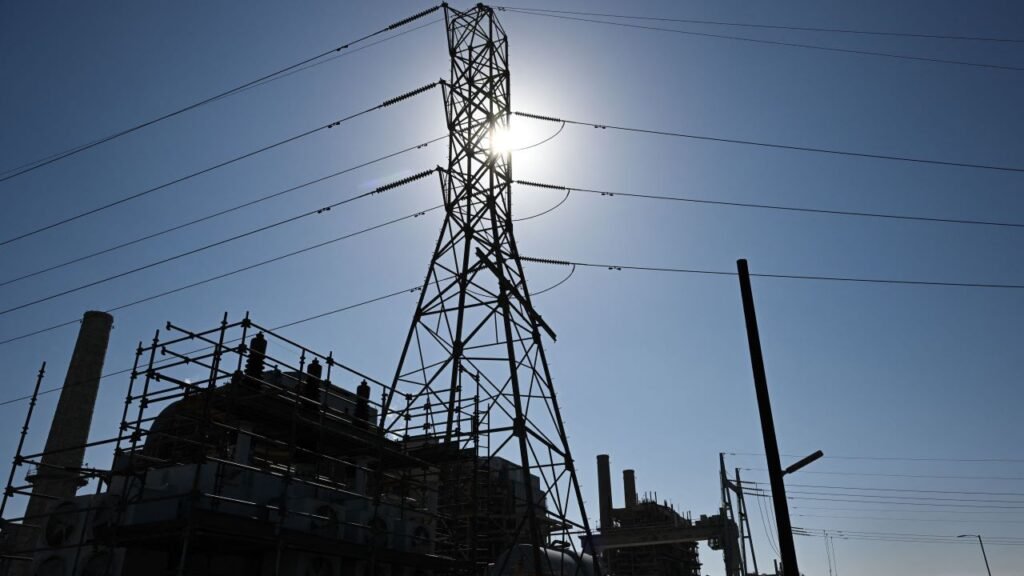
The rapid growth of artificial intelligence is reshaping the U.S. energy landscape, with data center operators and power companies racing to secure electricity capacity and critical grid equipment to support the next wave of AI development.
AI Data Centers Increase Pressure on Power Infrastructure
The rising demand from AI-driven data centers has created significant pressure on the power sector, where utilities are facing shortages of essential infrastructure, including high-voltage transformers, circuit breakers, and switchgear needed to connect new facilities to the electricity grid.
Industry estimates suggest that U.S. data center power demand could rise dramatically over the coming years, increasing from approximately 24 gigawatts (GW) today to around 110 GW by 2030 as companies continue expanding AI computing capacity.
Grid Equipment Shortages Delay New Projects
The challenge extends beyond electricity generation.
Even where additional power is available, shortages of critical grid equipment are delaying the development of new data centers.
Some major electrical components, including high-voltage transformers, now have delivery lead times exceeding three years due to limited manufacturing capacity and rising global demand.
Utilities and Developers Seek Alternative Solutions
To overcome equipment shortages, utilities and project developers are adopting several strategies.
These include placing orders years in advance, reserving manufacturing capacity, sourcing equipment from international suppliers, and extending the operational life of existing electrical infrastructure.
Such measures are aimed at ensuring that future AI facilities can be connected to the grid despite ongoing supply chain constraints.
Energy Infrastructure Becomes Critical for AI Growth
The growing competition for electricity underscores a new reality for the artificial intelligence industry: access to reliable energy infrastructure is becoming just as important as access to advanced semiconductors and computing hardware.
As AI adoption continues to accelerate, companies and governments are increasingly investing in expanding grid capacity, strengthening equipment supply chains, and developing the energy infrastructure required to support the next generation of digital and AI-powered technologies.