
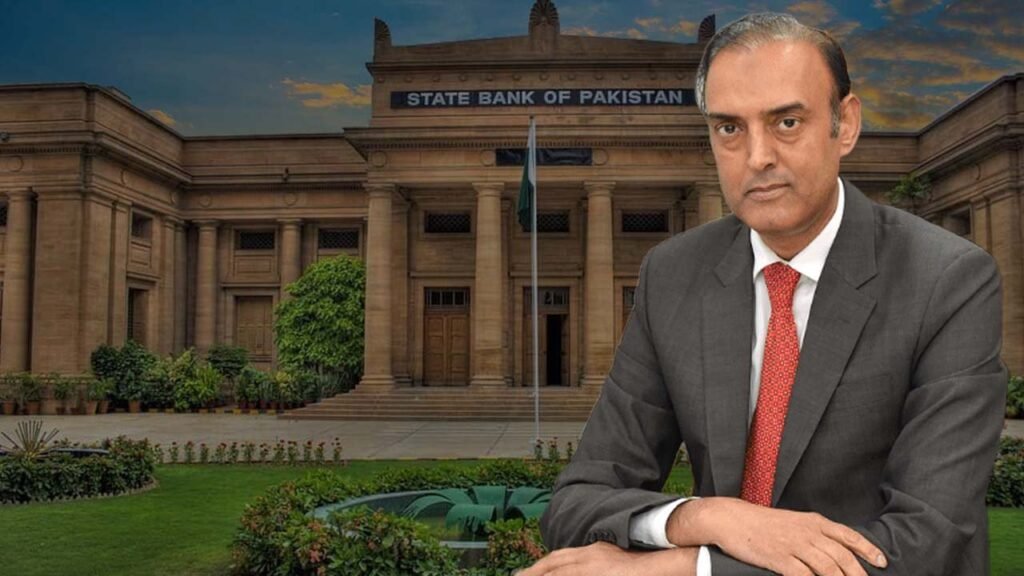
KARACHI: Governor of the State Bank of Pakistan, Jameel Ahmad, stated that Pakistan’s economy has witnessed a remarkable turnaround over the past three years, with foreign exchange reserves increasing from a critically low $3 billion to $17 billion, while remittances are expected to surpass a historic $41 billion during the current fiscal year.
Addressing an interactive session during his visit to the Karachi Chamber of Commerce & Industry, Jameel Ahmad said the country’s economic situation today is significantly different from the crisis conditions of 2023, when imports had sharply declined and businesses faced severe difficulties in opening Letters of Credit (LCs). He noted that average monthly imports have now crossed $5 billion compared to nearly $3 billion three years ago, while the LC situation has improved substantially.
The SBP Governor said reforms introduced by the central bank, along with strict action against hundi and hawala operations, played a major role in stabilizing the economy and strengthening foreign exchange reserves. He added that remittances, which stood at $38 billion last fiscal year, are now projected to exceed $41 billion during FY26.
He further revealed that Pakistan’s current account remained in surplus during the first nine months of FY26, while the overall deficit is expected to remain between zero and one percent. According to him, Pakistan’s external account is now in a significantly healthier and stronger position despite global economic uncertainty and tensions in the Middle East.
Discussing economic growth, Jameel Ahmad said the Pakistan Bureau of Statistics estimated GDP growth at 3.7 percent during the first nine months of the current fiscal year, while the State Bank projects annual growth between 3.75 and 4.75 percent. He acknowledged that international uncertainties and oil price volatility could affect growth during the final quarter of FY26.
Warning about temporary inflationary pressures, the Governor said inflation may exceed 7 percent during the last quarter of FY26, but emphasized that the State Bank remains committed to maintaining inflation within its medium-term target range of 5 to 7 percent. He expressed confidence that inflation would gradually ease over time.
Highlighting the State Bank’s focus on Small and Medium Enterprises (SMEs), Jameel Ahmad said regulations have been simplified, procedural hurdles reduced, and banks directed to prepare dedicated SME growth plans. He revealed that SME financing increased from Rs491 billion in June 2024 to Rs882 billion by December 2025, with a target of reaching Rs1.5 trillion by June 2028. He stressed that Pakistan’s future GDP growth is closely linked to the expansion of SMEs and added that the SBP has introduced a simplified one-page loan application form for small businesses.
On exports, the Governor noted that global economic conditions and falling international commodity prices negatively impacted export performance. He said rice exports worth $3.5 billion had significantly boosted exports last year, but declining global rice prices reduced export earnings by nearly $1 billion this year. Exports are expected to reach around $30 billion this year compared to $32 billion last year, although the government is taking measures to improve the situation.
In another major announcement, Jameel Ahmad disclosed that the designs for Pakistan’s new currency notes have been finalized and forwarded to the federal cabinet for approval. He also clarified that exchange company rates are determined entirely by market forces and that the State Bank does not directly set exchange rates.
The SBP Governor further confirmed that progress is underway regarding the licensing and regulatory framework for virtual assets in Pakistan.
Speaking at the event, Zubair Motiwala said overseas Pakistanis played a crucial role in stabilizing the economy by sending $38 billion in remittances during the previous fiscal year, which significantly supported the current account surplus. Referring to the geopolitical situation in the Middle East, he appealed to overseas Pakistanis to continue supporting the national economy during the ongoing regional conflict.
Zubair Motiwala also emphasized that the cost of doing business in Pakistan is not limited to high interest rates, as rising energy tariffs have become a major burden for industries and exporters. He warned that Pakistan cannot sustainably reduce fiscal and external deficits without significantly increasing exports and stressed the need for a practical export-oriented strategy.
Vice Chairman BMG Jawed Bilwani stated that sustainable industrial growth would remain difficult unless excessive government borrowing from banks is reduced. He pointed out that private sector lending accounts for only around 20 percent of total financing, while government borrowing consumes nearly 70 to 80 percent, restricting industrial expansion and private investment.
KCCI President Rehan Hanif, in his welcome address, recalled the severe economic challenges Pakistan faced three years ago when foreign exchange reserves sharply declined and fears of sovereign default intensified. He praised the State Bank for maintaining resilience and economic stability during that difficult period.
Rehan Hanif also raised concerns regarding valuation issues affecting businesses, claiming that commercial banks were effectively determining valuation benchmarks instead of customs authorities. He urged the State Bank to withdraw valuation-related powers from banks to facilitate smoother trade operations.
Highlighting the importance of SMEs, he said both the government and private sector have failed to fully recognize their economic significance, despite countries like Japan and China building their economic rise on the strength of small and medium-sized enterprises. He further pointed out that SMEs in Pakistan face numerous procedural requirements when seeking financing, discouraging entrepreneurship and business expansion.
He requested the State Bank to establish a dedicated SME financing desk for small businesses and also highlighted difficulties in importing industrial machinery, saying banking and procedural hurdles were slowing industrial modernization and expansion plans.