
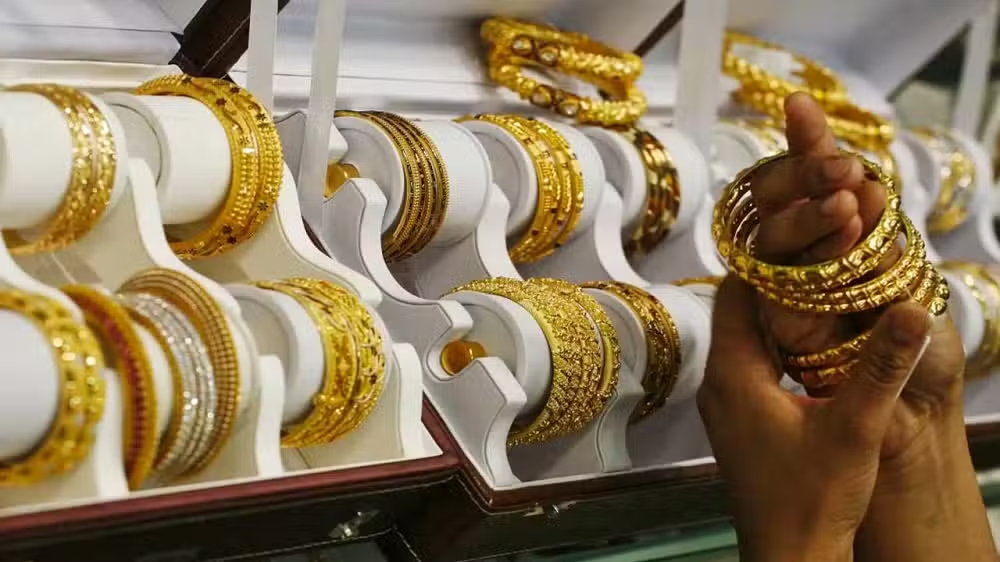
Pakistan Jewellers Tax Reform 2026 is quickly becoming one of the most talked-about developments in the country’s gold and jewellery market. At a time when traders are facing uncertainty, raids, inflation, and increasing business pressure, the newly proposed tax mechanism has created fresh hope for thousands of jewellers across Pakistan.
The proposed “Special Procedure for Income Tax 2026” under Section 99C of the Income Tax Ordinance 2001 promises to introduce a simpler, transparent, and business-friendly taxation system for the jewellery sector.
However, the announcement comes amid rising tensions in Karachi after traders at Karachi Jewellers Centre staged a strong protest against an alleged illegal raid conducted by the Federal Investigation Agency (FIA). The protest forced markets to shut down completely, exposing the growing frustration within Pakistan’s jewellers community.
Pakistan Jewellers Tax Reform 2026 Offers Simpler Tax Structure
According to All Pakistan Sarafa Gems & Jewellers Association President Qasim Shikarpuri, the proposed system is designed to eliminate unnecessary complications and reduce fear among traders.
Under the suggested framework, jewellers will be taxed through a straightforward turnover-based model instead of complicated valuation methods that often create disputes between traders and tax authorities.
The proposal introduces separate final tax rates for different segments of the jewellery business, including goldsmiths, retailers, manufacturers, and bullion dealers. Industry representatives believe this categorization could finally bring clarity to a sector that has long struggled with inconsistent taxation policies.
Gold Price Fluctuations Push Government Toward Flexible Tax Rules
One of the biggest concerns for jewellers has always been the volatile nature of gold prices. The proposed Pakistan Jewellers Tax Reform 2026 directly addresses this issue.
Instead of forcing traders to declare the constantly changing monetary value of their stock, jewellers would only need to declare inventory in grams or tola. This move is being welcomed as a practical solution that could save businesses from massive accounting complications caused by daily gold price fluctuations.
The proposal also includes simplified tax return procedures, which could reduce paperwork and improve compliance across the sector.
Business leaders argue that a less complicated system may encourage more traders to enter the documented economy voluntarily rather than operating informally.
Major Relief Proposed for Pakistan’s Jewellery Traders
Another major feature attracting attention is the promise that once taxes are paid under the special procedure, jewellers would not face re-assessment or additional proceedings.
For years, traders have complained about repeated notices, audits, and alleged harassment by authorities. Many within the jewellery market believe this new approach could restore confidence between businesses and government institutions.
The proposal also encourages banking channels and digital payment systems, which aligns with Pakistan’s broader push toward financial transparency and digital economic reforms.
Industry experts believe this could help increase tax collection while simultaneously reducing tensions between regulators and traders.
Karachi Jewellers Centre Protest Intensifies Pressure on Authorities
While hopes are rising around the tax reform proposal, anger among traders escalated dramatically after the alleged FIA operation at Karachi Jewellers Centre in Saddar.
Jewellers shut down shops and launched a fierce protest, calling the raid unlawful and demanding immediate action against what they described as harassment of the business community.
The association condemned the operation in strong words and demanded a transparent investigation into the incident.
The protest highlighted the fragile relationship between enforcement agencies and traders at a time when the government is attempting to build trust with the business sector through new taxation reforms.
Pakistan Jewellers Tax Reform 2026 Could Expand Tax Net
Supporters of the proposal say the reform is not just about easing business operations. They argue it could play a major role in documenting Pakistan’s economy and expanding the national tax base.
By introducing a predictable and trader-friendly system, authorities may finally succeed in bringing more jewellery businesses into the formal economy.
Analysts believe the success of the policy will depend heavily on whether the government can balance enforcement with trust-building measures.
For now, Pakistan’s jewellers are watching closely. Many see the proposed Pakistan Jewellers Tax Reform 2026 as a potential turning point that could either stabilize the industry or deepen tensions if implementation fails to address traders’ long-standing concerns.