
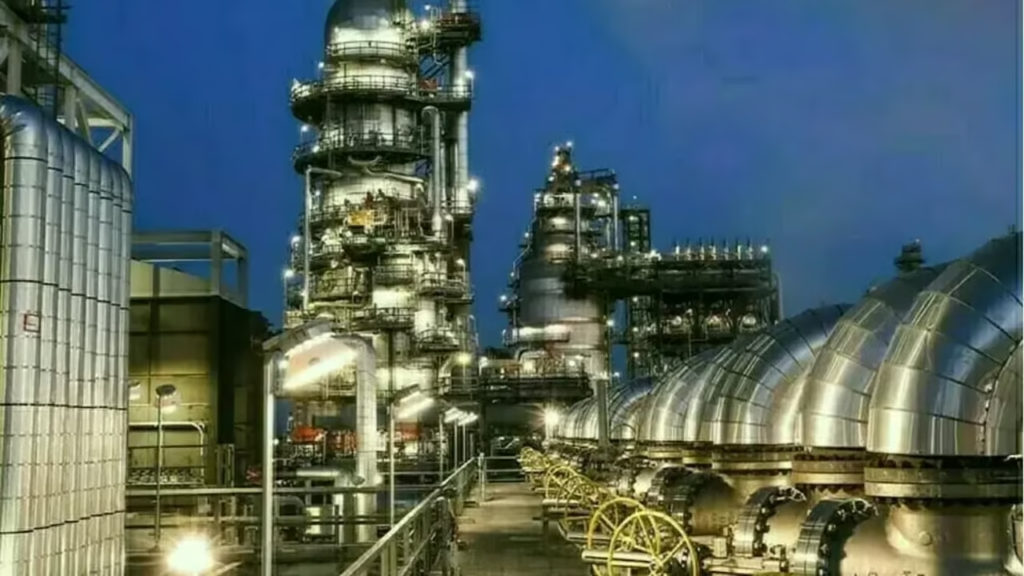
Pakistan is taking decisive steps to attract $6 billion in oil refinery investment. The government plans to exempt machinery imports from sales tax. This move aims to clear the path for long-delayed refinery upgrades across the country.
High-Level Meeting Breaks the Deadlock
Finance Minister Muhammad Aurangzeb chaired a high-level meeting on Thursday. Petroleum Minister Ali Pervaiz Malik attended alongside senior officials. Representatives from the Federal Board of Revenue, OGRA, and refineries were also present.
The meeting focused on removing tax and policy bottlenecks. These bottlenecks have stalled refinery modernisation for nearly two years. The uncertainty has affected not only refineries but also banks that must finance billion-dollar upgrade projects.
The finance minister gave clear assurances to refinery representatives. He said the government was aware of industry concerns. He pledged that all outstanding issues would be resolved swiftly.
Reason behind the Stall
The Finance Act 2024 changed the tax status of petroleum products. They moved from “zero-rated” to “exempt” status under sales tax rules. This shift disrupted the financial models of both ongoing and planned refinery projects.
Under the new arrangement, refineries can no longer fully adjust input sales tax against output tax liabilities.
Industry estimates show that a significant proportion of operational and project-related taxes will now add directly to business costs. This has shaken investor confidence and threatened project viability.
Government Plans Stability Clause to Protect Investors
A key proposal under discussion is a stability clause. This clause would be written into agreements between OGRA and individual refineries. It would guarantee that no policy shift occurs while upgrade work is in progress.
Such a clause is critical for projects with long gestation periods. Refineries invest over many years. They need regulatory and fiscal certainty to secure financing from local and international lenders.
Officials confirmed that several proposals are under active review. These include mechanisms to restore investor confidence, ensure cash flow stability, and preserve project viability without undermining fiscal goals.
Monday Meeting to Finalise Proposals
Another meeting is scheduled for Monday. Petroleum Minister Ali Pervaiz Malik will chair it. The meeting will finalise all proposals and prepare a summary for the Economic Coordination Committee for formal approval.
Prime Minister Shehbaz Sharif has already directed all relevant ministries to streamline refinery upgrade implementation. He is personally overseeing progress. Industry participants expressed optimism that a workable solution will emerge within weeks.
Why This Investment Matters for Pakistan
The Brownfield Refinery Policy was designed to push refineries toward major upgrades. The goal is to produce cleaner Euro-V compliant fuels. It also aims to reduce furnace oil output and cut reliance on imported petroleum products.
Pakistan’s energy import bill remains a heavy burden on foreign exchange reserves. Refinery upgrades directly address this burden. Upgraded refineries will produce cleaner fuels domestically. This reduces costly imports and improves the country’s trade balance.
The government has called refinery modernisation a strategic national priority. Officials linked it directly to fuel quality improvement, environmental compliance, import substitution, and long-term energy security.
Industry Response
Refinery executives welcomed the government’s proactive engagement. They described Thursday’s meeting as a positive signal. However, they stressed that policy continuity and fiscal predictability are non-negotiable for multibillion-dollar investments.
Industry leaders also called for a broader stability framework. This framework would protect approved investments from sudden fiscal policy changes. They believe such assurances will strengthen confidence among investors, lenders, and international technology partners.
If the government delivers on its commitments, the Brownfield Refinery Policy has the potential to transform Pakistan’s entire downstream petroleum sector.