
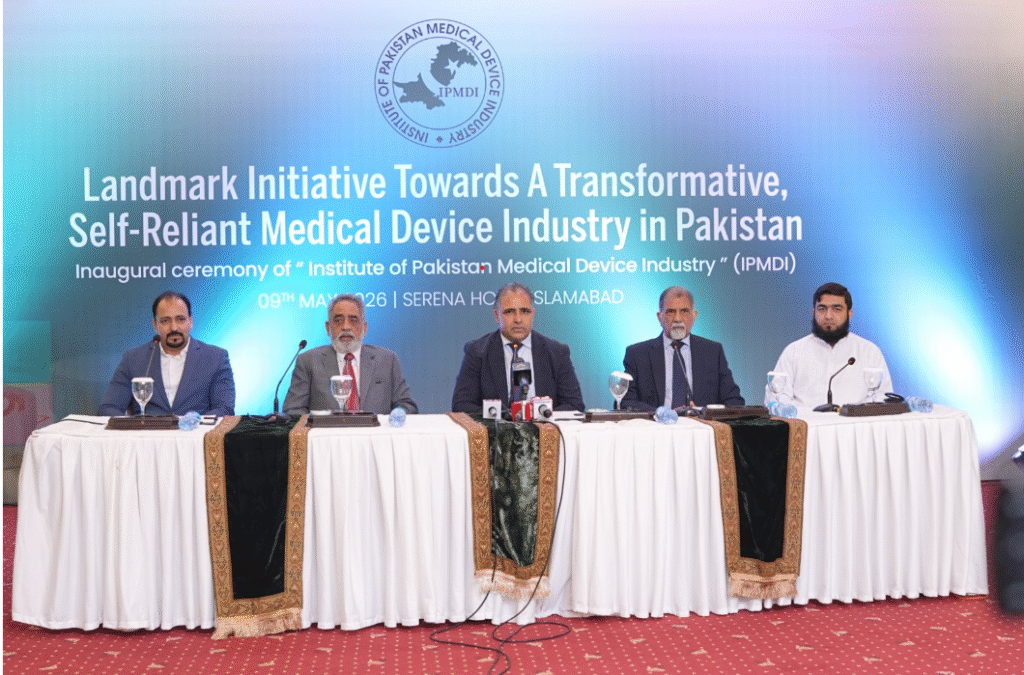
Pakistan’s healthcare sector marked a significant milestone with the inauguration of the Institute of Pakistan Medical Device Industry, the country’s first national platform dedicated to the medical device sector. The event brought together industrialists, academicians, policymakers, and representatives from regulatory and public health institutions to initiate a more structured national dialogue on the future of healthcare manufacturing in Pakistan.
The inauguration served as a key platform for stakeholders to discuss strengthening Pakistan’s capabilities in medical technology, diagnostics, and healthcare innovation. During the discussions, speakers openly addressed the structural challenges facing the industry, including limited resources, inconsistent industrial support, and the urgent need for more growth-oriented and industry-friendly policies. Participants emphasized that without a coherent framework encouraging innovation, investment, and local production, the healthcare sector would continue struggling to meet the demands of a rapidly growing population.
Representatives from major institutions, including the Drug Regulatory Authority of Pakistan, Health Services Academy, and COMSATS University Islamabad, attended the event and expressed strong support for the initiative. They highlighted the importance of creating a unified platform capable of shaping the strategic and operational direction of Pakistan’s medical device industry.
A major theme of the event was the relationship between academia and industry. Speakers stressed that collaboration between educational institutions and the healthcare manufacturing sector is essential for national progress. Such partnerships, they noted, would promote research and innovation while preparing students, researchers, and professionals with industry-relevant skills and practical exposure.
The discussions also focused heavily on public health challenges, particularly Pakistan’s rising disease burden from infections such as Hepatitis C and HIV. Concerns were raised over the increasing number of HIV cases and the ongoing difficulties related to diagnosis, treatment accessibility, and containment efforts. In response, speakers strongly advocated for locally manufactured and cost-effective healthcare solutions, emphasizing that indigenous diagnostic technologies and medical devices could provide more sustainable and affordable responses to public health crises, especially in underserved communities.
The concluding remarks reinforced the importance of building national confidence in local manufacturing and healthcare programmes. Participants stated that with supportive policies, institutional collaboration, and trust in domestic industry, Pakistan could significantly strengthen its public health system and improve outcomes in the fight against diseases such as Hepatitis C and HIV. The launch of the Institute of Pakistan Medical Device Industry was described not merely as the establishment of a new institution, but as the beginning of a broader movement toward healthcare self-reliance, industrial resilience, and a more sustainable future for public health in Pakistan.