
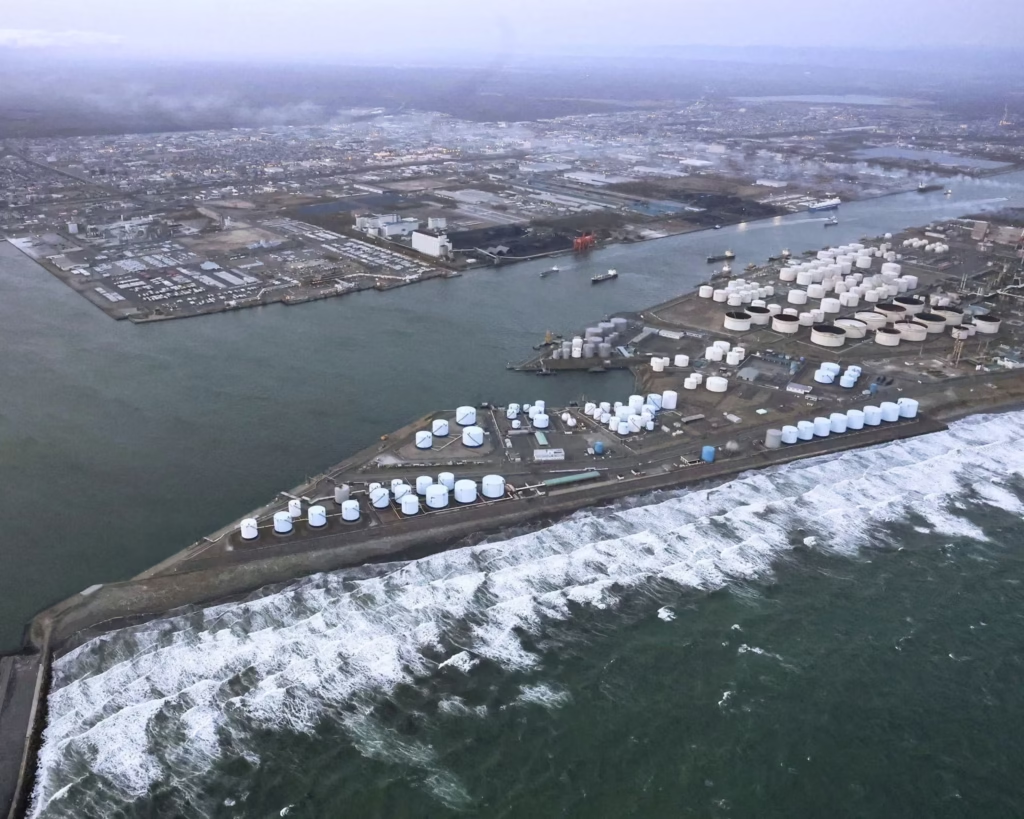
A powerful Japan earthquake measuring 7.4 magnitude struck northern Japan on Monday, prompting authorities to issue an urgent tsunami warning. The tremor shook coastal regions and triggered immediate evacuation alerts across vulnerable areas.
According to the Japan Meteorological Agency, the earthquake hit at 4:53 pm local time in the Pacific Ocean off the coast of Iwate Prefecture. The impact spread widely, with strong shaking reported even in Tokyo, hundreds of kilometres away.
Tsunami Warning Issued as Waves Threaten Coast
Authorities quickly issued a tsunami warning following the Japan earthquake. Officials warned that waves could reach heights of up to three metres. The agency stated that the earliest waves could hit northern coastal areas almost immediately.
Emergency alerts urged residents to evacuate without delay. Officials directed people living near the coast and rivers to move to higher ground or designated evacuation buildings. They also warned that tsunami waves could arrive in multiple surges.
“Do not leave safe areas until the warning is officially lifted,” the agency emphasized. Officials stressed that repeated waves could increase the risk of damage and casualties.
Government Activates Crisis Response
The Japanese government responded swiftly to the Japan earthquake. Prime Minister Sanae Takaichi confirmed that a crisis management team had been established.
She urged residents in affected areas to follow evacuation orders and prioritize safety. Authorities began assessing the situation to determine the extent of damage and any potential casualties. Initial reports did not confirm significant destruction, but officials remained cautious.
Footage aired by NHK showed several ports in Iwate with no immediate visible damage. However, authorities continued monitoring the situation closely.
Strong Tremors Felt Across Regions
The Japan earthquake caused strong tremors across northern regions and beyond. Buildings swayed in several cities, including Tokyo. Residents reported panic as the shaking lasted for several seconds.
Despite the intensity, early indications suggested limited immediate damage. However, experts warned that aftershocks could follow. Authorities advised residents to remain alert and prepared for further seismic activity.
Japan’s High Earthquake Risk
Japan remains one of the most earthquake-prone countries in the world. The nation sits along the Pacific Ring of Fire, where multiple tectonic plates meet. This location exposes the country to frequent seismic activity.
The country experiences around 1,500 earthquakes each year. These account for nearly 18 percent of global seismic activity. Most quakes are minor, but larger ones can cause significant damage depending on their depth and location.
Memories of the 2011 Disaster Resurface
The latest Japan earthquake has revived memories of the devastating 2011 Tohoku Earthquake and Tsunami. That 9.0 magnitude quake triggered massive tsunami waves and caused widespread destruction.
The disaster killed around 18,500 people and led to a nuclear crisis at the Fukushima power plant. It remains one of the most tragic events in Japan’s modern history.
Concerns Over Future Megaquakes
Experts continue to warn about the risk of a major earthquake along the Nankai Trough. This zone has the potential to generate a powerful megaquake.
In 2024, the Japan Meteorological Agency issued its first advisory warning about such a possibility. The alert caused widespread concern and even led to panic buying and travel cancellations.
Authorities estimate that a megaquake in this region could cause catastrophic damage. Government projections suggest it could lead to nearly 298,000 deaths and economic losses reaching $2 trillion.
A similar advisory followed in December 2025 after a magnitude 7.5 earthquake struck off the northern coast. That event caused injuries but limited structural damage.
Ongoing Monitoring and Public Safety Efforts
Following Monday’s Japan earthquake, authorities continue to monitor seismic activity and tsunami risks. Emergency teams remain on high alert. Officials are also assessing infrastructure and coastal areas for potential damage.
Residents have been urged to stay informed through official channels. Authorities emphasized the importance of following evacuation orders and avoiding coastal zones until conditions stabilize.
The situation remains fluid. While no major damage has been confirmed yet, the risk of aftershocks and further tsunami waves keeps authorities vigilant.