
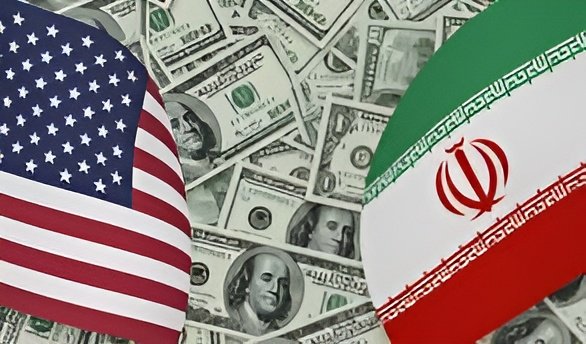
The US dollar strengthened in early Asian trading on Monday as global markets reacted to rising tensions between Washington and Tehran. Investors moved quickly toward safe haven assets after peace talks between the United States and Iran collapsed.
The United States signaled a major escalation in the conflict. The move pushed traders to shift away from riskier currencies and into the US dollar.
Market analysts described the early trading session as thin but decisive. They noted a clear risk off sentiment across global foreign exchange markets.
US Dollar Climbs as Hormuz Blockade Fears Intensify
US President Donald Trump announced that the US Navy would begin blockading the Strait of Hormuz. This development followed failed negotiations aimed at ending the ongoing conflict.
The blockade targets Iranian ports and threatens to disrupt global oil supply routes. As a result, investors reacted swiftly by increasing their exposure to the US dollar.
The United States Central Command confirmed that operations would begin at 10 a.m. ET. This announcement further intensified uncertainty in global markets.
US Dollar Pressures Major Global Currencies
The surge in the US dollar weighed heavily on other major currencies. The euro slipped 0.3 percent to 1.1684 against the dollar. The British pound also declined by 0.5 percent to 1.3398.
Meanwhile, risk sensitive currencies saw sharper declines. The Australian dollar dropped 0.6 percent to 0.7030. The New Zealand dollar fell 0.4 percent to 0.5816.
These movements reflect growing caution among investors. They are moving away from higher risk currencies amid rising geopolitical uncertainty.
US Dollar Index Holds Near Recent Highs
The US Dollar Index remained steady at 99.056. This level is close to its highest point since early April.
The index tracks the strength of the US dollar against a basket of major currencies. Its stability signals continued demand for the dollar despite market volatility.
Analysts from Westpac noted that the dollar rally reflects broader risk aversion. They highlighted that geopolitical developments are driving market sentiment more than economic data.
Hungarian Forint Surges After Political Shift
In contrast to the broader market trend, the Hungarian forint posted strong gains. The currency rallied sharply after a major political shift in Hungary.
Veteran leader Viktor Orbán lost power following national elections. The result boosted investor confidence in Hungary’s economic outlook.
The forint surged as much as 1.8 percent against the dollar. It reached its strongest level since January. Against the euro, it gained 2.2 percent and hit a four year high.
Analysts from Goldman Sachs said markets reacted positively to the election outcome. They noted that the result could unlock European Union funding for Hungary.
EU Funding Expectations Support Hungarian Assets
Market participants expect faster release of European Union funds to Hungary. These funds form a significant part of the country’s economic framework.
Analysts estimate that EU funding accounts for about 3 percent of Hungary’s GDP each year. Nearly half of these funds had remained frozen under previous political conditions.
The expected release of funds has boosted investor sentiment. It has also strengthened the forint despite broader global uncertainty.
US Dollar Gains Against Yen as Bond Yields Rise
The US dollar also strengthened against the Japanese yen. It rose 0.4 percent to 159.83 yen during trading.
At the same time, Japan’s benchmark 10 year government bond yield climbed sharply. It increased by 5.5 basis points to 2.49 percent. This marks its highest level in nearly three decades.
Higher bond yields often support currency strength. In this case, the dollar continued to gain as investors sought safety and returns.
Global Markets Brace for Continued Volatility
The rise of the US dollar reflects deeper concerns about geopolitical stability and global economic risks. Investors remain cautious as tensions between the United States and Iran continue to escalate.
Currency markets are likely to remain volatile in the coming days. Much will depend on developments in the Middle East and the response of global powers.
For now, the US dollar continues to dominate as the preferred safe haven asset. Its strength signals a broader shift in investor sentiment as uncertainty grips global markets.