
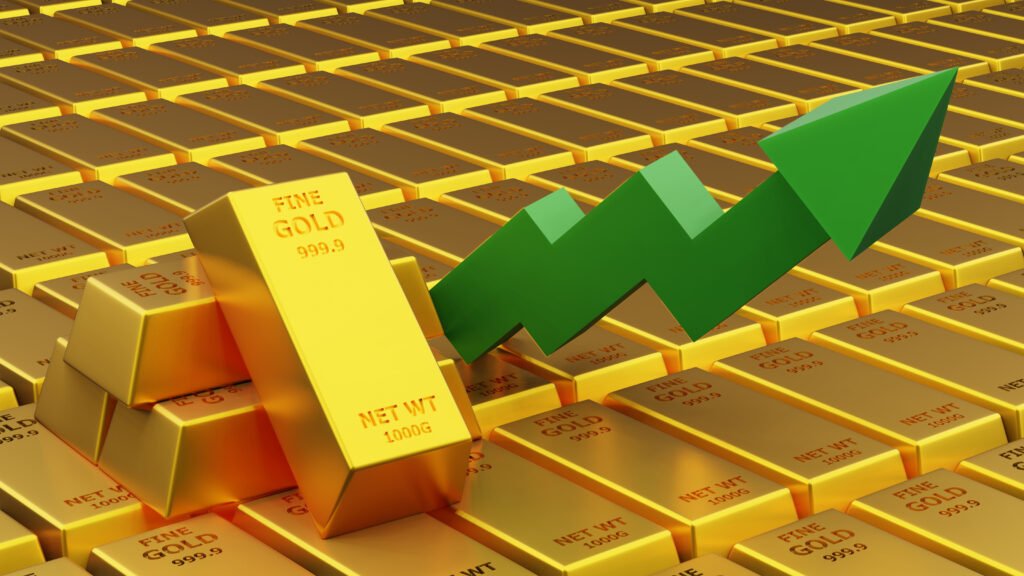
Gold prices jumped sharply on Wednesday, reaching a nearly three-week high after geopolitical tensions eased between the United States and Iran. Markets reacted positively after US President Donald Trump announced a temporary pause in military action, reducing fears of energy-driven inflation.
Global Gold Prices Rally Strongly
In international markets, spot gold surged by 2.5 percent to $4,819.52 per ounce as of early trading. During the session, bullion climbed more than 3 percent, hitting its highest level since March 19.
US gold futures for June delivery also recorded strong gains. Prices rose by 3.4 percent to reach $4,845.30 per ounce.
Market analysts linked the rally to improved sentiment following the announcement of a two-week truce. Investors had previously expected further escalation in tensions, which had kept markets volatile.
However, the sudden shift toward diplomacy boosted demand for safe-haven assets like gold.
Pakistan Gold Prices See Massive Increase
Following global trends, gold prices in Pakistan also surged significantly.
The price per tola jumped by Rs15,700, reaching Rs504,162. Meanwhile, the price for 10 grams increased by Rs13,460 to Rs432,237.
Silver prices also moved higher in the domestic market. The per tola rate rose by Rs440 to Rs8,184. Similarly, the price for 10 grams increased by Rs377 to Rs7,016.
Traders said the sharp rise reflects both international price movements and currency factors.
Trump’s Decision Eases Market Fears
The rally in gold came after Donald Trump confirmed a two-week pause in attacks against Iran. He described the move as part of ongoing diplomatic efforts and said Washington had received a “workable” proposal from Tehran.
Earlier, tensions had escalated due to concerns over the Strait of Hormuz. The US had warned Iran to reopen the strategic waterway or face possible retaliation targeting infrastructure.
However, the pause in hostilities reduced fears of supply disruptions in global energy markets. As a result, investors reassessed risks and shifted their strategies.
Market experts said the unexpected truce triggered a strong reaction.
“Investors entered the session expecting escalation, but the truce changed sentiment quickly. That was positive for gold,” said a global market analyst.
Islamabad Talks Add to Optimism
Diplomatic efforts have gained further momentum, with negotiations expected to begin on April 10 in Islamabad.
Iran’s Supreme Security Council confirmed that talks with the United States would take place after a proposal was submitted through Pakistan.
The development highlights Pakistan’s growing role in facilitating dialogue between the two countries. However, Iranian officials cautioned that negotiations do not signal an immediate end to the conflict.
Inflation Concerns Continue to Influence Markets
Despite easing tensions, concerns over inflation remain a key factor driving gold prices.
Rising energy costs could still push inflation higher, complicating decisions for central banks worldwide. Gold traditionally serves as a hedge against inflation and economic uncertainty.
However, analysts note that higher interest rates can limit gold’s appeal. Since gold does not offer yield, investors may shift toward interest-bearing assets when rates rise.
Market Outlook Remains Uncertain
Markets are now closely watching upcoming economic data, including minutes from the Federal Reserve’s March meeting.
Gold prices have shown strong volatility this year. Despite the current rally, the metal has declined by more than 8 percent since tensions escalated in late February.
Experts describe the current surge as a short-term relief rally. They caution that future price movements will depend on whether Iran complies with diplomatic commitments and whether tensions remain contained.
Silver and Other Metals Also Gain
The rally extended beyond gold to other precious metals.
Spot silver jumped by 5.8 percent to $77.16 per ounce. Platinum rose by 4 percent to $2,036.30, while palladium gained 4.6 percent to reach $1,537.75.
Analysts say the broader metals market is benefiting from improved investor sentiment and reduced geopolitical risk.