
Pakistan fuel price hike has triggered widespread concern after the government announced an unprecedented increase in petroleum prices, pushing fuel costs to record highs. The decision, described as difficult but necessary, is expected to have far-reaching consequences for inflation, transportation, and business activity across the country.
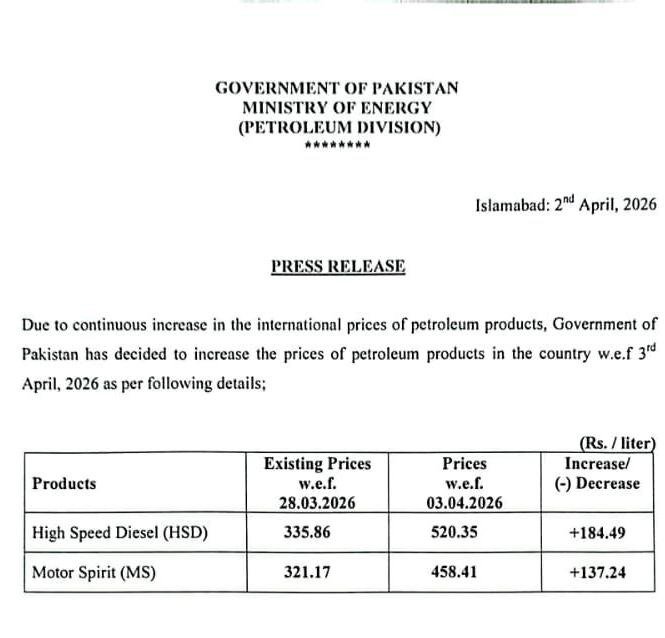
The government raised petrol prices by Rs137 per litre, bringing the new rate to Rs458.40 per litre. High-speed diesel witnessed an even steeper increase of Rs184 per litre, pushing its price to Rs520.35 per litre. The new prices came into effect at midnight, marking the highest fuel rates ever recorded in Pakistan.
Why the Pakistan Fuel Price Hike Was Announced
Officials attributed the Pakistan fuel price hike to rising international oil prices and ongoing geopolitical tensions in the Middle East. According to the government, instability in the region has disrupted global energy markets, forcing many countries to revise fuel pricing.
During a press conference, government representatives highlighted that even developed economies are facing energy supply challenges. Neighboring countries have reportedly experienced fuel shortages and long queues at petrol pumps, indicating a wider regional crisis.
The government stated that despite efforts over the past two years to stabilize the economy, the surge in global oil prices left little room to maintain subsidies. As a result, authorities opted to shift from blanket fuel subsidies to targeted relief measures for vulnerable segments of society.
Shift in Government Policy on Fuel Pricing
The Pakistan fuel price hike marks a reversal from the government’s earlier stance. Just days before the announcement, authorities had indicated willingness to absorb a financial burden instead of passing it on to consumers. However, escalating global oil prices and geopolitical uncertainty changed the situation rapidly.
Particular concern emerged following rising tensions in the Middle East and threats to key oil supply routes. These developments significantly increased international crude oil prices, forcing policymakers to reconsider their approach.
This is also the second fuel price increase within a month, following an earlier rise of Rs55 per litre. The frequency of adjustments signals mounting pressure on Pakistan’s energy import bill and foreign exchange reserves.
Economic Impact of the Pakistan Fuel Price Hike
The Pakistan fuel price hike is expected to affect multiple sectors of the economy. Higher fuel costs typically translate into increased transportation charges, which then push up the prices of essential commodities.
Transporters are likely to revise fares for buses, taxis, and ride-hailing services. Similarly, freight costs for goods movement are expected to rise, increasing the price of food items, construction materials, and industrial products.
Businesses, particularly manufacturing and logistics firms, will face higher operational costs. Small and medium enterprises may struggle to absorb these expenses, potentially leading to reduced production or price adjustments.
The agriculture sector could also be impacted, as diesel is widely used in tractors, tube wells, and transport of crops. Increased input costs may ultimately result in higher food prices, adding to inflationary pressure.
Inflation Concerns Intensify
Economists warn that the Pakistan fuel price hike may accelerate inflation, which has already affected household budgets. Fuel prices directly influence electricity tariffs, transportation costs, and production expenses, creating a cascading effect throughout the economy.
Consumers may see higher prices for daily necessities, including vegetables, flour, milk, and packaged goods. With disposable incomes already under strain, the increase could reduce purchasing power and slow economic activity.
Regional Comparison and Record High Prices
The latest Pakistan fuel price hike has pushed local fuel rates to the highest levels in the country’s history. Analysts note that Pakistan’s petrol and diesel prices are now among the highest in the region, intensifying pressure on businesses and consumers alike.
The record increase is being viewed as a major economic shock, with ripple effects expected across all segments of society, from transport operators to industrial units and households.
What Lies Ahead After the Pakistan Fuel Price Hike
The government has indicated that targeted relief measures may be introduced to cushion the impact on low-income groups. However, the effectiveness of these measures will depend on implementation and fiscal space.
Going forward, fuel price movements will likely remain tied to global oil markets and geopolitical developments. Until international prices stabilize, Pakistan may continue to face volatility in domestic fuel rates.