
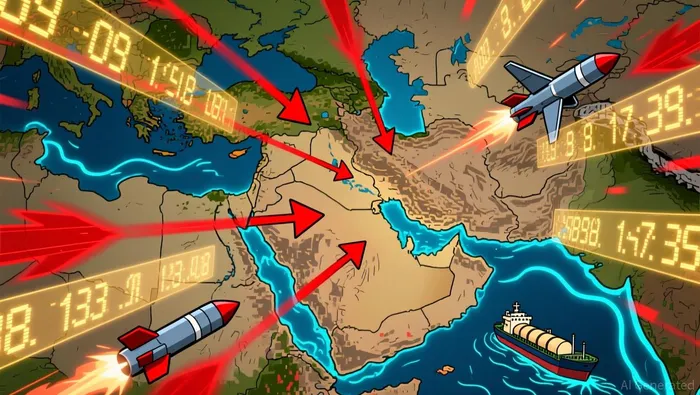
Oil prices swung sharply on Tuesday as traders balanced hopes of de-escalation in the Iran conflict against fears of a long-term shutdown of the Strait of Hormuz.
Market Volatility Persists
Brent crude futures rose slightly by 18 cents, or 0.16 percent, to $112.96 per barrel in early trading.
The more active June contract stood at $107.10. WTI futures fell 25 cents, or 0.24 percent, to $102.63 per barrel after touching recent highs.
De-escalation Signals vs Supply Risks
US President Donald Trump signaled willingness to end military action against Iran, even if the Strait of Hormuz stays closed for now.
However, he warned of obliterating Iran’s energy plants and oil wells if the waterway is not reopened soon. The US extended its deadline for strikes into April.
Traders remain cautious as any real relief depends on actual reopening of the critical chokepoint.
The strait handles about one-fifth of global oil supply and significant LNG volumes.
Analyst Sugandha Sachdeva noted that diplomatic signals are mixed, but ground realities suggest prolonged uncertainty.
Restoring damaged infrastructure would take time even after de-escalation.
Broader Disruptions Heighten Concerns
A Kuwaiti crude tanker, fully loaded with up to two million barrels, was reportedly struck in an alleged Iranian attack near a Dubai port.
Officials warned of possible oil spills from the incident.
Yemen’s Iran-aligned Houthi forces launched missiles at Israel, raising risks to the Bab el-Mandeb strait and global shipping routes.
Saudi Arabia has sharply increased crude exports through the Red Sea to Yanbu port, reaching 4.658 million barrels per day last week.
A Reuters poll pointed to expected declines in US crude stockpiles, distillates, and gasoline inventories.
Outlook Remains Tense
Experts like Lin Ye from Rystad Energy warned that oil market buffers are shrinking fast.
Prolonged closure could push the world closer to physical shortages in many regions, supporting further upward pressure on prices.
This month, Brent has surged 59 percent while WTI gained 58 percent, marking some of the strongest monthly rises in recent history.
Markets show little change overall but stay highly sensitive to any new headlines from the region.