
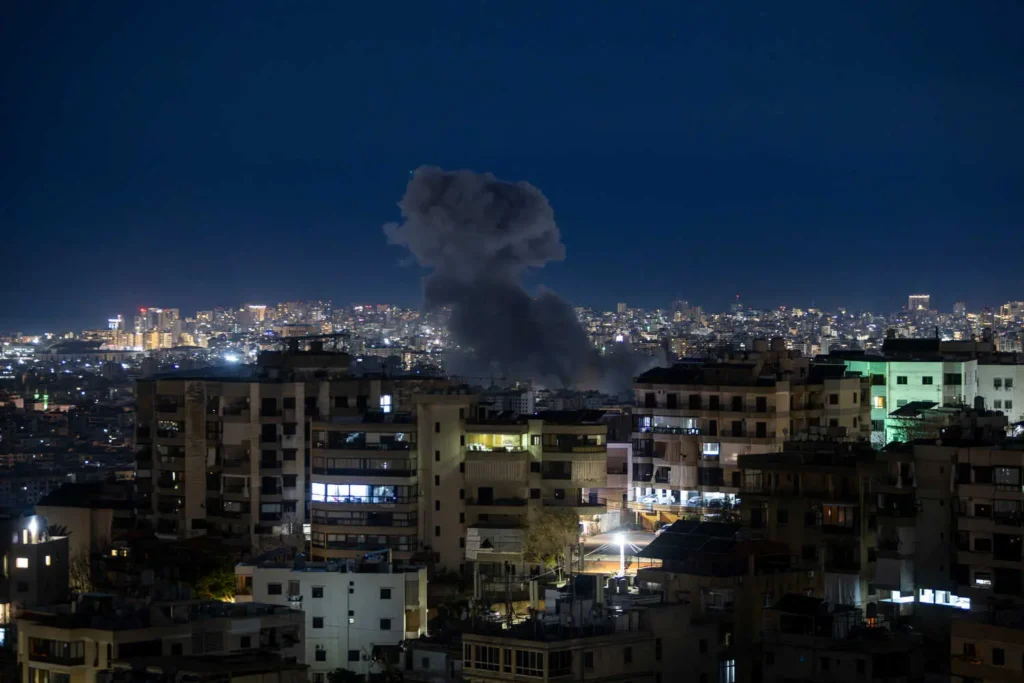
Israel carried out major airstrikes on Iran early Saturday, hitting targets in Tehran, Karaj, and Isfahan. These attacks mark a bold escalation in the ongoing U.S.-Israel campaign against Iran.
Iran retaliated by launching ballistic missiles toward Israel and a U.S.-British base on Diego Garcia in the Indian Ocean. The missiles toward Diego Garcia missed their target, but demonstrated Iran’s long-range capabilities.
In Beirut, Israeli forces struck Hezbollah strongholds in the southern suburbs. Evacuation warnings were issued for several neighborhoods in the Lebanese capital. Hezbollah, backed by Iran, has been firing rockets into Israel since early March in solidarity with Tehran.
This spillover has become the deadliest front outside Iran itself. The war began with U.S. and Israeli strikes on Iran on February 28. It has now entered its fourth week with no signs of de-escalation. Over 2,000 people have been killed across the region since the conflict started.
In Lebanon alone, more than 1,000 deaths have been reported, with over a million displaced. Energy infrastructure in Iran and Gulf states has been repeatedly targeted. Oil prices have jumped 50%, while European natural gas prices surged up to 35%. The Strait of Hormuz remains largely closed to shipping, threatening global supplies.
U.S. President Donald Trump criticized NATO allies as “cowards” for hesitating to help reopen the strait. He stated no large-scale U.S. ground troops would be sent into Iran, at least not announced. The Pentagon ordered 2,500 Marines to the Middle East. They are accompanied by the amphibious assault ship Boxer and additional warships.
This deployment aims to bolster U.S. presence amid rising threats. Iran’s Supreme Leader Ayatollah Mojtaba Khamenei issued a defiant statement. He claimed Iranians showed unity and delivered a “disorienting blow” to enemies. Israeli Prime Minister Benjamin Netanyahu questioned who is truly leading Iran.
He noted the new leader’s low public profile. Global markets reacted sharply, with stocks falling and bond yields rising. Airlines like United cut flights due to higher fuel costs.
The conflict risks broader regional involvement.
Iranian Foreign Minister indicated willingness to allow some shipping through the strait. However, tensions remain high with no immediate ceasefire in sight.