
Islamabad has vehemently pushed back against US intelligence assessments suggesting Pakistan’s ballistic missile advancements could eventually endanger the American mainland.
The rejection followed remarks by US Director of National Intelligence Tulsi Gabbard, who warned in a Senate briefing that Pakistan’s ongoing missile developments might include intercontinental ballistic missiles (ICBMs) capable of reaching US territory if trends persist.
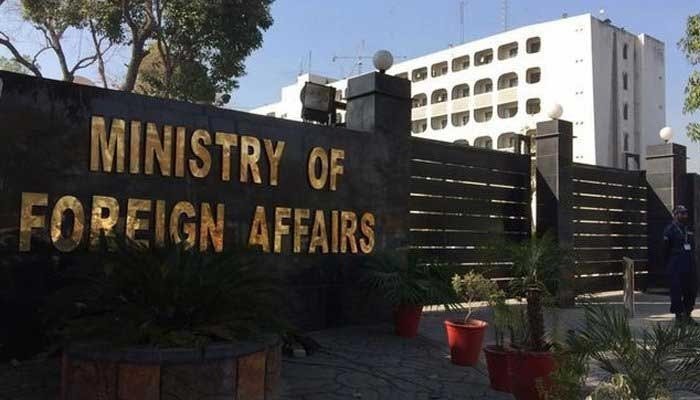
Defensive Doctrine Reaffirmed Foreign Office spokesperson Tahir Andrabi stated that Pakistan “categorically rejects” the claims of a potential threat from its missile capabilities.
He emphasized that the country’s strategic systems are “exclusively defensive,” designed to safeguard sovereignty and maintain regional peace amid South Asian dynamics. Pakistan’s program, he added, stays “well below intercontinental range” and is anchored in credible minimum deterrence specifically vis-à-vis India.
Call for Balanced US Approach Andrabi highlighted India’s longer-range missiles—exceeding 12,000 km—as extending beyond local security needs and raising broader concerns.
He appealed to Washington for evaluations that reflect factual South Asian imperatives rather than unsubstantiated extrapolations.
The Foreign Office reiterated Pakistan’s readiness for engagement with the US on principles of respect and accuracy, while questioning the timing and foundation of the intelligence assertions.
This diplomatic exchange occurs against a backdrop of prior US sanctions on Pakistan’s missile entities and recurring concerns over proliferation risks. Pakistan maintains its capabilities serve deterrence in a bilateral context with India, not extraterritorial ambitions.
The public dismissal seeks to clarify intent and counter perceptions of emerging global threats. Observers note that while short-term friction may arise, sustained dialogue could address mutual security interests in an increasingly complex geopolitical landscape.