
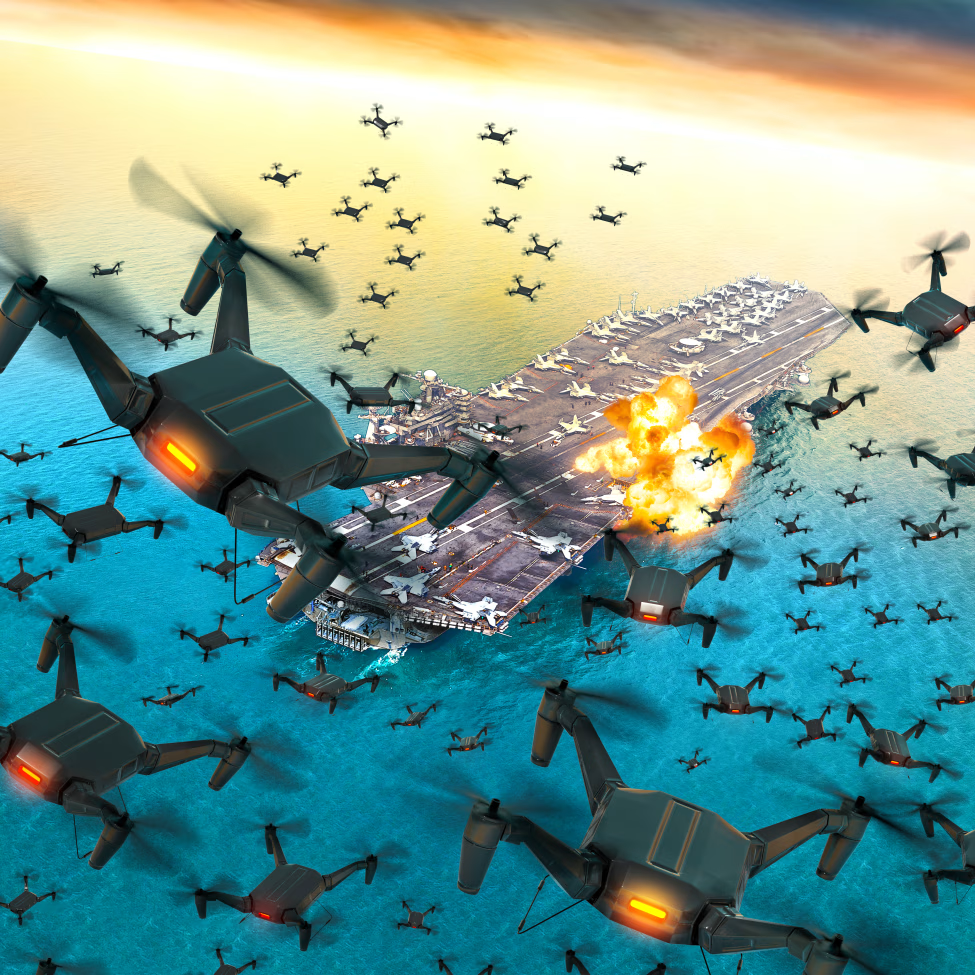
The Israel-US war on Iran highlights how inexpensive attack drones are fundamentally transforming aerial warfare.
Read More: https://theboardroompk.com/pakistans-coal-provider-exxaros-profit-jump-8-amid-war/
By enabling smaller or less affluent forces to challenge traditional air dominance, these low-cost unmanned systems are shifting the economics and tactics of conflict.
This is evident in ongoing wars involving Ukraine, Russia, Iran, the U.S., and allies in the Middle East, where drones provide high-volume, affordable strikes that strain expensive defenses.
The Rise of Affordable Drone Swarms Cheap drones, such as Iran’s Shahed-136 (costing $20,000–$50,000), have become a game-changer.
Unlike high-end fighter jets like the U.S. F-35 or B-2 bombers, which require massive investments and trained pilots, these one-way attack drones can be produced at scale—Iran reportedly manufactures around 10,000 per month.
They function like low-cost cruise missiles, carrying payloads and traveling long ranges (up to 2,000 km) before detonating on impact.
This allows attackers to overwhelm air defenses through sheer numbers rather than precision alone.
Economic Imbalance in Modern Conflicts The cost disparity is stark. A single Patriot missile interceptor can cost $3–4 million, enough to buy over 100 Shahed drones at lower estimates.
In the Red Sea and Middle East operations, the U.S. Navy has spent over $1 billion countering Houthi drones and missiles since late 2023.
Pentagon officials, including weapons buyer Bill LaPlante, have criticized this unsustainable equation, noting that defending against $50,000 drones with multimillion-dollar missiles is inefficient.
Emerging countermeasures like lasers (costing $1–$10 per shot) and reusable interceptors offer hope, but traditional systems remain dominant for now.
In Ukraine, drones account for roughly 70% of Russian casualties, enabling remote strikes that minimize human risk.
Russia counters with its own Shahed fleets, while Ukraine adapts consumer quadcopters for warfare.
The article warns that this trend lowers barriers to aerial attacks, forcing major powers to rethink procurement and embrace “affordable mass” strategies.