
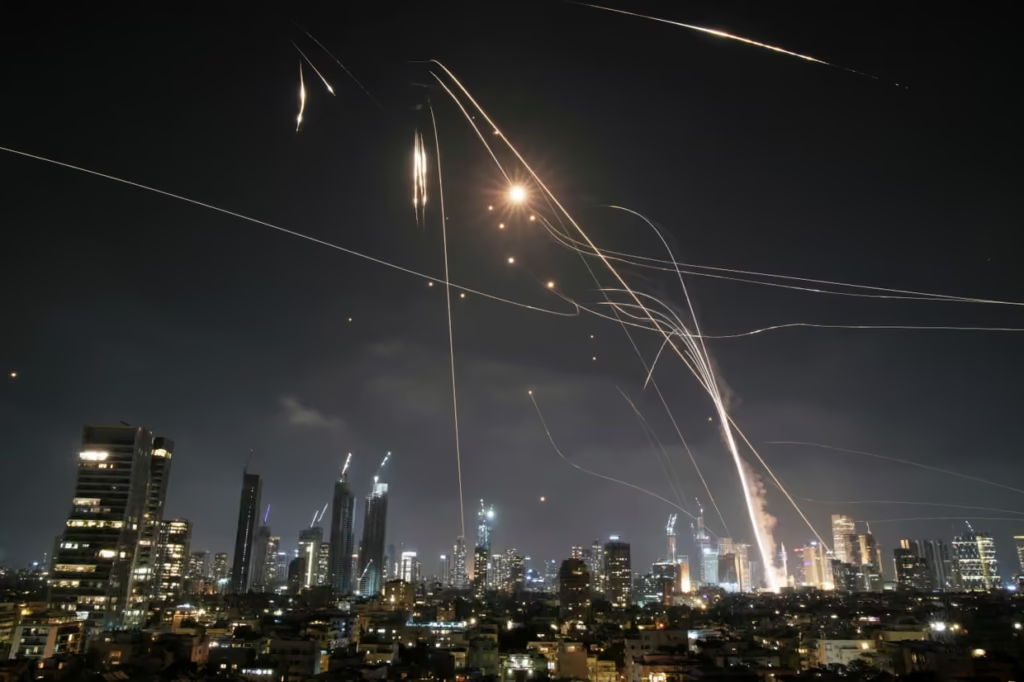
Iran has struck Tel Aviv with advanced missiles carrying cluster warheads. This marks a sharp escalation in the ongoing war. The attack came as direct retaliation for the killing of Iran’s security chief.
Background of the Retaliation
The strike follows Israel’s assassination of Ali Larijani. He served as secretary of Iran’s Supreme National Security Council. Larijani died Monday night alongside his son and deputy in targeted strikes. These killings form part of wider U.S.-Israeli operations. They began over two weeks ago against Iranian officials.
The goal was to halt Iran’s nuclear weapons program. Iran’s new supreme leader, Mojtaba Khamenei, rejected ceasefire calls. He demanded the U.S. and Israel accept defeat and pay compensation first.
Details of the Cluster Strike
Iran used Khorramshahr 4 and Qadr missiles. These carry multi-warhead cluster payloads. The bomblets disperse mid-air over wide areas. This tactic makes interception harder for Israel’s defenses. Cluster munitions spread smaller explosives randomly.
They pose risks to civilians long after impact. The attack hit a neighborhood near densely populated Tel Aviv. Key military facilities lie close by. Two people died from the strike. Israel’s overall war death toll now stands at least 14. Sirens blared across central Israel during the barrage.
Wider Regional Fallout
Israel intensified airstrikes on Lebanon in response. Beirut’s Bachoura area and other zones faced heavy bombing. At least 20 died there, with 24 wounded. Hezbollah’s involvement grows. Over 900 killed in Lebanon so far. More than 800,000 displaced amid the campaign.
The U.S. hit Iranian coastal sites near the Strait of Hormuz. Bunker buster bombs targeted anti-ship threats to protect shipping lanes. Iran executed a man for spying for Israel. This signals internal crackdowns amid the war.
Global Impacts
Oil prices dipped slightly after an Iraqi-Kurdish deal. They stay above $100 per barrel. The conflict drives the worst oil crisis since the 1970s. Aviation faces disruptions worldwide. Hunger risks rise for tens of millions if the war drags on.
A Saudi-led meeting in Riyadh will discuss regional security. Arab and Islamic foreign ministers plan to attend. Iran thanked Pakistan for solidarity. It rejects de-escalation without major concessions.
The IAEA chief urged maximum restraint. A projectile landed near Iran’s Bushehr nuclear plant with no damage reported. This tit-for-tat cycle shows no immediate end. Both sides dig in deeper as casualties mount.