
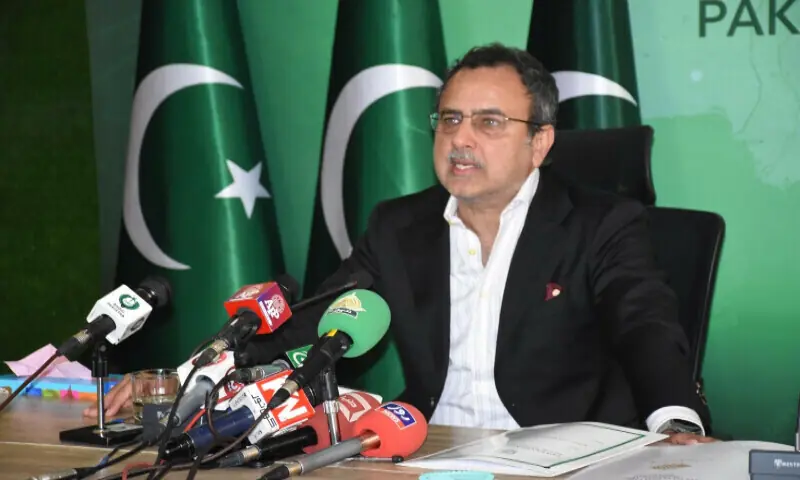
Pakistan’s Power Minister Awais Leghari stated in an interview on March 12, 2026, that the country’s growing dependence on domestic energy resources has significantly reduced vulnerability to disruptions in liquefied natural gas (LNG) supplies. This comes amid global tensions affecting key suppliers like Qatar.
Read More: https://theboardroompk.com/ccp-authorizes-maple-leaf-cements-acquisition-of-shares-in-faysal-bank/
Leghari highlighted that approximately 74% of Pakistan’s electricity now comes from indigenous sources, including hydropower, nuclear, domestic coal, and surging renewables like solar and wind. The government targets raising this share above 96% by 2034.
He described a “people-led solar revolution” alongside prior investments in nuclear, hydropower, and local coal as key drivers of self-reliance. Clean sources currently account for about 55% of generation, with plans to exceed 90% by 2034.
Reduced Impact from LNG Disruptions
LNG constitutes only around 10% of electricity generation, primarily for evening peak demand and grid stability. Leghari assured that even if LNG supplies were disrupted or prices soared, effects on industry, agriculture, or overall production would remain minimal.
In a worst-case scenario of several months without LNG cargoes, Pakistan might experience one to two hours of load shedding during peak summer evenings in some areas. However, this would not broadly impact the economy.
Recent global events, including Qatar’s temporary production halt due to Middle East conflicts, have caused shortages. Asian buyers, who take 80% of Qatar’s LNG, face challenges. Pakistan previously faced extended outages during the 2022 energy crisis after failing to secure spot cargoes.
Domestic Strengths and Future Strategy
Rooftop solar installations exceed 20 GW, with behind-the-meter capacity at 12-14 GW (possibly up to 18 GW), slashing daytime grid demand. Hydropower adds up to 7,000 MW in summer from increased river flows, aligning with higher air-conditioning needs.
Annual outputs include hydropower at about 40 terawatt hours (TWh), nuclear at 22 TWh, and domestic coal at 12 TWh. Surplus generation capacity exists from added plants in coal, nuclear, and prior LNG investments, while demand growth has slowed.
Pakistan recently cancelled 21 LNG cargoes for 2026-27 under a deal with Italy’s Eni, reflecting lower gas needs due to domestic shifts.
Leghari emphasized future investments will prioritize indigenous clean power, including battery storage to shift excess solar to evenings, avoiding any sources risking energy security.
Outages now stem mainly from theft, transmission losses, and financial issues rather than generation shortages.
This shift positions Pakistan more resilient amid volatile global LNG markets influenced by geopolitical risks in the Middle East.