
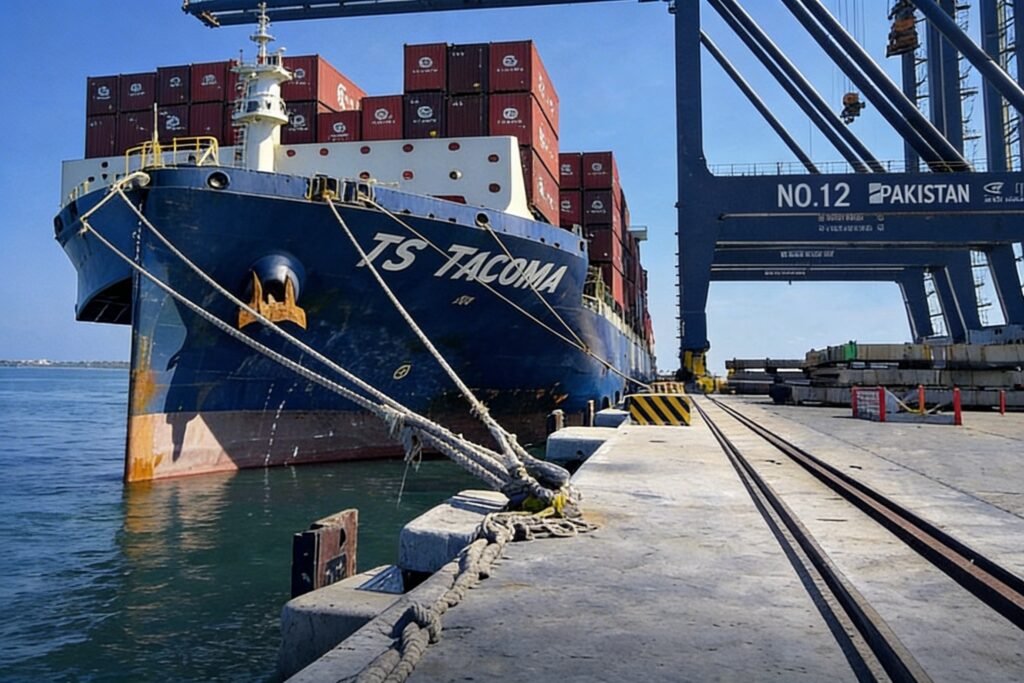
Karachi Port transshipment activity has unexpectedly surged as global shipping lines reroute cargo due to escalating tensions in the Middle East and the disruption of traditional shipping corridors. The evolving geopolitical situation, particularly the closure of the strategic Strait of Hormuz, is forcing maritime operators to rethink long-standing logistics routes that have shaped regional trade for decades.
In a significant development, Karachi Port has begun receiving large volumes of containers originally destined for the United Arab Emirates, marking a shift in regional shipping patterns and potentially positioning Pakistan as a new logistics hub for international trade.
This sudden redirection of cargo has sparked curiosity across the maritime industry: Could Karachi emerge as an alternative transshipment center for the region?
Why the Karachi Port Transshipments Shift Is Happening
For decades, major shipping lines relied heavily on UAE ports particularly Jebel Ali as the primary transshipment hub in the region. Massive container vessels would dock there, unload cargo destined for neighboring markets, and then distribute those goods via smaller feeder ships to Pakistan, Central Asia, Afghanistan, and parts of East Africa.
However, the ongoing conflict involving Iran, the United States, and Israel has disrupted this established model. Iran’s closure of the Strait of Hormuz one of the world’s most critical oil and shipping chokepoints has created uncertainty for vessels heading toward Gulf ports.
As a result, several shipping lines have begun offloading UAE-bound cargo at Karachi instead, allowing the containers to be redistributed from Pakistan through alternative maritime routes.
This logistical adjustment has effectively triggered a new wave of Karachi Port transshipment operations, highlighting the port’s growing strategic importance.
Cargo Ships Arrive with Transshipment Containers
The shift became visible this week when two container vessels arrived at Karachi carrying large volumes of redirected cargo.
The ships, MV TS Tacoma and MV TS Sydney, docked at Karachi Port and discharged numerous containers belonging to regional shipping companies and non-vessel operating common carriers (NVOCCs). These containers are currently being stored at port terminals before being forwarded onward to the Middle East.
The cargo originated from multiple shipping operators including:
• TS Line
• Heung-A Shipping
• Sinokor Merchant Marine
• Various international NVOCC operators
Once processed at Karachi, the containers will be shipped onward to the UAE, particularly the major regional logistics hub of Jebel Ali.
Karachi Port Authority Signals Readiness
Karachi Port Trust (KPT) officials say the port is fully prepared to handle the unexpected increase in cargo traffic.
KPT Chairman, retired Rear Admiral Shahid Ahmed, reaffirmed the port authority’s commitment to maintaining uninterrupted trade flows despite geopolitical instability in the region.
According to port officials, the incoming containers have been temporarily stored within terminal areas inside the port limits while authorities coordinate further logistics arrangements.
The surge in Karachi Port transshipment volumes may also require expanded storage capacity and operational coordination to avoid congestion.
Shipping Industry Calls for Expanded Storage Facilities
Recognizing the growing cargo inflow, the Pakistan Ships Agent Association (PSAA) has urged the government to allow transshipment containers to be temporarily stored at off-dock terminals.
These facilities are located in nearby logistics zones such as:
• Hawkesbay
• Mauripur
• Port Qasim
Moving cargo to these off-dock terminals could significantly reduce congestion at Karachi Port while improving the speed of container handling and onward transportation.
PSAA Chairman Muhammad Rajpar warned that the current disruption may persist for some time.
Industry observers believe the Strait of Hormuz may remain closed or unstable in the near term, meaning that the volume of redirected cargo could continue to grow.
A Strategic Opportunity for Pakistan’s Logistics Sector
While the geopolitical crisis presents clear risks to global trade, it also creates an unexpected opportunity for Pakistan’s maritime sector.
If shipping lines continue using Karachi as a temporary redistribution hub, Karachi Port transshipment operations could expand significantly. Increased cargo traffic could boost port revenues, enhance Pakistan’s role in regional supply chains, and encourage further investment in logistics infrastructure.
Experts note that ports often gain long-term strategic importance during periods of disruption, when shipping companies discover new and efficient alternatives to traditional routes.
If managed effectively, the current crisis could become a turning point for Pakistan’s maritime economy.
Could Karachi Become a Regional Shipping Hub?
The question now circulating in shipping circles is whether Karachi’s role in transshipment will remain temporary or evolve into a permanent shift.
With modernized port terminals, proximity to key regional markets, and access to alternative maritime routes, Karachi has the potential to attract more global shipping traffic.
For now, the surge in Karachi Port transshipment activity reflects how quickly global trade patterns can change when geopolitical tensions reshape critical sea routes.
And as the Middle East crisis continues to unfold, Karachi may find itself unexpectedly at the center of a new maritime trade corridor.