
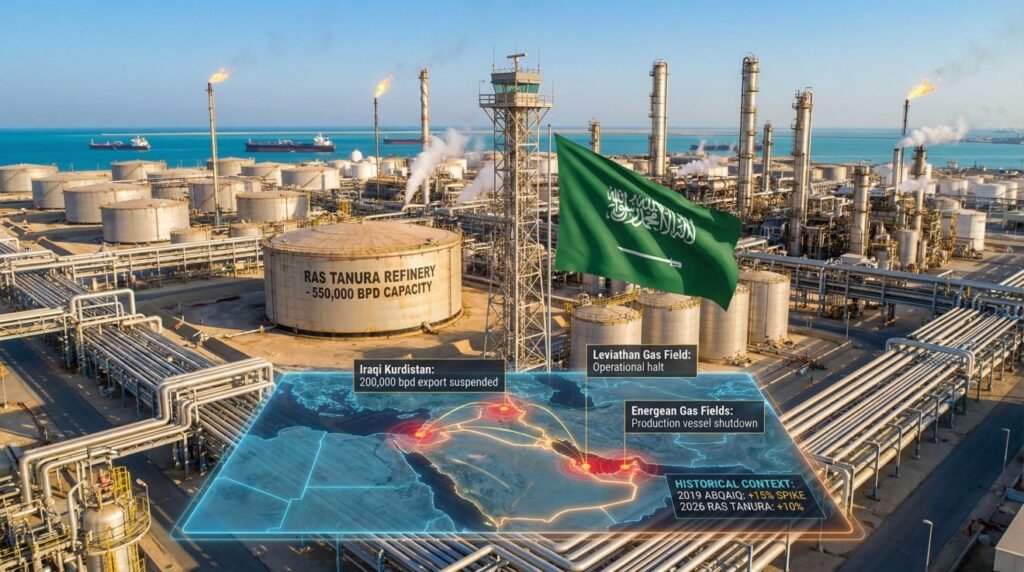
The Ras Tanura Refinery Attack has once again placed global oil markets on edge, raising urgent questions about supply stability and geopolitical risk. In a dramatic turn of events, Saudi Aramco temporarily shut down its flagship facility after a drone strike ignited a fire at the critical site.
Located along the Gulf coast, the Ras Tanura Refinery is not just any oil facility it is the largest refinery in the world, processing more than 550,000 barrels per day. Its strategic importance extends beyond refining, as it also serves as a major crude export hub, making it a cornerstone of global oil supply chains.
Why the Ras Tanura Refinery Attack Matters
The Ras Tanura Refinery Attack is more than a localized incident it’s a signal of vulnerability in one of the world’s most critical energy corridors. The attack, reportedly carried out by Houthi forces, comes amid escalating tensions involving Iran and Israel, further intensifying regional instability.
This development has already triggered strong reactions in global markets. Brent Crude futures surged nearly 10%, reflecting fears of potential supply disruptions. Oil traders and analysts are closely monitoring the situation, as any prolonged shutdown could significantly tighten global supply.
A Region Under Pressure
The Ras Tanura Refinery Attack is part of a broader wave of coordinated strikes across the Gulf. Reports indicate that key commercial and energy hubs including Abu Dhabi, Dubai, Doha, Manama, and Duqm have also been targeted.
This escalation has disrupted major shipping routes, creating ripple effects across global trade and energy logistics. Tanker movements in the Gulf have slowed, insurance premiums are rising, and supply chain uncertainties are growing.
Lessons from the Past
This is not the first time Saudi Arabia’s energy infrastructure has been under threat. In 2019, coordinated attacks on Abqaiq oil processing facility and Khurais oil field temporarily knocked out over half of the kingdom’s oil production.
That incident caused immediate price spikes and exposed the fragility of even the most advanced oil infrastructure. Today’s Ras Tanura Refinery Attack echoes those concerns, reminding markets that geopolitical risk remains a powerful force shaping energy dynamics.
What Happens Next?
While initial reports suggest the situation is under control, uncertainty lingers. The temporary shutdown of such a vital facility highlights a critical reality: global energy security is deeply intertwined with regional stability in the Gulf.
If tensions escalate further, the consequences could include:
• Prolonged supply disruptions
• Higher global oil prices
• Increased volatility in financial markets
• Strain on import-dependent economies
For countries like Pakistan, which rely heavily on imported energy, the Ras Tanura Refinery Attack could translate into higher fuel costs and inflationary pressures.
Final Thoughts
The Ras Tanura Refinery Attack underscores a growing concern in global energy markets: even the most strategically protected oil hubs are not immune to geopolitical shocks. As tensions rise and markets react, the world is once again reminded that energy security is as much about politics as it is about production.
Investors, policymakers, and businesses alike will be watching closely because what happens next in the Gulf could shape the global economy in the weeks to come.