
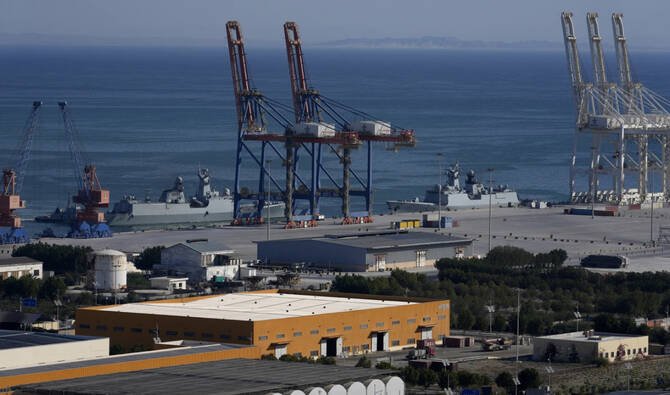
Pakistan’s federal government has greenlit a comprehensive battery-backed power arrangement to deliver fully reliable electricity to Gwadar by February or March 2027.
Read More: https://theboardroompk.com/pakistan-senate-resolution-on-afghanistan-tensions-a-defining-moment/
The announcement came during a Senate session where Power Minister Sardar Awais Ahmed Khan Leghari detailed the plan to ensure no interruptions for vital facilities, including the deep-sea port, water desalination units, and emerging industrial areas.
Overcoming Supply Challenges Gwadar’s existing power comes from Iranian imports (intermittent and fluctuating) and distant national grid connections (prone to voltage issues). Simultaneous operation is technically impossible, and past grid upgrade plans were not feasible economically.
Abandoning the earlier 300MW imported coal plant under CPEC, authorities opted for a smarter approach: Battery Energy Storage Systems (BESS) paired with economical backup generation.
This setup will handle the present 40-50 MW demand while allowing expansion as the region develops.
Strategic Impact and Future Outlook The project guarantees stable power independent of external sources, eliminating fluctuations and promoting investor confidence in Gwadar. It supports sustainable progress in the Makran region and ties into national goals for efficient energy solutions.
Minister Leghari emphasized its role as a milestone for reliable supply to critical infrastructure. Combined with ongoing solar initiatives in Balochistan, it signals a forward-looking strategy to power economic hubs like Gwadar effectively.