
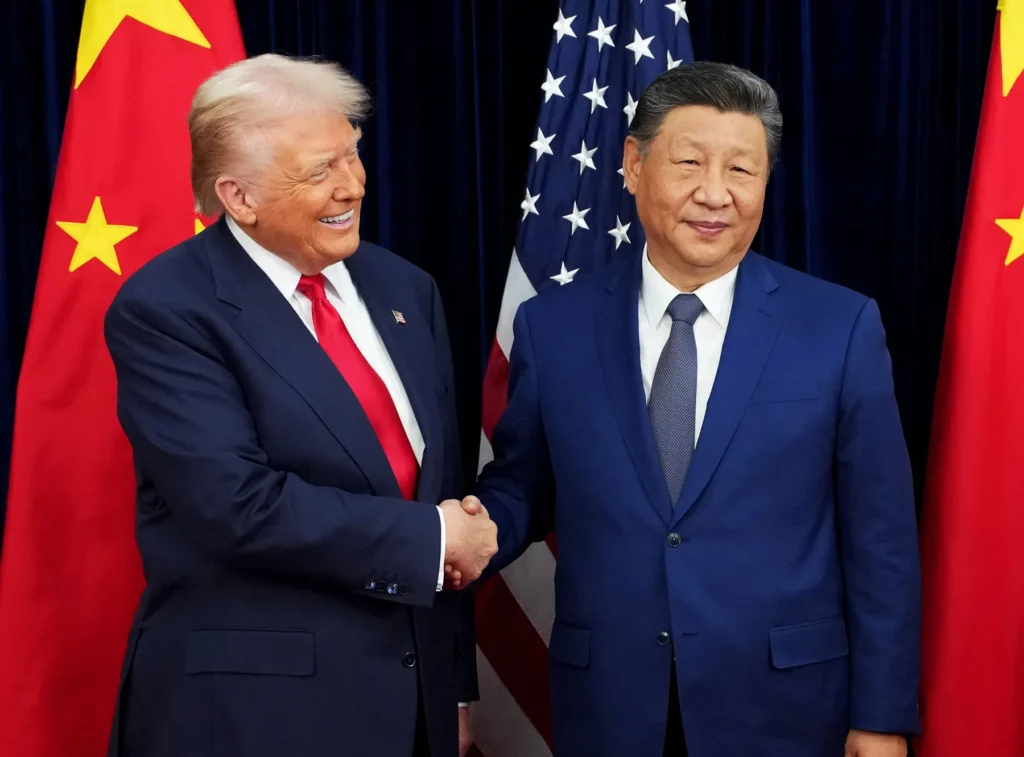
China is strategically positioning itself to maintain and expand dominance in global trade well beyond the current U.S. administration under President Donald Trump.
According to a Reuters analysis published on February 19, 2026, Beijing views Trump’s tariffs and protectionist policies as an opportunity to insulate its $19 trillion economy from future U.S. pressure by deepening integration into major economic blocs worldwide.
Read More: https://theboardroompk.com/pm-sharif-seeks-clarity-on-gaza-troop-role-during-washington-visit/
The approach involves aggressively pursuing around 20 free-trade agreements (FTAs) with partners across regions, including the European Union, Gulf States, and trans-Pacific frameworks like the CPTPP. This push aims to embed China’s vast manufacturing base so firmly in global supply chains that decoupling becomes difficult or impractical for trading partners.
Core Strategies and Initiatives
China is accelerating negotiations on long-standing deals, with recent examples including tariff reductions on Chinese EVs in a new agreement with Canada (January 2026), zero tariffs on imports from 53 African countries (announced February 2026), and outreach to countries like Honduras, Panama, Peru, South Korea, and Switzerland.
Diplomats are promoting multilateralism, offering AI-powered customs systems, digital trade upgrades, and development cooperation to build alliances.
Policy papers from institutions like the Chinese Academy of Social Sciences emphasize “anti-decoupling” as a priority, drawing lessons from U.S. tactics to weaponize institutions. Initiatives such as the Belt and Road and Regional Comprehensive Economic Partnership (RCEP, covering ~30% of global GDP) help set standards in areas like digital trade and intellectual property.
Sector Focus and Challenges
China leverages strengths in EVs, batteries, semiconductors, and overproduction to flood markets with competitive goods, supported by a record $1.2 trillion trade surplus. However, this surplus, uneven market access, and weak domestic demand raise concerns among partners about market flooding and unfair competition.
Beijing is preparing for structural shifts, with the upcoming five-year plan (March 2026) prioritizing higher consumption and imports to rebalance the economy.
Expert Views and Implications
Experts offer mixed assessments. Alicia Garcia Herrero called it a “golden opportunity” for China, while others like Wendy Cutler urged Beijing to “walk the walk” on fair trade, and Pascal Lamy questioned the failure to rebalance despite surpluses. European diplomats dismissed some overtures as propaganda, with no immediate EU deal in sight.
If successful, this could reshape multilateral trade around China-centric rules, countering over a decade of U.S. containment efforts. Yet risks of fragmentation persist if imbalances remain unaddressed.