
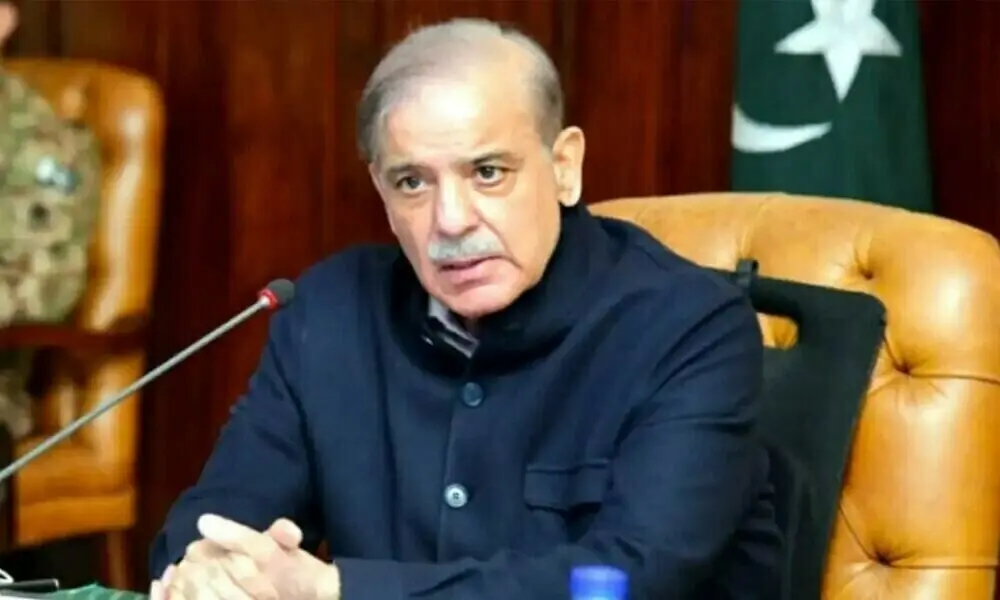
Prime Minister Muhammad Shehbaz Sharif is in Washington DC to attend the inaugural meeting of US President Donald Trump’s Board of Peace, where he will seek assurances on the role of any potential Pakistani troops in Gaza’s proposed International Stabilization Force (ISF).
According to sources cited by Reuters, Pakistan is willing to contribute forces but only under strict conditions that limit their role to peacekeeping, explicitly excluding any involvement in disarming Hamas.
The visit, running February 18–20, 2026, coincides with the first formal session of the Board of Peace, chaired by Trump and involving delegations from at least 20 countries. Discussions are expected to cover a multi-billion-dollar Gaza reconstruction plan and details of the UN-authorized stabilization force.
Pakistan’s Conditions and Concerns
Three government sources told Reuters that PM Sharif aims to clarify the ISF’s objectives, operational authority, and chain of command before any commitment. A close aide to the Prime Minister stated: “We are ready to send troops. Let me make it clear that our troops could only be part of a peace mission in Gaza.
We will not be part of any other role, such as disarming Hamas. It is out of the question.” Another source noted Pakistan could deploy “a couple of thousand troops” initially if terms are acceptable.
Pakistan’s stance reflects sensitivity to domestic and broader Muslim-world sentiments, with analysts warning of potential public backlash if the mission does not advance Palestinian interests.
Broader Context and Diplomatic Balancing
Trump’s Gaza plan envisions a multinational force from Muslim nations to support reconstruction and stability post-ceasefire. Pakistan has been encouraged by the US to participate, leveraging its military expertise.
The Board of Peace initiative, launched in late January 2026, aims to address global conflicts, including Gaza’s recovery following the October 2025 ceasefire phase.
This engagement highlights Pakistan’s diplomatic balancing act: strengthening ties with the US while upholding support for Palestinian statehood and avoiding controversial roles in the conflict.