
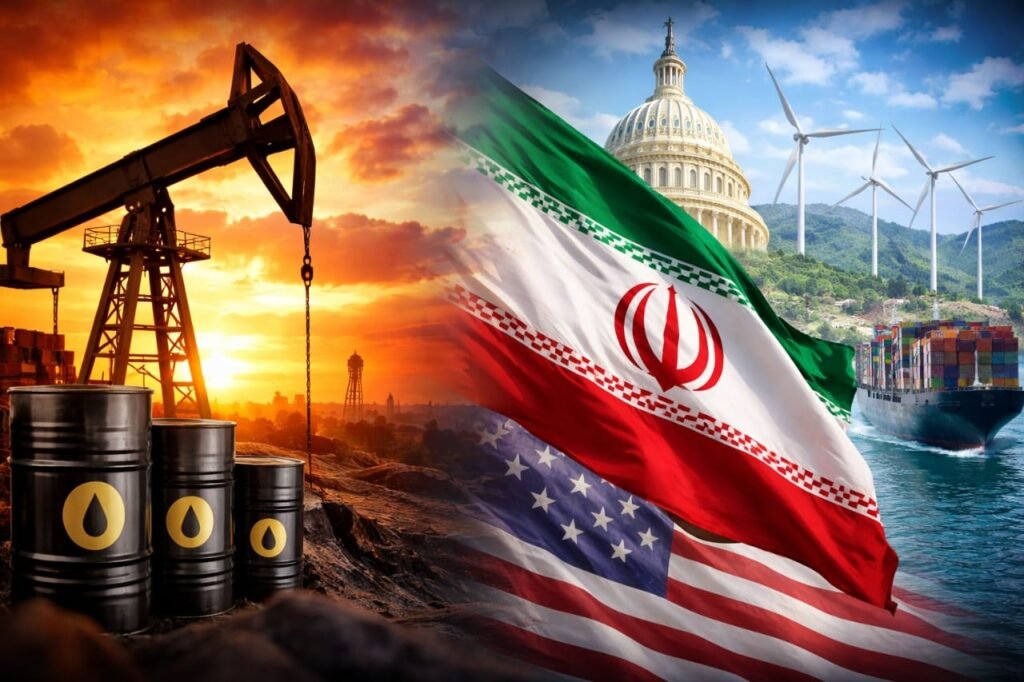
Oil prices today opened Tuesday on a cautious note, slipping slightly in Asian trading as global markets weighed rising geopolitical risks against critical economic signals from the world’s biggest oil consumers. While crude prices had surged more than 1% in the previous session, traders appeared unwilling to extend gains amid lingering uncertainty surrounding U.S.–Iran relations and upcoming inflation and employment data from the U.S. and China.
The oil market, already sensitive to political flashpoints and monetary policy shifts, is now navigating a perfect storm of diplomacy, data, and demand expectations keeping investors glued to every headline.
Oil Prices Today: Market Snapshot at a Glance
In early Asian hours, Brent crude futures for April edged down 0.1% to $68.99 per barrel, while West Texas Intermediate (WTI) slipped 0.2% to $64.06 per barrel. The modest pullback followed a strong rally a day earlier, when prices jumped after reports suggested Washington was adopting a more cautious stance toward Iran.
Instead of listing figures in a table, it’s worth noting that Brent remains just below the psychologically important $70 mark, while WTI continues to trade comfortably above $64, reflecting resilience despite short-term volatility.
A softer U.S. dollar earlier in the week also provided some relief to commodity markets, although the greenback recovered slightly on Tuesday, limiting upside momentum for oil prices today.
U.S.–Iran Tensions Add a New Risk Premium to Oil Prices Today
One of the biggest drivers behind recent price swings is escalating concern over Middle East security. On Monday, the U.S. Department of Transportation’s Maritime Administration issued a stark advisory urging U.S.-flagged vessels to stay as far away from Iranian waters as possible while transiting the Strait of Hormuz and the Gulf of Oman.
The advisory specifically recommended ships remain close to Omani territorial waters, citing heightened risks of Iranian forces boarding vessels. This warning reignited fears of supply disruptions in one of the world’s most critical oil transit routes, through which nearly one-fifth of global oil flows.
Although recent weekend talks between Washington and Tehran showed signs of diplomatic progress, tensions remain unresolved. Iran’s rejection of calls to halt nuclear enrichment a core U.S. demand has kept geopolitical risk firmly embedded in oil prices today.
Economic Data Takes Center Stage for Oil Prices Today
Beyond geopolitics, markets are bracing for a wave of economic indicators that could redefine demand expectations.
U.S. Data and Interest Rate Outlook
In the United States, January nonfarm payrolls are due midweek, followed by consumer price index (CPI) inflation data on Friday. These readings will heavily influence expectations around U.S. interest rates, particularly as speculation grows over an upcoming leadership change at the Federal Reserve.
Stronger labor and inflation data could dampen oil demand optimism by reinforcing a higher-for-longer rate environment, while weaker numbers may revive hopes of monetary easing potentially supporting oil prices today.
China’s CPI and Lunar New Year Effect
In China, the world’s largest oil importer, CPI data is also scheduled for release on Friday, just ahead of the week-long Lunar New Year holiday. Historically, this period sees a spike in travel, fuel consumption, and industrial activity.
Analysts expect Chinese travel and fuel demand to rebound sharply, offering a potential cushion for oil prices today if economic data signals stabilization in the world’s second-largest economy.
What This Means for Oil Prices Today and Beyond
The oil market is currently balancing on a tightrope. On one side are geopolitical risks and maritime security threats, which tend to push prices higher. On the other are macroeconomic uncertainties, including inflation, interest rates, and global growth concerns.
For now, oil prices today reflect a wait-and-watch mood where every diplomatic signal and data release has the power to swing sentiment. As tensions simmer in the Middle East and economic indicators roll in from Washington and Beijing, volatility is likely to remain the defining feature of the oil market in the days ahead.