
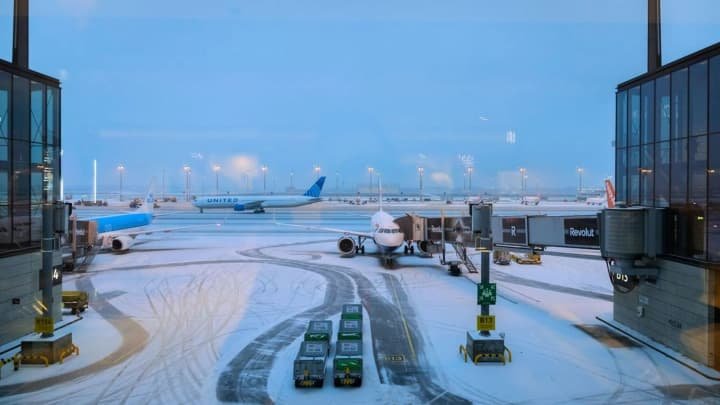
Berlin Brandenburg Airport (BER), the German capital’s main international hub, ground to a halt on Friday morning as severe weather wreaked havoc on operations. Freezing rain and black ice turned runways into slippery hazards, preventing any takeoffs or landings. Airport officials confirmed the suspension, which began Thursday evening, shows no immediate signs of lifting, leaving thousands of passengers stranded amid the winter chaos.
Impact on Travelers and Airlines
Passengers faced mounting frustration as flight boards displayed endless delays and cancellations. Many had arrived early, only to find check-in counters overwhelmed and lounges packed.
Airlines like Lufthansa and EasyJet scrambled to rebook flights, offering vouchers for hotels and meals. One traveler, a business executive from London, described the scene as “utter disarray,” with families huddling in terminals and announcements echoing apologies.
The economic ripple effects are significant. Berlin’s airport handles over 25 million passengers annually, and disruptions like this could cost millions in lost revenue for carriers and local businesses.
Ground crews worked tirelessly overnight, applying de-icing agents to runways and taxiways. Despite their efforts, the persistent freezing rain rendered treatments ineffective, with surfaces remaining perilously slick.
Meteorologists attribute the black ice to a rare combination of sub-zero temperatures and moisture from Atlantic weather systems. This phenomenon, where clear ice forms invisibly on surfaces, poses extreme risks to aviation safety.
Efforts to Resume Operations and Future Precautions
Airport spokeswoman Anna Müller stated that safety remains the top priority, with no risks being taken until conditions improve. “We’re monitoring the weather hourly,” she said. Teams are deploying advanced heating equipment and additional anti-slip materials in hopes of a midday restart.
Forecasts predict a slight thaw by afternoon, but uncertainty lingers. If operations don’t resume soon, diversions to nearby airports like Leipzig or Hamburg may increase.
This incident highlights Berlin’s vulnerability to extreme weather, prompting calls for infrastructure upgrades. Experts suggest investing in heated runways and better predictive tech to prevent future shutdowns.
In the meantime, passengers are advised to check airline apps for updates and consider alternative travel options, such as high-speed trains connecting Berlin to major European cities.
The disruption underscores broader climate challenges, with more frequent severe winters affecting global travel. Berlin officials promise a full review once the crisis passes, aiming to enhance resilience against such events.