
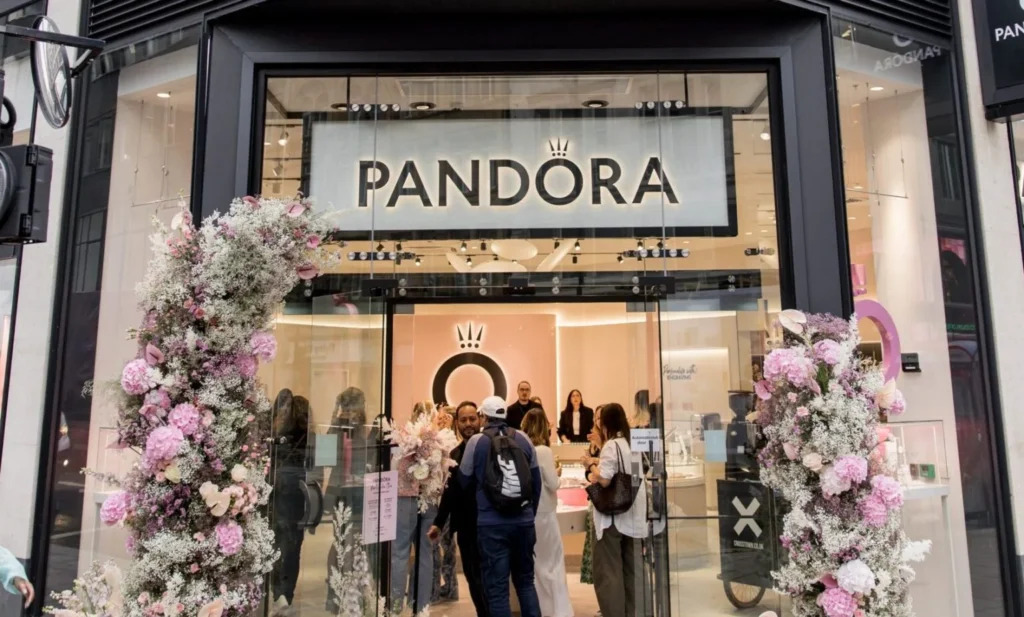
Pandora world’s largest jeweler is facing one of its most testing periods in recent years, as surging silver prices and weakening consumer confidence collide to shake investor faith. The Danish jewelry giant saw its shares tumble nearly 7% after analysts issued stark warnings that volatile silver costs could trap the company in a prolonged period of underperformance.
Read More: https://theboardroompk.com/bitcoin-price-crash-from-digital-gold-to-risk-asset-in-just-four-months/
Once celebrated for democratizing affordable luxury, Pandora now finds itself squeezed between rising input costs and a fragile global consumer—an uncomfortable position that has prompted major investment banks to hit the brakes on bullish calls.
Why Analysts Are Reassessing Pandora World’s Largest Jeweler
Jefferies analysts downgraded Pandora world’s largest jeweler from Buy to Hold, warning that the company is “caught between a rock and a hard place.” On one side lies a pressured consumer environment, particularly in the United States and Europe. On the other, wildly fluctuating silver prices an essential raw material for Pandora’s core products.
The concern goes beyond short-term earnings. Analysts believe investor hesitation could linger even if silver prices stabilize. In other words, any rebound in Pandora’s stock may struggle to gain momentum due to lasting uncertainty around input costs.
A Stock Under Pressure: What the Numbers Reveal
The market reaction has been swift and unforgiving. After two days of gains, Pandora shares dropped 6.7% in afternoon trading. Zooming out paints an even starker picture: the stock has fallen roughly 46% over the past year and is down about 26% year-to-date.
Earlier this year, Pandora world’s largest jeweler cut its earnings guidance, citing weakening consumer sentiment—particularly among lower-income shoppers who form its core customer base. However, analysts now point to silver prices as the real culprit driving long-term concern.
Silver prices remain almost three times higher than they were a year ago. According to Jefferies’ projections, this cost surge could translate into profit levels that are as much as 60% lower by 2027 if current trends persist.
Can Pandora Escape the Silver Trap?
Pandora has already attempted to offset rising costs by increasing prices by approximately 14%. While this move helped protect margins in the short term, it came at a cost: weaker consumer engagement. In a world shaped by what economists call a “K-shaped economy,” lower-income consumers are finding it harder to absorb price hikes on discretionary items like jewelry.
Some have speculated whether Pandora world’s largest jeweler could shift toward alternatives such as silver-plating or stainless steel. Analysts, however, remain skeptical. Such changes would add manufacturing complexity and could dilute Pandora’s brand promise an unacceptable risk for a company built on emotional, affordable luxury.
Macro Forces Add to the Pressure
Silver’s recent volatility has been amplified by global macroeconomic events. The metal suffered its worst single-day drop since 1980 following political developments in the United States that eased fears over central bank independence. Yet despite this sharp sell-off, silver prices remain historically elevated.
Citi analysts echoed the cautious tone, downgrading Pandora to Neutral and citing slowing sales momentum, extreme silver inflation, and growing signs of jewelry consumption fatigue across key markets that account for nearly 80% of total sales.
What’s Next for Pandora World’s Largest Jeweler?
All eyes are now on Pandora’s upcoming full-year earnings report. Investors will be looking for clarity on cost controls, pricing strategy, and whether demand can stabilize amid persistent economic uncertainty.
For Pandora world’s largest jeweler, the challenge is no longer just about selling charm bracelets it’s about restoring confidence in a market where both consumers and investors are growing increasingly cautious. Until silver prices settle and spending power improves, Pandora’s sparkle may remain dimmed.