
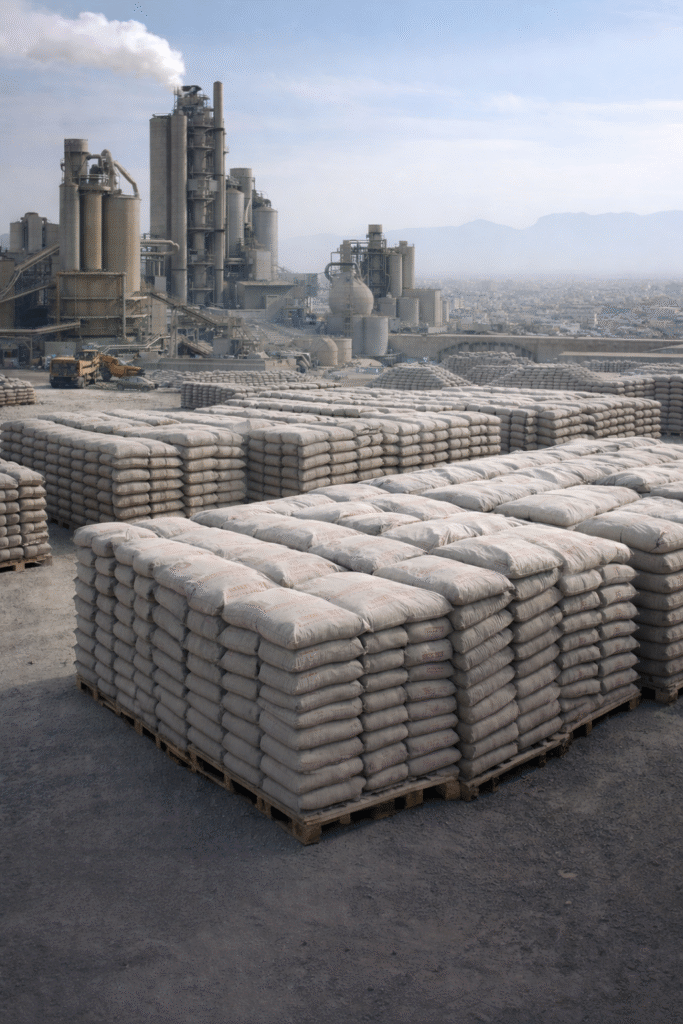
Pakistan cement despatches opened 2026 on a powerful note, surprising many industry watchers with a double-digit surge that signals renewed momentum across both domestic and export markets. According to the latest figures released by the All Pakistan Cement Manufacturers Association (APCMA), total cement despatches climbed 12.54% year-on-year in January 2026, reaching 4.538 million tons, compared to 4.032 million tons in the same month last year.
Read More: https://theboardroompk.com/uae-2-billion-loan-to-pakistan-a-temporary-breathing-space/
At a time when construction-linked sectors are closely watched as economic barometers, these numbers hint at deeper shifts underway in Pakistan’s infrastructure, housing, and export dynamics.
Pakistan Cement Despatches Driven by Domestic Stability and Export Boom
A closer look at Pakistan cement despatches reveals a tale of two markets steady domestic growth paired with an explosive rise in exports.
Local cement despatches reached 3.601 million tons, marking a 4.36% increase from January 2025. While not dramatic, this growth reflects consistent activity in housing projects, private construction, and ongoing development work despite cost pressures and tighter financial conditions.
The real headline-grabber, however, came from exports. Cement exports surged by a staggering 61.1%, jumping from 581,691 tons last year to 937,097 tons in January 2026. This sharp rise highlights Pakistan’s growing competitiveness in regional cement markets, supported by favorable pricing, logistics advantages, and strong demand from overseas buyers.
North vs South: How Pakistan Cement Despatches Differ by Region
Northern Mills: Domestic Strength Holds Firm
Northern-based cement mills dispatched 2.95 million tons in January 2026, posting a 4.67% increase compared to the same month last year. This growth was entirely driven by domestic demand, where shipments rose 6.93% to 2.95 million tons.
Interestingly, no cement exports were recorded from northern mills during the month, underscoring their continued reliance on Pakistan’s internal construction market.
Southern Mills: Export Powerhouse of Pakistan Cement Despatches
Southern-based mills told a very different story. Total despatches from the south jumped 30.82%, reaching 1.59 million tons, up from 1.214 million tons a year earlier.
While domestic despatches from the south dipped slightly by 5.87%, exports more than compensated. Southern mills exported 937,097 tons, reflecting a massive 79.41% year-on-year increase. This firmly positions the south as the export engine behind Pakistan cement despatches, benefiting from proximity to ports and international shipping routes.
Pakistan Cement Despatches Show Sustained Growth in FY2026
The January performance builds on a broader upward trend seen during the first seven months of the current fiscal year.
From July to January, total Pakistan cement despatches reached 30.583 million tons, up 10.58% from 27.656 million tons in the same period last year. Domestic shipments rose a healthy 12.36% to 25.015 million tons, reflecting ongoing construction demand across the country.
Exports during this period grew more modestly by 3.26%, reaching 5.568 million tons, but remain a crucial pillar of overall industry volumes.
Northern mills dominated domestic supply with 20.895 million tons, while their exports declined by 23.13%, bringing total despatches to 21.704 million tons. Southern mills, meanwhile, reported combined domestic and export shipments of 8.879 million tons, up nearly 8%, powered largely by export growth.
What Pakistan Cement Despatches Reveal About the Economy
The latest Pakistan cement despatches data paints a cautiously optimistic picture. Rising domestic volumes suggest resilience in construction activity, while booming exports point to Pakistan’s cement sector gaining traction internationally.
For investors, policymakers, and industry players alike, these numbers signal that cement often seen as the backbone of economic development may be gearing up for a stronger year ahead, provided macroeconomic stability and infrastructure spending remain on track.
As 2026 unfolds, all eyes will be on whether this momentum can be sustained or even accelerated.