
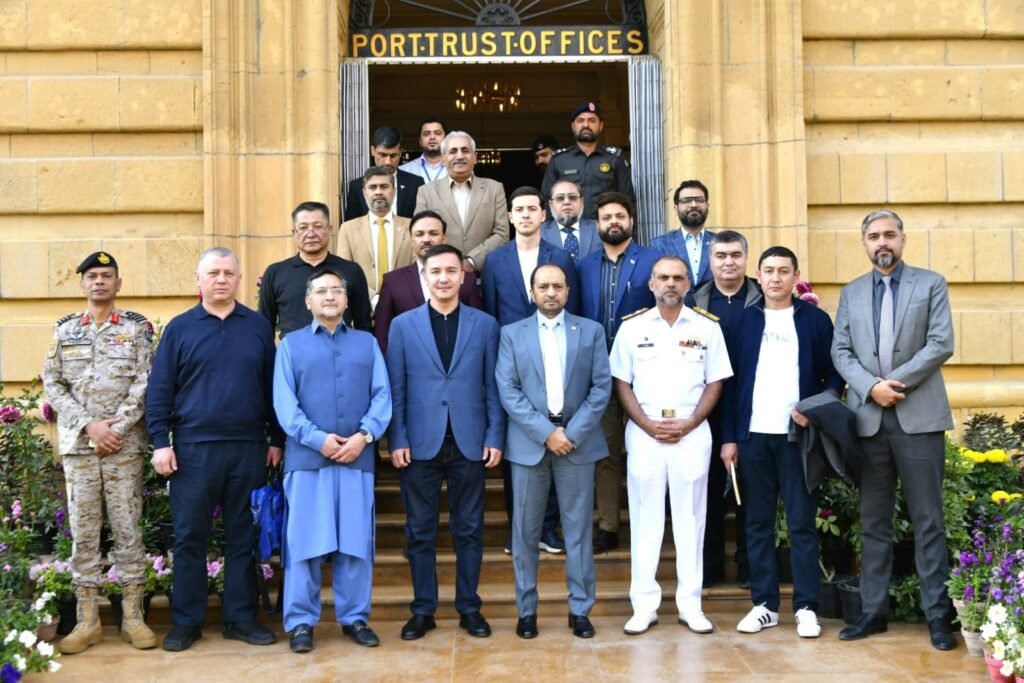
The Uzbekistan Transport Ministry Karachi Port Trust visit may appear ceremonial at first glance, but beneath the protocol lies a strategic signal one that could reshape trade corridors connecting Central Asia to global markets through Pakistan. As regional economies search for faster, cost-efficient logistics routes, Karachi Port is steadily emerging as a gateway of choice.
A high-level delegation from the Ministry of Transport of the Republic of Uzbekistan, led by H.E. Omarov Mamanbiy Allabergenovich, First Deputy Minister of Transport, arrived at Karachi Port Trust (KPT). The delegation was received by Rear Admiral Shahid Ahmed, SI(M), S.Bt (Retd), Chairman KPT, along with senior port officials setting the stage for discussions that went far beyond routine diplomacy.
Why the Uzbekistan Transport Ministry Karachi Port Trust Engagement Matters
This visit comes at a time when landlocked Central Asian states, including Uzbekistan, are actively exploring southern maritime routes to reduce dependence on longer, costlier logistics chains. Pakistan, with its deep-sea ports and improving inland connectivity, presents a compelling alternative.
Chairman KPT highlighted the historical, cultural, and intellectual ties between Pakistan and Uzbekistan, underscoring how trade cooperation can build upon centuries-old connections. The message was clear: economic geography is evolving, and Karachi is positioning itself as Central Asia’s maritime bridge.
Inside Karachi Port Trust’s Expansion Vision
During the briefing, the Uzbek delegation was presented with a comprehensive overview of KPT’s ongoing and future-ready infrastructure projects, each designed to enhance capacity, efficiency, and multimodal connectivity.
Instead of tables, these initiatives can be understood as three strategic development pillars:
- Port Modernization and Commercial Expansion
Karachi Port Trust is advancing major waterfront projects, including:
• The East–West Connectivity Bridge, aimed at reducing congestion and improving cargo flow.
• A dedicated Ferry Terminal, enhancing maritime passenger and logistics services.
• The Maritime Business District at TPX, envisioned as a commercial hub integrating port operations with business and services.
• South Wharf expansion, designed to accommodate larger vessels and increased cargo volumes.
Together, these developments signal KPT’s ambition to compete with leading regional ports.
- Inland Connectivity and Freight Corridors
For Uzbekistan, port access is only as good as inland connectivity. KPT emphasized projects that link sea to land seamlessly, including:
• The Lyari Elevated Freight Corridor, enabling faster cargo movement from port to highways.
• Karachi Northern Bypass and Malir Expressway, reducing urban bottlenecks.
• Rail freight expansion under ML-1, a backbone project for long-haul cargo movement across Pakistan.
These corridors directly support Central Asian transit trade, shortening delivery times and lowering logistics costs.
- Regional Trade Integration
The Uzbekistan Transport Ministry Karachi Port Trust dialogue focused on regional integration, positioning Karachi as a logistics hub for Uzbek exports and imports, spanning textiles, agriculture, minerals, and manufactured goods.
A Gateway to Central Asia’s Future
For Uzbekistan, access to warm-water ports has long been a strategic priority. Karachi Port offers:
• Shorter routes to Middle Eastern, African, and European markets
• Reliable maritime infrastructure
• Expanding rail and road links into Central Asia via Pakistan
For Pakistan, this partnership enhances its role as a regional transit economy, unlocking new revenue streams and strengthening geopolitical relevance.
Beyond Symbolism: What This Visit Really Signals
The exchange of souvenirs and group photographs marked the conclusion of the visit, but the implications extend far beyond protocol. The Uzbekistan Transport Ministry Karachi Port Trust engagement reflects:
• Growing confidence in Pakistan’s port infrastructure
• Rising Central Asian interest in southern trade corridors
• Karachi Port’s transformation into a regional logistics powerhouse
As global supply chains diversify, such engagements hint at new trade routes quietly taking shape routes where Karachi stands at the center.
Conclusion: Karachi Port at the Crossroads of Opportunity
The Uzbekistan delegation’s visit is more than a diplomatic courtesy; it is a strategic alignment of interests. With modern infrastructure, expanding connectivity, and regional ambition, Karachi Port Trust is positioning itself as the maritime heartbeat linking Central Asia to the world.
If momentum continues, this visit may be remembered as a turning point in Pakistan–Uzbekistan trade relations one that opens new corridors of commerce, cooperation, and connectivity.