
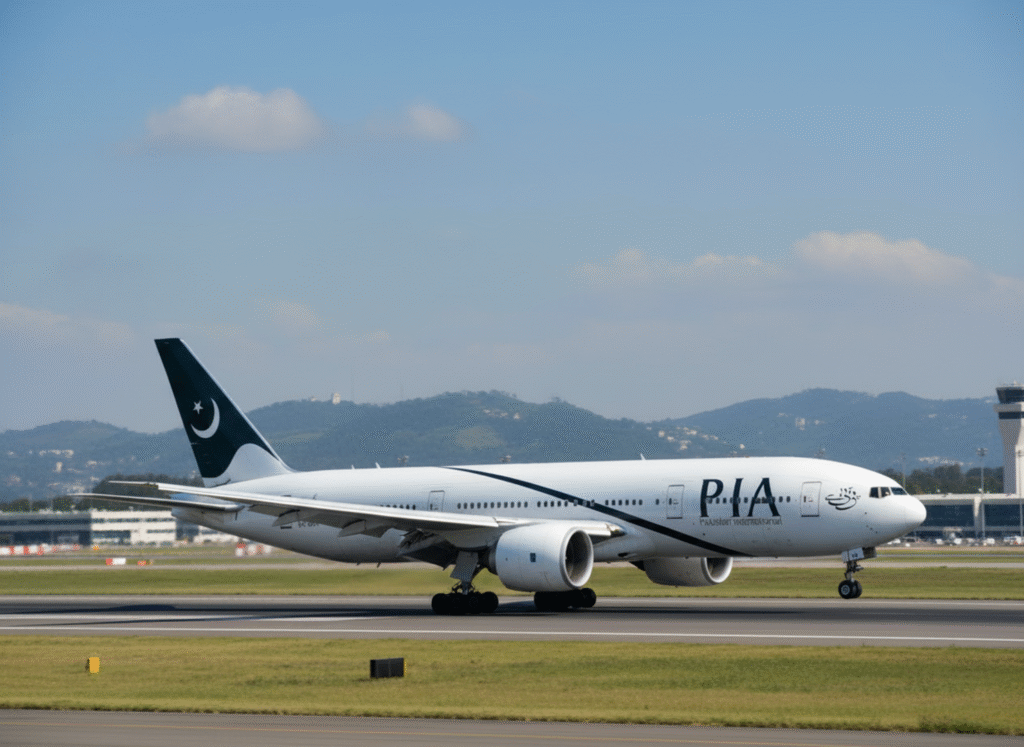
The long-anticipated PIA Privatization process has finally crossed a historic milestone. Pakistan International Airlines (PIA), the country’s national flag carrier, has officially been handed over to an Arif-Habib led consortium, marking one of the most consequential shifts in Pakistan’s aviation and public-sector reform landscape.
This handover is more than a change in ownership it represents a bold reset for an airline that once symbolized national pride but struggled for decades under mounting losses, inefficiencies, and governance challenges. For investors, policymakers, and travelers alike, PIA Privatization now moves from policy debate to real execution.
Why PIA Privatization Matters for Pakistan’s Economy
The significance of PIA Privatization extends far beyond aviation. As one of Pakistan’s most visible state-owned enterprises (SOEs), PIA’s chronic losses placed immense pressure on public finances. The transfer to private management reflects the government’s broader commitment to structural reforms, fiscal discipline, and private-sector-led growth.
In recent years, PIA required repeated government bailouts, accumulated billions in debt, and faced operational disruptions that damaged its global standing. By bringing in a reputed financial and industrial group, policymakers are betting that professional management and commercial discipline can finally reverse the airline’s fortunes.
Who Is the Arif-Habib Led Consortium?
At the center of this landmark PIA Privatization is the Arif-Habib Group one of Pakistan’s most prominent conglomerates with deep expertise in financial services, investments, energy, and industrial management.
The consortium’s involvement signals credibility and long-term intent. Market observers note that Arif-Habib’s track record of turning around complex businesses was a key factor in securing the deal. The group is expected to introduce modern governance structures, cost rationalization, and performance-driven decision-making areas where PIA historically struggled.
What Changes Can We Expect After PIA Privatization?
Under private management, PIA Privatization is expected to trigger a series of operational and strategic reforms.
Instead of presenting these changes in a table, they can be understood through three key transformation pillars.
First, operational efficiency is likely to improve through route rationalization, better fleet utilization, and stricter cost controls.
Second, customer experience is expected to be a priority, with upgraded services, improved punctuality, and a renewed focus on international standards.
Third, financial discipline will play a central role, as the consortium works to reduce losses, restructure liabilities, and restore investor confidence.
Together, these changes could reposition PIA as a commercially viable airline rather than a fiscal burden.
PIA Privatization and Investor Sentiment
From a market perspective, PIA Privatization has already sparked renewed interest in Pakistan’s reform narrative. Analysts view the handover as a test case: if PIA can be stabilized and revived, it could accelerate privatization across other loss-making SOEs.
The move also sends a strong signal to both local and foreign investors that Pakistan is willing to take politically difficult decisions to fix structural economic weaknesses. In a time of tight fiscal space, this credibility boost is critical.
Challenges Ahead for PIA Privatization
Despite optimism, PIA Privatization is not without risks. The airline operates in a highly competitive global aviation market, faces legacy labor issues, and must rebuild its international reputation. Fuel price volatility, regulatory compliance, and fleet modernization will also test the new management’s execution capabilities.
However, experts argue that private ownership provides far greater flexibility to address these challenges than state control ever allowed.
A Defining Moment for Pakistan International Airlines
The handover of PIA to the Arif-Habib led consortium marks a defining chapter in Pakistan’s economic reform journey. PIA Privatization is no longer an abstract policy goal it is a living experiment in whether private-sector efficiency can rescue a national institution.
If successful, this transition could redefine how Pakistan approaches state-owned enterprises for years to come. For now, all eyes are on how swiftly and decisively the new management can transform promises into performance.