
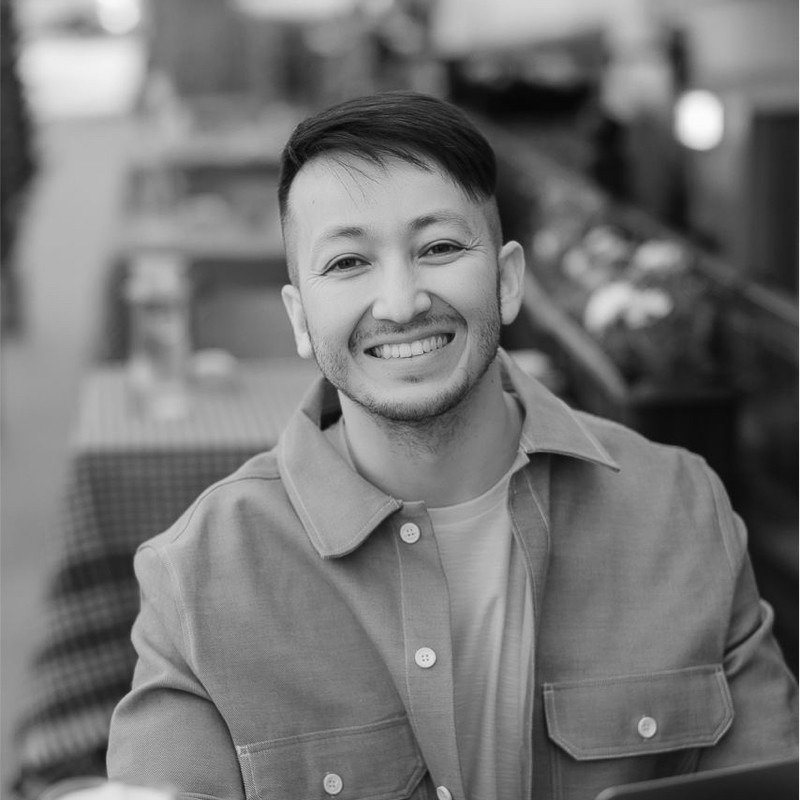
Nurken Rzaliyev, Head of Q-Commerce Services, inDrive said Super apps have long been portrayed as the inevitable next stage of digital evolution — a single platform that brings mobility, groceries, payments, logistics, and daily services into one seamless ecosystem. In Pakistan, however, repeated attempts have failed to gain meaningful traction. Not because the market lacks potential, but because the model has consistently been implemented the wrong way.
The failure of earlier super app experiments was not technological. It was structural. Platforms tried to do too many things at once, expanded without a strong core business, and overestimated the market’s readiness for bundled digital ecosystems. Growth was engineered from the top down, driven by ambition rather than behaviour.
Sustainable platforms are not built that way.
A real super app is not a product strategy — it is a trust architecture. It grows out of daily habits, fairness, and reliability. It starts with one service people use frequently, trust instinctively, and depend on daily. Without that foundation, integration becomes noise rather than value.
Pakistan’s digital economy today is far more mature than it was during earlier failed attempts. Smartphone adoption has surged, digital payments have normalized, and users are more comfortable with app-based services. Systems like Raast have helped build confidence in digital transactions, while everyday services like ride-hailing and deliveries have become routine.
But readiness alone is not enough. Platforms must align with local behaviour and culture.
Pakistan is a price-sensitive, trust-driven society. Transparency matters. Fairness matters. Negotiation is not a feature — it is a social norm. Digital platforms that ignore this reality struggle to integrate. Those that respect it build loyalty.
inDrive’s model is anchored in this principle. It is not algorithm-first — it is people-first. It gives users fair choice instead of automated price imposition. This is not just a pricing model; it is a philosophy that reflects how real markets function in emerging economies.
Every successful super app begins with a dominant core utility. For inDrive, that core is ride-hailing — a high-frequency service that builds daily engagement and trust. Once that trust is established, expansion becomes organic rather than forced.
Diversification must be sequenced, not rushed.
Services like courier, freight, and groceries are not parallel experiments; they are extensions of daily behaviour. Each vertical must integrate naturally into existing user routines. This creates platform coherence instead of fragmentation.
Groceries, in particular, represent one of the most strategic high-frequency categories in digital commerce. Food and household essentials define daily consumption. But quick commerce is not a convenience play — it is an operational discipline. Logistics density, quality control, last-mile reliability, and pricing stability determine long-term success. Speed alone does not create loyalty — consistency does.
True platform advantage is not fast delivery. It is predictability, trust, and fairness.
Long-term digital platforms in emerging markets must also reject unsustainable growth models. Burning capital without building loyalty creates inflated scale without real value. User trust, engagement depth, and community impact matter more than short-term financial optics.
Super apps are not built by stacking services. They are built by stacking trust.
Pakistan’s future super app ecosystem will not be defined by feature volume, aggressive expansion, or platform dominance. It will be defined by reliability, fairness, and daily usefulness. Platforms that grow from people’s needs — not from boardroom ambition — will endure.
The next generation of digital platforms in Pakistan must be people-driven, community-rooted, and behaviour-led.
That is how ecosystems are built. And that is how super apps will finally succeed in Pakistan.