
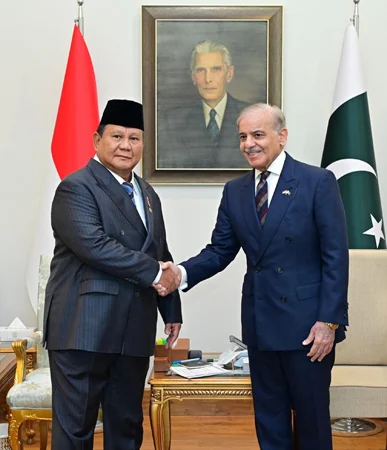
Pakistan Indonesia Joint Trade Committee cooperation entered a new phase as both countries signed a landmark Memorandum of Understanding (MoU) to establish the Indonesia–Pakistan Joint Trade Committee (JTC), reinforcing their shared vision for deeper trade and economic engagement.
The MoU was signed in Karachi on January 10, 2026, following high-level talks held a day earlier between Pakistan’s Federal Minister for Commerce, Jam Kamal Khan, and Indonesia’s Vice Minister of Trade, Ms. Dyah Roro Esty Widya Putri. The agreement creates a formal institutional framework to strengthen bilateral trade dialogue, address market access challenges, and unlock new investment opportunities.
Pakistan Indonesia Joint Trade Committee to Institutionalize Trade Dialogue
The establishment of the Pakistan Indonesia Joint Trade Committee marks a strategic move toward structured and sustained economic collaboration. The JTC will serve as a dedicated platform for identifying trade barriers, facilitating cooperation between public and private sectors, and coordinating policy-level engagement between the two governments.
The signing coincided with a reception hosted by the Indonesian Consulate General in Karachi, attended by senior officials and leading members of the business community from both countries. The event underscored growing confidence among stakeholders in the future of Pakistan–Indonesia economic relations.
Indonesia’s ASEAN Role and Pakistan’s Export Potential
During the talks, Commerce Minister Jam Kamal Khan highlighted Indonesia’s strategic importance as a key ASEAN economy and regional trade hub. He emphasized that closer cooperation with Indonesia could open pathways for trilateral and regional trade initiatives involving ASEAN member states.
Pakistan, he noted, has the capacity to become a reliable supplier of key products for the Indonesian market. These include minerals, pharmaceuticals, cosmetics, and agri-food commodities sectors where Pakistan holds competitive advantages and export growth potential.
Pakistan Indonesia Joint Trade Committee and Trade Facilitation Priorities
The Chief Executive of the Trade Development Authority of Pakistan (TDAP) Faiz Ahmed raised several trade facilitation priorities under the Pakistan Indonesia Joint Trade Committee framework. These included early announcement of fruit import quotas, rationalization of certification requirements for Pakistani exporters, notification of rice import quotas, and enhanced market access for Pakistan’s industrial-grade potatoes.
Addressing these technical and regulatory issues through the JTC is expected to improve trade predictability and reduce barriers for exporters on both sides.
Expanding PTA Toward a CEPA
Both Pakistan and Indonesia agreed to jointly work on expanding the scope of the existing Preferential Trade Agreement (PTA). The long-term objective is to progress toward a Comprehensive Economic Partnership Agreement (CEPA), which would significantly enhance trade volumes, investment flows, and supply chain integration.
Currently, bilateral trade between the two countries exceeds USD 4 billion. Policymakers believe that deeper tariff liberalization and improved regulatory cooperation could push this figure substantially higher in the coming years.
Palm Oil, Food Security, and Economic Interdependence
Highlighting the depth of economic interdependence, the Commerce Minister emphasized the importance of palm oil imports primarily sourced from Indonesia in Pakistan’s food supply chain. Imported edible oil plays a vital role in Pakistan’s daily consumption patterns, making Indonesia a critical trade partner.
He also noted that engagements such as diplomatic receptions and business forums help project Pakistan’s economic strengths and diversity internationally, countering outdated narratives and showcasing emerging opportunities.
75 Years of Diplomatic Relations and Future Outlook
Speaking at the event, Indonesian Vice Minister Dyah Roro Esty Widya Putri recalled 75 years of diplomatic relations between Pakistan and Indonesia, describing the partnership as one built on mutual respect, trust, and shared economic aspirations. She welcomed the formation of the Joint Trade Committee as a practical mechanism to deepen cooperation.
With strong political goodwill, expanding trade volumes, and increasing people-to-people linkages, the Pakistan Indonesia Joint Trade Committee is poised to become a cornerstone of bilateral economic relations, driving sustainable growth and regional connectivity.