
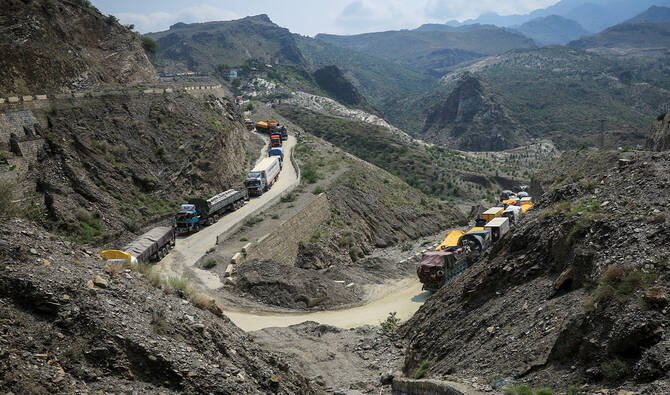
In 2025, Afghanistan demonstrated remarkable economic resilience despite repeated closures of key border crossings with Pakistan, driven by ongoing security disputes and tensions with Islamabad. These disruptions threatened to sever the landlocked nation’s primary access to seaports via established transit corridors that have been vital for decades. However, Afghan traders swiftly adapted by redirecting cargo through alternative pathways, primarily Iran’s Chabahar port and overland routes via Uzbekistan, Turkmenistan, and Tajikistan. This strategic pivot not only mitigated delays and political uncertainty but also allowed commerce to flourish amid strained bilateral relations.
According to Afghanistan’s commerce ministry data, total trade volume—combining exports and imports—climbed to nearly $13.9 billion in 2025, marking an increase from the previous year. Exports remained stable at approximately $1.8 billion, dominated by traditional goods such as dried fruits, coal, carpets, saffron, and agricultural produce destined for markets in India, Pakistan, and Central Asian states.
Subheading 2: Growth in Imports and Long-Term Diversification Strategy
Imports surged to over $12.1 billion, fueled by essential commodities like fuel, machinery, food staples, and industrial inputs sourced mainly from Iran, the United Arab Emirates, China, and regional neighbors. The shift to Chabahar port, supported by incentives including reduced tariffs and faster handling, along with expanded northern overland shipments, cushioned the economic impact of Pakistan’s border policies.
Afghan officials emphasized accelerating efforts to reduce dependence on Pakistan, acknowledging it as the fastest sea route but prioritizing diversification for sustainability. This approach has enabled uninterrupted trade flows, strengthening ties with Iran and Central Asia while highlighting Afghanistan’s adaptability in a volatile regional landscape. As geopolitical challenges persist, these alternative corridors position the country for more robust economic stability in the future.