
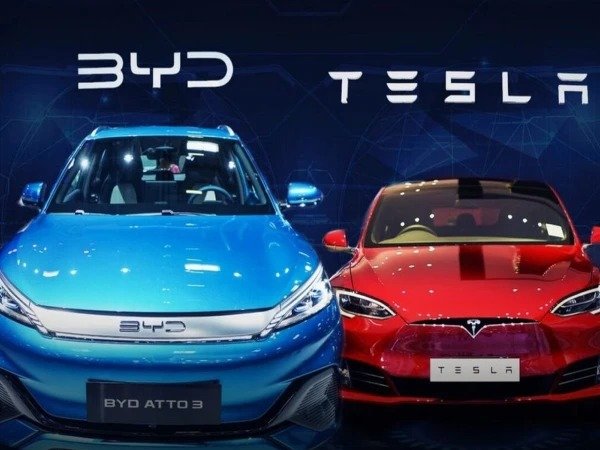
BYD overtakes Tesla in global EV sales, marking one of the most significant shifts in the electric vehicle (EV) market in recent years. China’s leading electric automaker has officially surpassed Elon Musk-led Tesla in worldwide electric vehicle deliveries, reshaping competitive dynamics across the global automotive industry.
According to 2025 sales data, BYD delivered more than 2.25 million electric vehicles globally, while Tesla reported approximately 1.6 million battery-electric vehicle deliveries over the same period. This milestone positions BYD as the world’s largest EV manufacturer by volume and underscores the growing influence of Chinese automakers in the global transition toward electric mobility.
BYD Overtakes Tesla in Global EV Sales: Key Numbers Explained
Rather than viewing these figures in isolation, they reflect a broader structural shift within the EV industry.
In simple terms, BYD’s sales leadership can be explained by three core factors. First, BYD’s wide-ranging product portfolio caters to both premium and mass-market consumers. Second, its cost-efficient production model enables competitive pricing. Third, its rapid international expansion has unlocked growth in emerging and developed markets alike.
In comparison, Tesla continues to dominate the premium EV segment but faces mounting pressure in price-sensitive regions, particularly across Asia, Latin America, and parts of Europe.
Why BYD Overtakes Tesla in Global EV Sales
Market analysts suggest several interconnected reasons behind why BYD overtakes Tesla in global EV sales:
Brand strategy and pricing pressure:
Tesla’s brand, while still strong, has faced reputational headwinds in certain markets due to Elon Musk’s growing involvement in political and public policy debates. This has, in some regions, influenced consumer sentiment and purchasing behavior.
Rising Chinese competition:
Chinese EV manufacturers, led by BYD, have intensified competition through affordable pricing, localized manufacturing, and rapid model innovation. BYD’s ability to undercut competitors while maintaining quality has proven particularly effective.
Vertical integration advantage:
BYD’s business model sets it apart. Unlike most automakers, BYD manufactures its own batteries, power electronics, and key components. This vertical integration lowers costs, stabilizes supply chains, and enhances production scalability advantages that have become critical in a volatile global economy.
BYD’s Business Model: A Competitive Edge in the EV Market
BYD is not just an electric car manufacturer. The company is also a global leader in battery technology, electric buses, commercial EVs, and clean energy solutions. Its proprietary Blade Battery technology, known for improved safety and efficiency, has strengthened consumer trust and industry credibility.
Additionally, BYD’s manufacturing scale allows faster market entry and quicker adaptation to regulatory and consumer demands across regions. This flexibility has enabled BYD to expand aggressively into Europe, Southeast Asia, the Middle East, and Latin America.
What BYD Overtakes Tesla in Global EV Sales Means for the Industry
The fact that BYD overtakes Tesla in global EV sales signals a broader shift in the electric vehicle landscape. Industry experts believe the global EV market is entering a new phase defined by:
• Increased price competition
• Faster technological innovation
• Greater emphasis on affordability and scale
• Strategic realignments among legacy automakers
As Chinese EV makers continue to lead in production efficiency and cost control, global automakers may be forced to rethink pricing strategies, supply chain structures, and market positioning.
Future Outlook: Intensifying Global EV Competition
Looking ahead, competition between BYD, Tesla, and other global automakers is expected to intensify. Consumers are likely to benefit from wider model choices, improved battery technology, and more competitive pricing.
While Tesla remains a technological and brand leader, BYD’s rise highlights a new reality: dominance in the EV market will increasingly be determined by scale, affordability, and operational efficiency not just innovation alone.