
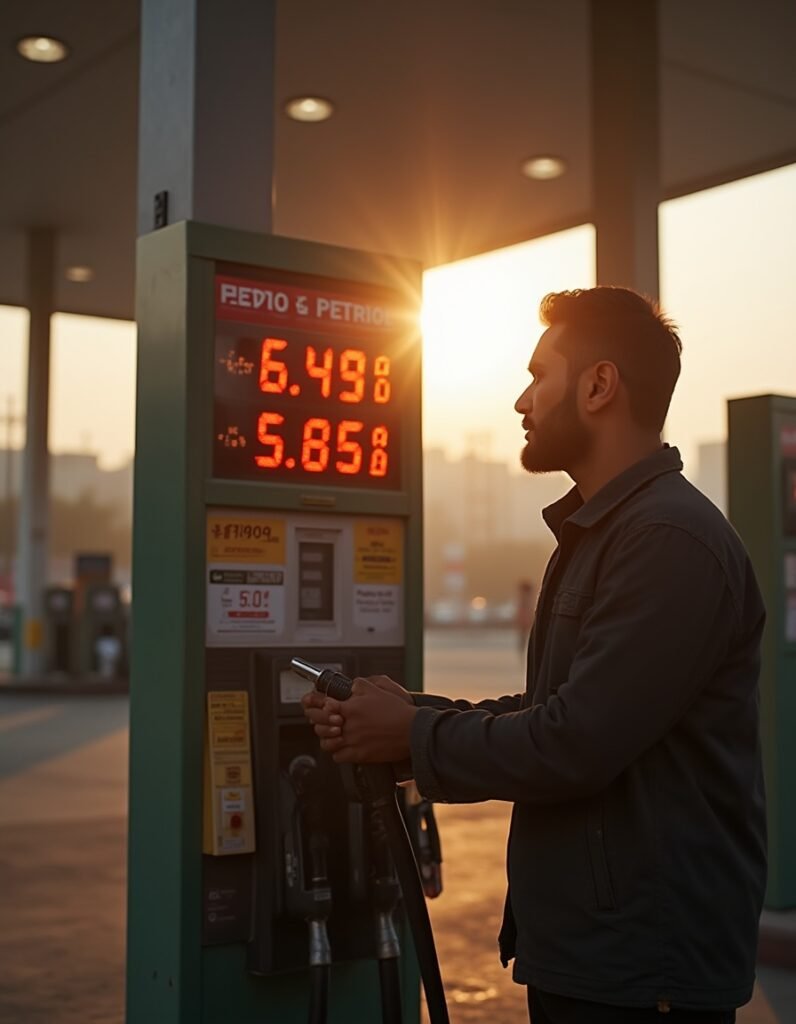
Pakistan petroleum prices cut January 2026 has brought much-needed relief for consumers as the federal government announced a reduction in fuel prices for the first fortnight of the new year. Effective from January 1, 2026, the revised prices are expected to ease inflationary pressure on households, commuters, and key economic sectors across the country.
The decision, notified by the Petroleum Division, follows recommendations from the Oil and Gas Regulatory Authority (OGRA) and reflects declining trends in international oil markets. The move signals a positive start to 2026 amid persistent concerns over the cost of living.
Petrol Price Reduction Under Pakistan Petroleum Prices Cut January 2026
Under the Pakistan petroleum prices cut January 2026, the government has reduced the price of petrol by Rs10.28 per litre. As a result, the new ex-depot petrol price stands at Rs253.17 per litre, effective until January 15, 2026.
Petrol is the primary fuel for motorcycles, rickshaws, and small private vehicles, making it a crucial component of daily household expenses. Any reduction in petrol prices directly benefits urban commuters, salaried individuals, and lower- to middle-income households, who rely heavily on affordable transport for work and education.
This price cut is expected to provide immediate financial relief, especially in major cities where fuel expenses make up a significant portion of monthly budgets.
High-Speed Diesel Prices Reduced: Economic Impact Explained
Alongside petrol, high-speed diesel (HSD) prices have also been lowered as part of the Pakistan petroleum prices cut January 2026. The government reduced HSD rates by Rs8.57 per litre, bringing the new price to Rs257.08 per litre.
High-speed diesel plays a critical role in Pakistan’s transport and agricultural sectors. It is widely used in trucks, buses, trains, tractors, tube-wells, and threshers, making it one of the most inflation-sensitive fuels in the economy.
A reduction in diesel prices helps lower the cost of transporting goods, particularly essential food items such as vegetables and grains. This, in turn, can contribute to easing food inflation, which remains a major concern for policymakers and consumers alike.
Comparison With the Previous Fortnightly Review
In the previous fortnightly price adjustment, the government had reduced diesel prices by Rs14 per litre, while keeping petrol prices unchanged. The latest revision reflects continued responsiveness to global oil price movements and domestic economic conditions.
By cutting both petrol and diesel prices simultaneously, the government aims to create a broader economic impact, supporting consumers as well as supply-chain operators.
Government Levies Despite Zero GST on Fuel
Despite a zero general sales tax (GST) on petroleum products, consumers continue to bear significant government-imposed charges. These include petroleum levies and other duties, which make up a large portion of the final retail price.
While the Pakistan petroleum prices cut January 2026 provides short-term relief, analysts argue that structural reforms in fuel taxation could offer more sustainable benefits for consumers and businesses in the long run.
Economic Outlook After Pakistan Petroleum Prices Cut January 2026
The fuel price reduction is likely to have a positive ripple effect across the economy. Lower transport and production costs may support price stability, improve consumer confidence, and help businesses manage operating expenses more effectively at the start of the year.
However, experts caution that global oil price volatility remains a key risk, and future adjustments will depend on international market trends and exchange rate stability.