
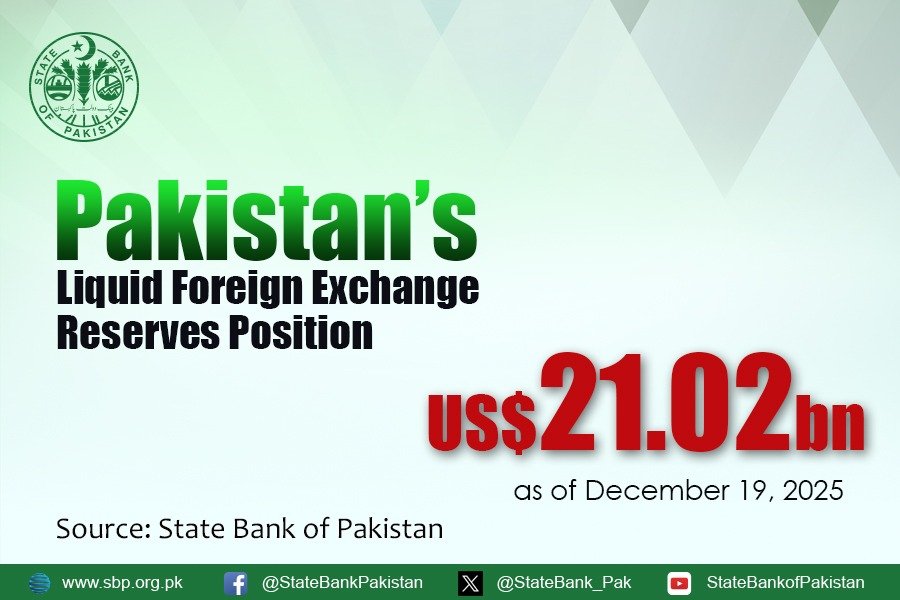
Pakistan foreign exchange reserves showed a modest but positive improvement in the third week of December 2025, reinforcing signs of growing external sector stability. According to the latest data released on December 26, 2025, the country’s total liquid foreign reserves stood at US$21.02 billion as of December 19, 2025, supported by a weekly increase in reserves held by the State Bank of Pakistan (SBP).
This development comes at a time when Pakistan’s economy continues to navigate fiscal consolidation, external financing requirements, and exchange rate management, making foreign reserves a critical indicator for investors, policymakers, and international lenders.
Pakistan Foreign Exchange Reserves: Latest Breakdown
The Pakistan foreign exchange reserves are composed of holdings by the central bank and commercial banks, offering a comprehensive snapshot of the country’s external liquidity position.
As of December 19, 2025, SBP-held foreign exchange reserves stood at US$15.9 billion, accounting for the majority share of the national reserve stockpile. These reserves play a vital role in meeting external debt obligations, stabilizing the Pakistani rupee, and supporting imports such as energy, food, and industrial raw materials.
Meanwhile, net foreign reserves held by commercial banks amounted to US$5.12 billion. These funds primarily support trade financing, private sector imports, and routine banking operations linked to international transactions.
Combined, the SBP and commercial bank holdings brought Pakistan’s total liquid foreign exchange reserves to US$21.02 billion, reflecting a cautiously improving external balance.
Weekly Increase in Pakistan Foreign Exchange Reserves
During the week ended December 19, 2025, Pakistan foreign exchange reserves held by the State Bank of Pakistan increased by US$16 million, rising from the previous week’s level to US$15.9 billion.
Although the weekly increase was relatively modest, it signals continued inflows and disciplined external account management. Such gains often stem from a mix of multilateral financing, bilateral inflows, export receipts, and remittances from overseas Pakistanis.
Why Pakistan Foreign Exchange Reserves Matter
Strong Pakistan foreign exchange reserves are essential for maintaining macroeconomic stability. Adequate reserve levels help:
• Strengthen investor confidence and improve sovereign credit outlook
• Cushion the economy against external shocks
• Support exchange rate stability
• Ensure uninterrupted imports of essential commodities
• Enhance Pakistan’s negotiating position with international lenders
With reserves above the psychologically important $20 billion mark, Pakistan remains better positioned to manage short-term external pressures compared to earlier periods of acute balance-of-payments stress.
Outlook for Pakistan Foreign Exchange Reserves in 2026
Looking ahead, the trajectory of Pakistan foreign exchange reserves will depend on several key factors, including IMF program continuity, export growth, remittance inflows, oil prices, and external debt repayments.
Sustained reforms, prudent monetary policy, and improved current account discipline will be critical in ensuring reserves remain on an upward path in 2026. Any significant rise in exports or foreign investment could further strengthen Pakistan’s external buffers.
Key Takeaway
The latest data confirms that Pakistan foreign exchange reserves reached US$21.02 billion in December 2025, with a weekly increase driven by higher SBP holdings. While challenges remain, the improving reserve position reflects cautious optimism for Pakistan’s external economic outlook as the year draws to a close.