
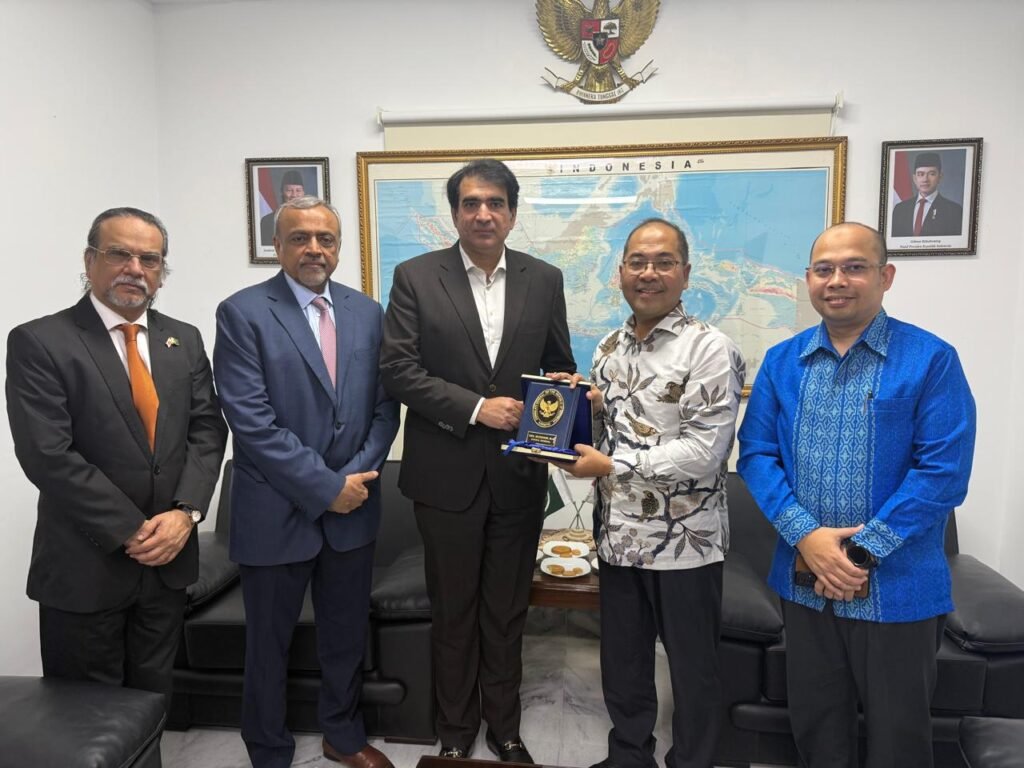
Pakistan and Indonesia need to significantly strengthen bilateral cooperation in the edible oil and palm oil sector to ensure sustainable economic growth, reduce trade bottlenecks, and create new investment opportunities, Indonesian Consul General in Karachi Madzaker M.A. said on Tuesday.
The Consul General expressed these views during a meeting with Sheikh Umer Rehan, Chairman of the Pakistan Vanaspati Manufacturers Association (PVMA), held at the Indonesian Consulate in Karachi. The meeting was also attended by Rashid Jan Muhammad and Ahmed Ghulam Hussain, where both sides discussed ways to expand trade ties and remove existing barriers in the edible oil industry.
Indonesia Offers Technical Support and Expertise in Palm Oil
Highlighting Indonesia’s global leadership in palm oil production, Consul General Madzaker M.A. said Indonesia has extensive experience in palm oil cultivation, processing, and value addition, which Pakistan can benefit from through technology transfer, training programs, and technical cooperation.
He noted that enhanced agricultural collaboration and the exchange of expertise would not only strengthen the edible oil supply chain but also deepen overall Pakistan–Indonesia economic relations, contributing to shared prosperity and long-term development.
Pakistan Relies Heavily on Indonesian Palm Oil Imports
Speaking on the occasion, PVMA Chairman Sheikh Umer Rehan emphasized that Pakistan is one of the largest importers of edible oil from Indonesia, making Indonesia a critical and reliable trading partner.
“Nearly 90 percent of palm oil consumed in Pakistan is imported from Indonesia, which underlines the strategic importance of this bilateral relationship,” he said.
He explained that Pakistan’s domestic edible oil production falls far short of national demand, making imports essential. As edible oil is a basic daily necessity for Pakistani households, maintaining stable and cost-effective supply lines with Indonesia is of vital economic importance.
Trade Barriers Slowing Cooperation
While acknowledging the decades-long trade relationship between the two countries, Sheikh Umer Rehan pointed out that tariff and non-tariff barriers, along with administrative and technical challenges, have slowed the pace of cooperation in recent years.
He stressed that these issues could be effectively addressed through continuous bilateral dialogue, policy coordination, and private-sector engagement, enabling smoother trade flows and stronger partnerships.
Investment Opportunities in Refining and Value Addition
The PVMA Chairman further highlighted Pakistan’s potential to collaborate with Indonesia in value-added edible oil products, palm oil refining, and storage infrastructure.
He noted that Indonesian investment in palm oil refining and value addition facilities in Pakistan could significantly reduce import costs, generate employment, and strengthen the local edible oil industry. He added that Indonesian palm oil meets international quality standards and is well-suited for Pakistan’s manufacturing sector.
Commitment to Long-Term Collaboration
Both sides held detailed discussions on mutual trade interests, industry challenges, and future collaboration opportunities, with participants emphasizing the need to broaden cooperation beyond trade into investment and industrial development.
Reaffirming their commitment, both Pakistan and Indonesia agreed to maintain close coordination to further strengthen Pakistan’s edible oil sector, enhance food security, and unlock new avenues of economic cooperation in the coming years.